

Whey protein supplies all essential amino acids and is naturally rich in leucine, making it a logical ingredient for healthy-aging nutrition. But if an older adult is already consuming approximately the recommended amount of protein, will adding considerably more whey protein improve muscle mass or physical function?
A 2026 randomized trial suggests that protein quantity alone may not provide a complete muscle-health strategy. In healthy, free-living older adults, increasing total protein intake to approximately 1.5 g/kg/day with whey protein did not produce measurable improvements in muscle power, muscle mass or physical performance over 24 weeks.
That does not mean whey protein “does not work.” It shows why baseline diet, target population, exercise context and product design matter when interpreting supplementation research.
What Did the 2026 Trial Test?
The study used a 24-week, placebo-controlled, 2 × 2 factorial design. Participants aged 65 years or older received one of four interventions:
- · whey protein plus potassium bicarbonate;
- · whey protein plus placebo potassium bicarbonate;
- · placebo protein plus potassium bicarbonate; or
- · double placebo.
The whey intervention was individually adjusted to raise total protein intake to approximately 1.5 g/kg/day. Potassium bicarbonate was included as a separate intervention to test whether reducing dietary acid load affected muscle outcomes.
The intention-to-treat analysis included 128 participants. Their average age was 74 years, 47.7% were women, and their reported baseline protein intake averaged 0.85 ± 0.30 g/kg/day—close to the current adult RDA of 0.8 g/kg/day.
The primary outcome was double-leg press muscle power. Researchers also assessed strength, physical performance, lean tissue by DXA, muscle mass using D₃-creatine dilution and circulating IGF-1. Original study record
More Whey Protein Did Not Improve the Measured Muscle Outcomes
After 24 weeks, the difference in leg-press power between the whey and placebo-whey groups was 4.7 W, with a 95% confidence interval from −21.1 to 30.5 W (P = 0.72). No significant differences were detected in physical performance or muscle mass.
Whey protein did, however, increase circulating IGF-1 by 14.2 ng/mL compared with placebo (95% CI: 7.5–21.0; P < 0.01).
This biochemical response shows that the intervention affected physiology. However, the higher IGF-1 level did not translate into detectable improvements in muscle power, mass or physical performance during the study period. IGF-1 changes were also not significantly associated with changes in the measured muscle outcomes.

Why the Result Needs Careful Interpretation
This was not a trial comparing several whey protein doses. It therefore cannot establish an optimal intake, prove that a lower dose would work better or define a point at which additional protein stops providing value.
The findings apply specifically to generally healthy, free-living older adults whose average baseline intake was already near the RDA. They should not automatically be extended to people who are malnourished, recovering from illness, consuming inadequate protein or following a structured resistance-training program.
Most importantly, the study did not include a prescribed exercise intervention. It therefore does not test whether whey protein combined with resistance training could improve muscle adaptation.
The results also should not be interpreted as evidence that 1.5 g/kg/day is unnecessary or ineffective for every older adult. Clinical condition, energy intake, activity level and individual protein needs can change the outcome.
What This Means for Healthy-Aging Product Development
The practical lesson is not to reduce protein quality or remove whey from healthy-aging products. It is to avoid treating a higher protein number as a complete formulation strategy
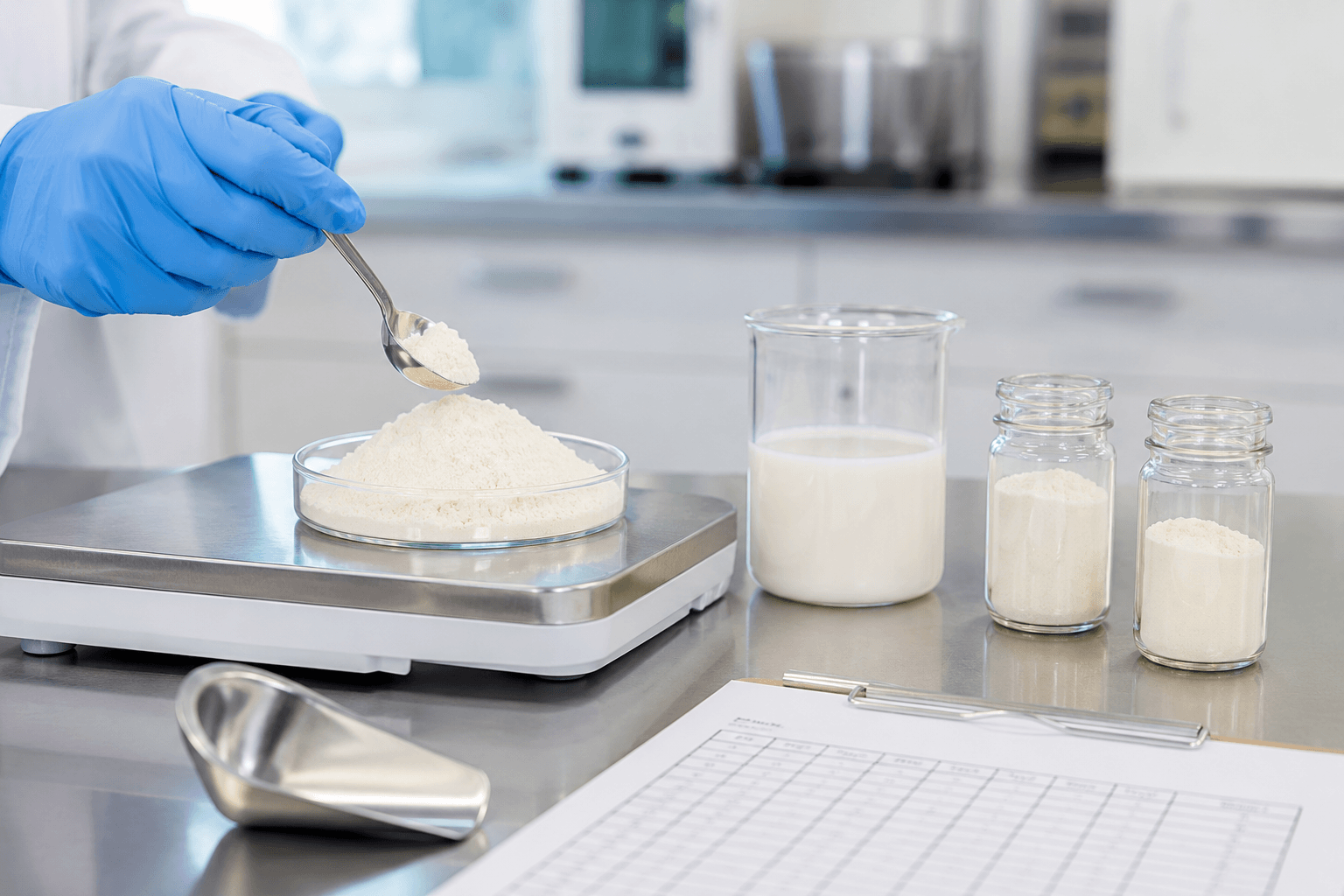
Product developers should also consider:
· whether the target consumer is likely to have inadequate protein intake;
· protein quality and amino acid composition;
· protein and leucine supplied per serving;
· distribution across daily meals;
· energy and micronutrient adequacy;
· use alongside resistance exercise;
· taste, digestibility and long-term adherence.
A product for an active older adult may need a different serving format from one intended for people with low appetite, frailty or recovery-related nutritional needs. WPC, WPI and finished nutritional blends also differ in protein concentration, lactose, fat, flavor and processing behavior.
The Bottom Line
In this 2026 trial, increasing protein intake to approximately 1.5 g/kg/day with whey protein—without a structured exercise intervention—did not improve muscle power, muscle mass or physical performance in healthy older adults over 24 weeks.
The study does not show that whey protein is ineffective. It shows that more protein alone does not automatically create better functional outcomes in every population.
For healthy-aging brands, successful formulation begins with the intended consumer, not simply the largest protein number on the label. SRS Nutrition Express supports whey protein selection, specifications, samples and serving-design discussions for products developed around specific nutritional and application requirements.
Contact SRS Nutrition Express to discuss WPC, WPI and protein formulation options for your target market.
Reference
Ceglia L, et al. Independent effects of whey protein and alkali supplementation on muscle health in healthy older adults: factorial randomized controlled trial. The American Journal of Clinical Nutrition. 2026. doi: 10.1016/j.ajcnut.2026.101257. Clinical trial registration.
Post time: Aug-18-2026


