

Creatine monohydrate is highly stable as a dry crystalline powder, but it can convert to creatinine after it is dissolved. Lower pH and higher temperature generally accelerate this reaction, creating a development challenge for acidic ready-to-drink (RTD) beverages.
For brands and OEMs, adding creatine at the start of production is not enough. The finished beverage must retain the intended dose after processing, distribution and storage, while also meeting microbial, sensory and physical-stability requirements.
What the Solution-Stability Data Show
pH and Temperature Matter
In aqueous solution, creatine undergoes intramolecular cyclization to creatinine, which does not contribute to the intended creatine dose. Reviews report that after three days at 25°C, creatine degradation was approximately 4% at pH 5.5, 12% at pH 4.5 and 21% at pH 3.5. These figures illustrate the direction and possible scale of pH effects; they are not shelf-life predictions for every finished beverage.
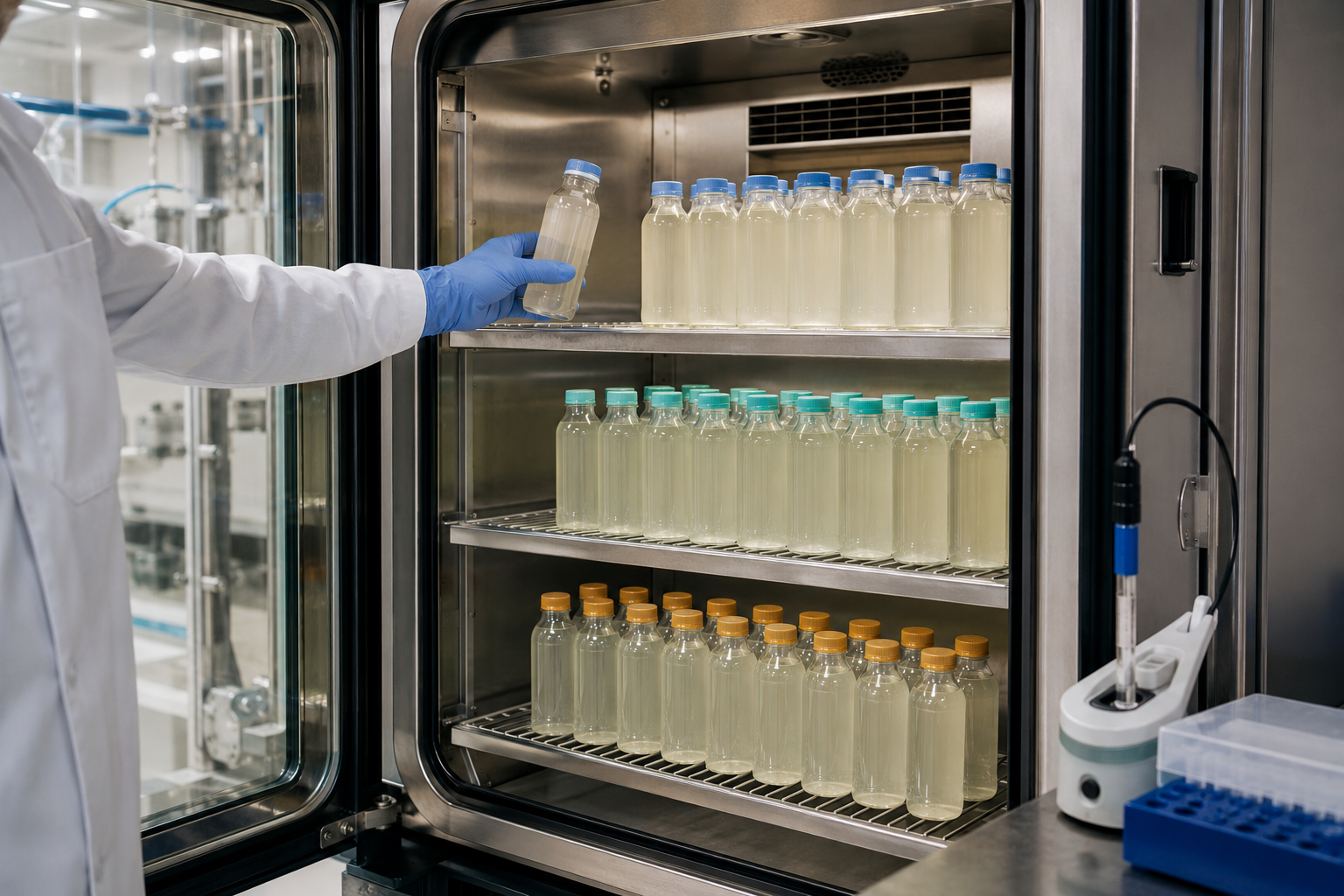
First-order behaviour has been reported in pH 4.0 model systems, particularly during the earlier part of degradation. A commercial RTD may behave differently because its buffer system, water activity, ingredients and pH can change during storage.
A 45-Day Effervescent-Formulation Study
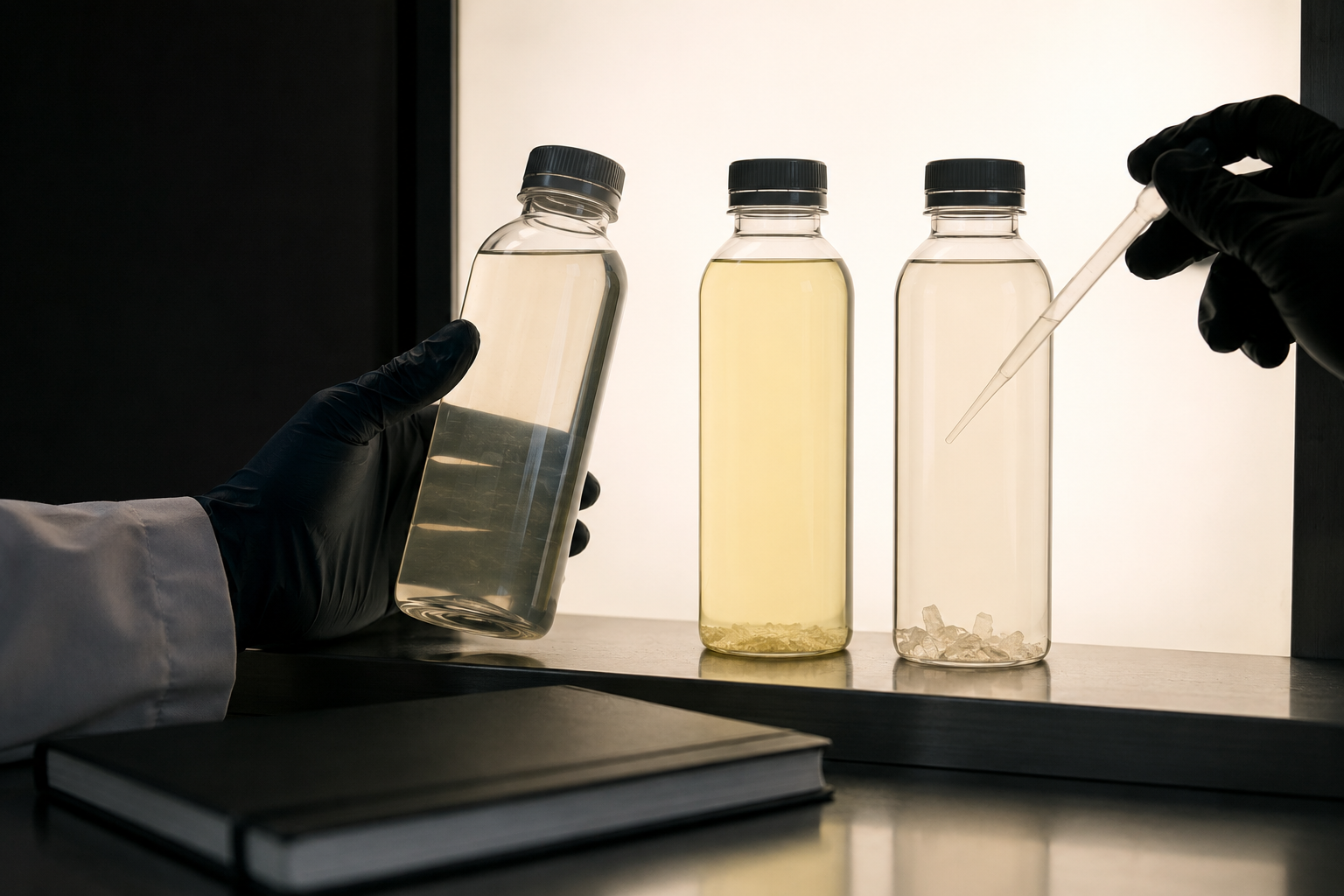
Ganguly and colleagues studied effervescent formulations containing di-creatine citrate. Creatine concentration declined by approximately 90% after 45 days at 25°C. Refrigerated samples showed a smaller decline but developed creatine monohydrate crystals from day 7. The solution pH also changed during room-temperature storage.
This study demonstrates that chemical conversion, solubility and crystallization can interact. However, it evaluated a specific effervescent formulation and should not be treated as a universal loss rate for creatine monohydrate RTDs.
The Main RTD Formulation Trade-Offs
Raising pH Changes the Preservation Strategy
A less acidic beverage may slow creatine conversion, but higher pH can reduce the effectiveness of acid-based preservation systems. Depending on the product, this may require aseptic processing, more intensive thermal treatment or another validated control strategy. Flavor, sweetness and acid balance may also need redevelopment.
Heat Exposure Must Be Measured, Not Assumed
Pasteurization, hot-fill and retort expose dissolved creatine to elevated temperatures, but actual loss depends on both temperature and residence time. A brief process step cannot be equated with months of warm storage. Development trials should measure creatine before processing, immediately after processing and during shelf life, while recording cooling, transport and retail-storage conditions.
Chemical Loss Is Not the Only Explanation
An apparent decline in creatine assay may reflect conversion to creatinine, crystallization, sedimentation or non-representative sampling. Developers should assess whether the intended dose dissolves at the processing temperature, whether crystals form after cooling, and whether electrolytes, sugars or acids change solubility. If the beverage is a suspension, redispersibility and sampling procedures must be defined.
What Should a Stability Program Measure?
A finished-product program should use a suitable method to quantify both creatine and creatinine. At minimum, the protocol should include:
- Creatine retained per serving and creatinine formation at release and planned shelf-life intervals.
- pH and pH drift, appearance, crystallization, sedimentation and redispersibility.
- Testing immediately before and after the intended thermal process.
- Real-time and justified accelerated conditions covering expected distribution temperatures.
- Microbial validation, sensory assessment and packaging-integrity checks.
- Representative sampling procedures for solutions and suspensions.
A raw-material CoA confirms the tested characteristics of the incoming creatine batch; it cannot establish the retained dose or shelf life of the finished RTD.
Evidence and Regulatory Boundaries
Most human efficacy studies use creatine powders, capsules or freshly prepared mixtures rather than long-shelf-life acidic RTDs. Performance claims should therefore be based on the amount of creatine actually delivered through the end of shelf life, not only the initial addition rate. Claim requirements also vary by market.
FDA GRAS Notice No. 931 includes an intended use for creatine monohydrate in energy drinks at 1.2 g per serving, equivalent to approximately 1.0 g creatine. It does not establish the stability of higher-dose acidic beverages, substantiate performance claims or determine compliance in other markets.
Patent literature also describes acidic creatine beverages formulated with electrolyte systems. A patent identifies a claimed technical approach; it is not independent confirmation that every commercial formulation will meet a stated shelf life.
Practical Conclusion
Acidic, long-shelf-life RTDs present a meaningful stability risk for creatine monohydrate, but pH alone cannot predict the outcome. The final result depends on formulation composition, physical state, processing and storage history.
Dry powders and stick packs remain simpler routes to a defined creatine dose. An RTD can still be developed, but it should be treated as a product-specific stability project supported by finished-product testing rather than assumptions based on the raw material.
Developing a Creatine RTD?
SRS Nutrition Express supplies creatine monohydrate and can provide available specifications, representative CoA, particle-size information and qualification samples. For RTD concepts, the brand, OEM or application laboratory should establish finished-product solubility, sensory performance, creatine retention and creatinine formation under the intended process and shelf-life conditions.
References
1. Jäger R, Harris RC, Purpura M, et al. Analysis of the efficacy, safety, and regulatory status of novel forms of creatine. Amino Acids. 2011;40(5):1369-1383. https://doi.org/10.1007/s00726-011-0920-9
2. Kreider RB, Jäger R, Purpura M. Bioavailability, efficacy, safety, and regulatory status of creatine and related compounds: a critical review. Nutrients. 2022;14(5):1035. https://doi.org/10.3390/nu14051035
3. Antonio J, Candow DG, Forbes SC, et al. Common questions and misconceptions about creatine supplementation: what does the scientific evidence really show? Journal of the International Society of Sports Nutrition. 2021;18:13. https://doi.org/10.1186/s12970-021-00412-w
4. Ganguly S, Jayappa S, Dash AK. Evaluation of the stability of creatine in solution prepared from effervescent creatine formulations. AAPS PharmSciTech. 2003;4(2):E25. https://doi.org/10.1208/pt040225
5. Uzzan M, Nechrebeki J, Zhou P, Labuza TP. Effect of water activity and temperature on the stability of creatine during storage. Drug Development and Industrial Pharmacy. 2009;35(8):1003-1008. https://doi.org/10.1080/03639040902755197
6. U.S. Food and Drug Administration. GRAS Notice No. 931: Creatine Monohydrate. 2020. https://www.fda.gov/media/143525/download
7. US Patent Application US20220287346A1. Stable Creatine Beverages. 2022. https://patents.google.com/patent/US20220287346A1/en
Post time: Sep-08-2026


