

H1: Creatine Monohydrate Safety Beyond the Headlines: What 684 Trials Mean for Consumers and Brands
Creatine monohydrate has decades of research behind it, yet questions about kidney health, digestive discomfort, muscle cramps, and long-term use still shape consumer decisions.
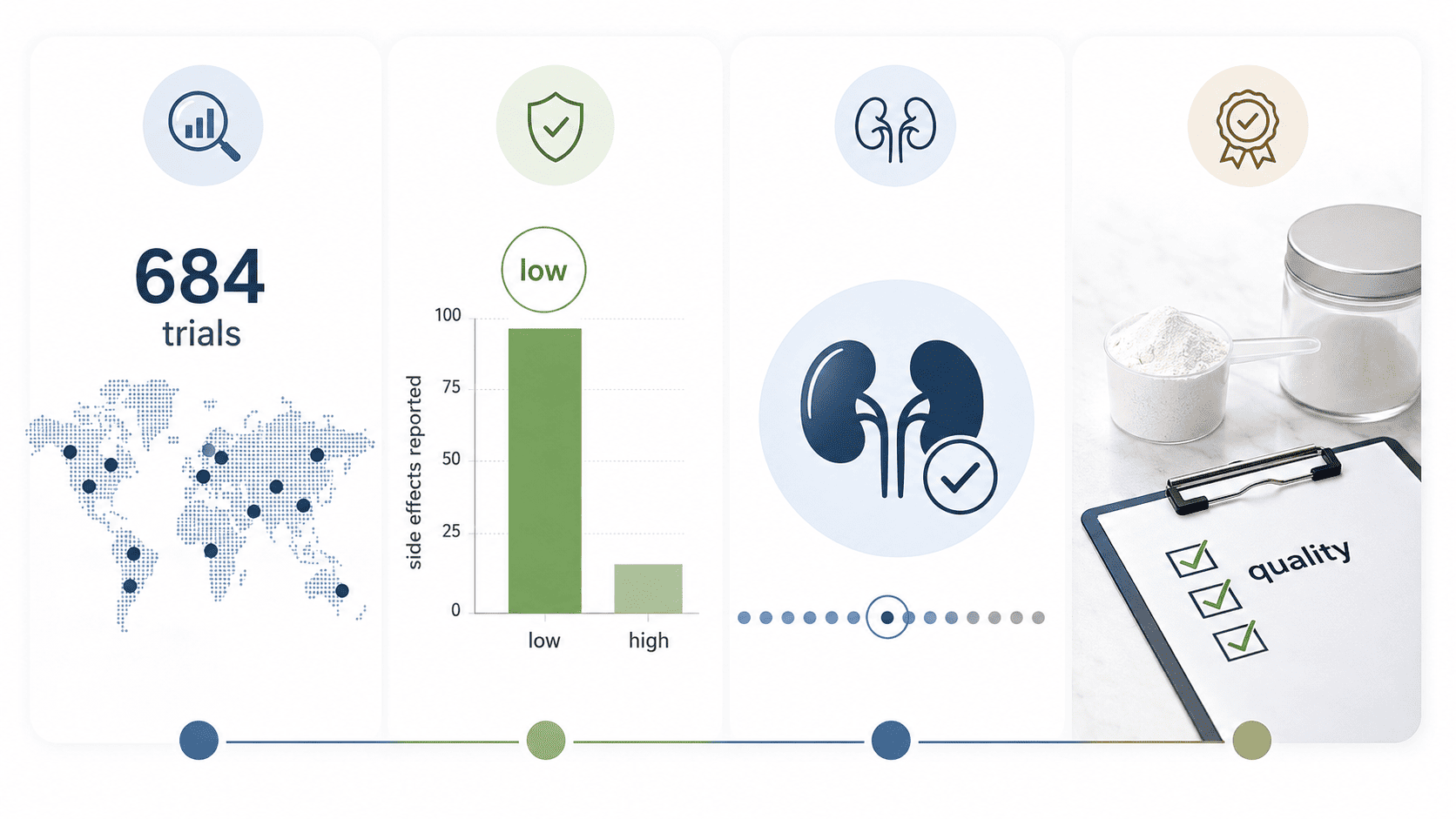
A 2026 analysis of 684 randomized controlled trials offers one of the broadest views of these concerns. The findings are reassuring, but the numbers need to be read correctly.
H2: What Did the 684-Trial Review Actually Measure?
The researchers analyzed data from more than 12,800 participants across creatine and placebo study arms. The trials covered different ages, health conditions, training levels, doses, and supplementation periods.
Importantly, this was a study-level analysis. A trial was counted as reporting a side effect when at least one participant reported at least one symptom.
That does not mean the same percentage of individual creatine users experienced a side effect. It also does not prove that every symptom recorded during a trial was caused by creatine.
H2: Most Creatine Trials Reported No Side Effects
Of the 684 creatine trial arms:
- · 93 studies, or 13.6%, reported at least one event.
- · 591 studies, or 86.4%, reported none.
Gastrointestinal complaints were the most frequently reported category, appearing in 68 studies, or 9.9%. Musculoskeletal complaints appeared in 20 studies (2.9%), neurological or vestibular complaints in 17 (2.5%), cardiovascular events in six (0.9%), renal or urinary events in three (0.4%), and liver, metabolic, or nutrition-related events in one study (0.1%).
These figures describe the percentage of studies with at least one report—not the personal risk for an individual consumer.
A related 2025 analysis also found similar overall reporting between creatine and placebo study arms: 13.7% versus 13.2%, with no statistically significant difference between them (p = 0.776). This comparison matters because headaches, stomach discomfort, nausea, or cramps can occur during a study without necessarily being caused by the tested supplement.
H2: Did Higher Doses or Longer Use Increase Risk?
Studies in the highest dose group reported at least one event more often than those in the lowest group:
- · Low-dose studies: 8.8%
- · Moderate-dose studies: 11.6%
- · High-dose studies: 20.8%
A similar pattern appeared across supplementation duration:
- · Short-duration studies: 7.0%
- · Moderate-duration studies: 15.6%
- · Long-duration studies: 20.0%
At first glance, this may sound concerning. However, the measured associations were small. Cramér’s effect size was 0.151 for dose and 0.162 for duration.
After adjusting for age, biological sex, health status, and population type, the researchers did not identify a consistent exposure–response pattern indicating clinically meaningful harm. Placebo groups also frequently reported similar or higher event frequencies.
Longer studies and studies using higher total exposure also provide more time and opportunities to record common background symptoms. More reports do not automatically establish dose-dependent toxicity.
H2: What Does the Evidence Say About Kidney Function?
Kidney safety deserves separate attention because creatine metabolism can affect serum creatinine, a laboratory marker commonly used when evaluating kidney function.
A 2025 systematic review included 21 studies examining creatine supplementation and kidney-related outcomes. In the pooled serum-creatinine analysis, the creatine groups included 177 participants and the control groups included 263.
Serum creatinine increased slightly (p = 0.03). However, pooled data from five GFR studies—69 creatine users and 74 controls—found no statistically significant reduction in glomerular filtration rate.
This distinction matters. A modest increase in serum creatinine may reflect greater creatine turnover rather than reduced kidney filtration. People using creatine should mention supplementation when kidney-related laboratory results are interpreted.
H2: Safety Evidence Does Not Replace Ingredient Quality
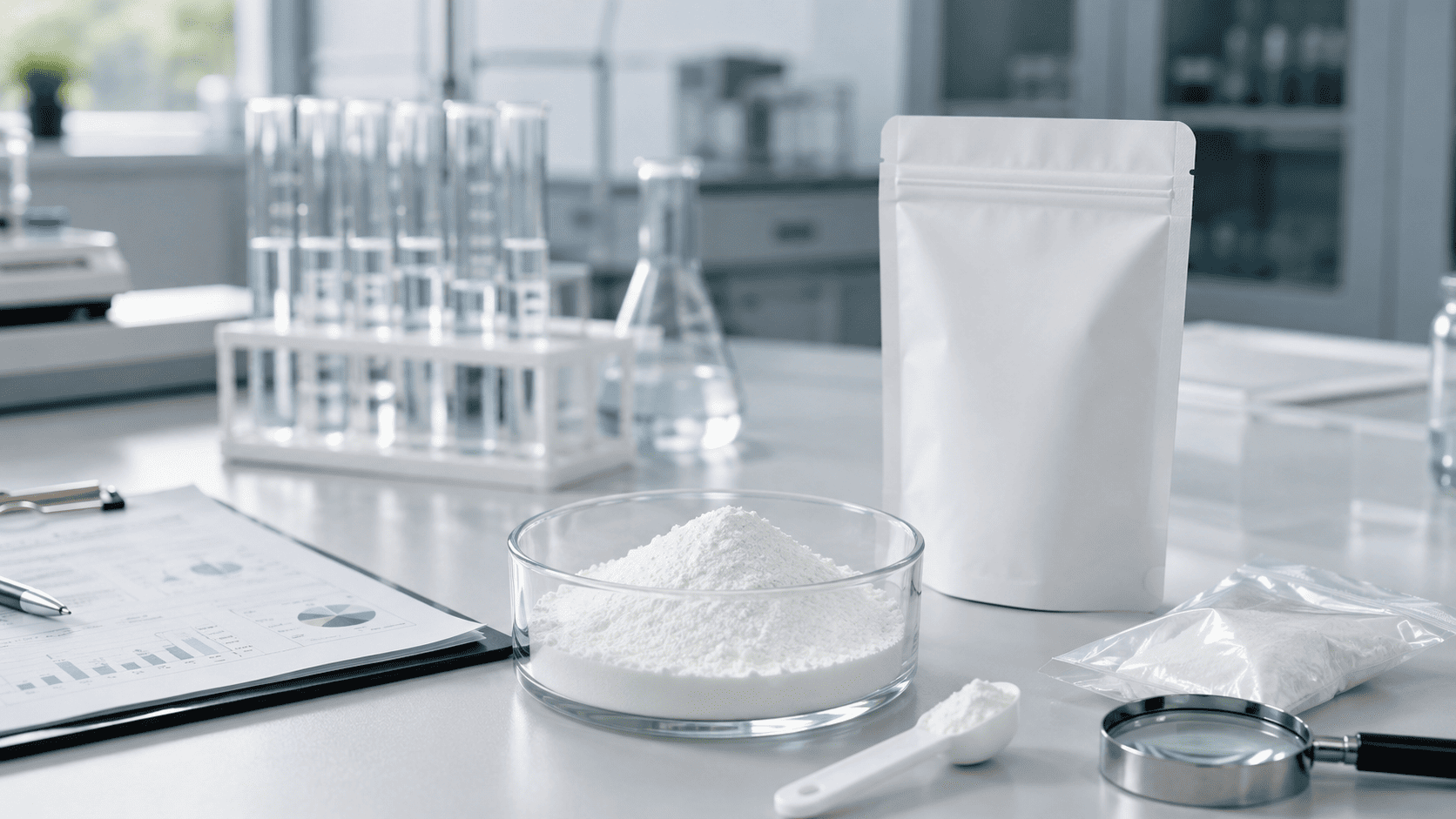
Clinical research evaluates creatine monohydrate as an ingredient. It does not verify the identity, purity, contaminant profile, or consistency of every commercial batch.
For consumers, brands, OEM manufacturers, and formulators, responsible sourcing should combine the broader safety evidence with batch-specific quality control. Relevant checks may include:
- · Creatine monohydrate assay
- · Creatinine
- · DCD and DHT
- · Heavy metals
- · Microbiological limits
- · Particle size and bulk density
- · Batch traceability and supporting documentation
A strong scientific safety profile should be supported by a raw-material specification that matches the intended application—whether the finished product is a powder, capsule, tablet, gummy, or functional blend.
H2: The Practical Conclusion
The 684-trial analysis supports creatine monohydrate as generally well tolerated across varied doses and supplementation periods. It does not prove that no individual will ever experience discomfort, and it does not support marketing claims such as “zero side effects.”
A more accurate conclusion is:Side-effect reporting across randomized trials was generally low, most reported symptoms were mild and nonspecific, and no consistent pattern of clinically meaningful dose- or duration-dependent harm was identified compared with placebo.
For SRS customers, scientific evidence and quality control should work together. Research supports the ingredient; qualified sourcing, appropriate specifications, and batch verification support the finished product.
CTA
Review Creatine Specifications and Batch Documentation
Compare available creatine monohydrate grades, request a sample, or discuss the quality requirements of your formulation with SRS Nutrition Express.
References
1. Gonzalez DE, et al. Sports. 2026;14(4):137. doi: 10.3390/sports14040137.
2. Kreider RB, et al. Journal of the International Society of SportsNutrition.2025;22:2488937.doi:10.1080/15502783.2025.2488937.
3. Naeini EK, et al. BMC Nephrology. 2025;26:622. doi: 10.1186/s12882-025-04558-6.
Kreider RB, et al. Journal of the International Society of SportsNutrition.2017;14:18.doi: 10.1186/s12970-017-0173-z.
Post time: Jul-23-2026


