

Two fish oil quotations arrive. The EPA numbers match. The DHA numbers match. The prices do not.
It looks like a short meeting. Then quality opens the attachments.
Matching EPA and DHA is a useful starting point. Before declaring the quotations equivalent, check what those numbers describe, which oil you are buying and what the supplier will actually deliver.
Same Numbers, Different Denominators?
Ask for EPA and DHA individually, their units, analytical method and calculation basis. Are the results expressed per gram of oil, per capsule or as a percentage? Is a percentage a mass fraction or chromatographic area percentage? AOCS lists mg/g and area-percent reporting separately in its proficiency-testing programme; they should not be treated as interchangeable. [1]
Also distinguish a specification minimum from a measured lot result. GOED’s Voluntary Monograph uses free-fatty-acid equivalents for its common EPA/DHA reporting basis and describes other form-specific expressions. Have the laboratory confirm the basis before converting or comparing results. [3]
The unit beside the number deserves a seat at the purchasing meeting.
The Capsule Has Its Own Arithmetic
Translate the agreed concentration into the intended oil fill. For illustration, an oil providing 300 mg EPA and 200 mg DHA per gram contributes a calculated 400 mg combined EPA+DHA in an 800 mg oil fill: 500 mg/g × 0.8 g.
That is a hypothetical formulation calculation, not an SRS grade, measured capsule result or intake recommendation. It assumes the quoted content uses the agreed basis and the stated oil fill. The finished product still needs its own verification.
TG, rTG and EE Are More Than Alphabet Soup
Confirm whether the proposed material is supplied as natural triglycerides, re-esterified triglycerides or ethyl esters. NIH describes these as distinct omega-3 forms. [2] A matching fatty-acid concentration does not tell you which form is in the drum.
Ask for supporting identification or compositional information when form matters to the approved brief. Keep it consistent with the manufacturer’s requirements and intended product description. This is a specification decision; the abbreviations alone do not prove a superior finished product.
EPA and DHA Do Not Run the Whole Quality Department

Review the agreed oxidation tests, including peroxide value, p-anisidine value and TOTOX where applicable. AOCS treats these as separate determinations alongside fatty-acid composition. [1] Confirm the limits, methods, lot identity and testing date, plus the relevant contaminant requirements.
For flavoured oils, check method suitability with the laboratory. GOED identifies possible flavour interference with oxidation testing. [3] A pleasant lemon aroma is not an analytical report.
The Quotation Still Has to Survive Delivery
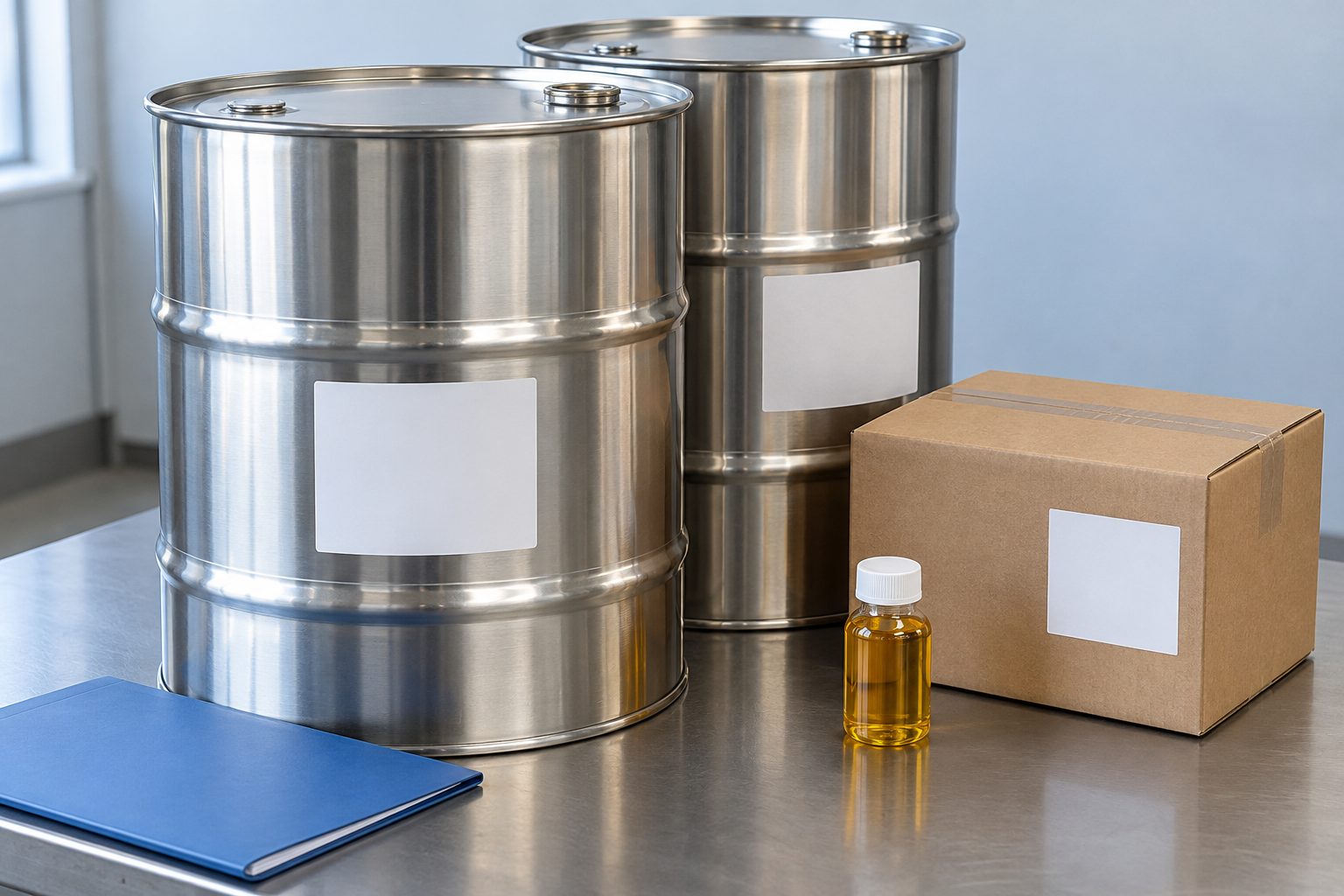
Agree the bulk container, storage conditions, transport requirements, remaining usable period on receipt and handling after opening. If the oil will be encapsulated, blended or repacked, define the manufacturer’s approval and finished-product testing separately.
Compare quotations using the same quantity, delivery basis, documentation and testing scope. Identify any work or charges outside the price. The lower-priced option may be the right choice; first make sure both suppliers are quoting the job you need.
Send SRS the Product Brief Behind the Numbers
Share your target EPA and DHA with units and reporting basis, required oil form, intended dosage format, destination market and estimated quantity. Include the current approved specification if you are evaluating a replacement, plus packaging, quality-document and timing requirements.
SRS Nutrition Express can review available omega-3 options and discuss the specifications, representative COAs and sample arrangements available for your project. Grade availability, additional testing, costs and delivery need confirmation. Your manufacturer and quality team should approve the material for the intended product.
A short, clear brief gives the comparison somewhere useful to go. Matching two numbers is a good opening line, but there is still a product to make.
Evidence Boundaries
- The quotation scene is illustrative, not a verified SRS customer case. No oil sample or batch has been tested for this article.
- The 300 mg/g EPA, 200 mg/g DHA and 800 mg fill example is hypothetical. It is not an SRS specification, finished-product result or dosage recommendation.
- AOCS proficiency-test information and the GOED Voluntary Monograph are used within their stated scope. They do not establish universal legal limits or certify an SRS supplier; no GOED membership or compliance is asserted.
- No oil form, quotation, additional testing service, shelf life or finished-product performance is guaranteed. Availability and responsibilities require project-specific confirmation.
Recommended Reading
References
1. AOCS. GOED Nutraceutical Oils Laboratory Proficiency Testing. Determinations and recommended test methods.
2. National Institutes of Health, Office of Dietary Supplements. Omega-3 Fatty Acids: Fact Sheet for Health Professionals. Dietary supplements section.
3. GOED. Voluntary Monograph. Version 8.1. 6 January 2022. Definitions, oxidation and fatty-acid reporting.
Post time: Oct-23-2026


