

A laboratory can test a creatine sample accurately without that sample representing the commercial lot. Taking a small quantity from the top of one bag may be convenient, but it provides limited evidence about a shipment containing multiple bags, drums or pallets.
A defensible creatine raw material sampling procedure should define the lot, selected containers, sampling locations, sample division and traceability. It should also reflect the purpose of testing. A plan designed for routine incoming inspection may not be sufficient for investigating a disputed result.
Define the Lot Before Sampling
First confirm the supplier, manufacturing site, creatine grade, lot number, shipment size and number of containers. Packaging damage, storage history and the presence of more than one manufacturing lot should also be recorded.
Different lots should be sampled and evaluated separately. Combining material from two lot numbers into one laboratory sample can prevent the result from being traced to the affected lot.
For US dietary supplements, 21 CFR §111.80 requires representative samples of each unique lot within each unique shipment of received components. The regulation requires representativeness but does not prescribe one sampling formula for every material or shipment.
Select Containers Using a Risk-Based Plan
The number of bags or drums selected should reflect:
- ✓ shipment size and packaging configuration;
- ✓ supplier qualification and batch history;
- ✓ previous test-result variability;
- ✓ intended test and consequence of failure;
- ✓ damaged, wet or improperly sealed containers;
- ✓ evidence or suspicion of non-uniformity.
Containers should be selected across the shipment rather than only from the most accessible pallet. A qualified supplier with consistent history may justify a reduced plan, while a new supplier, damaged shipment or disputed result may require broader sampling.
Control Where and How the Powder Is Collected
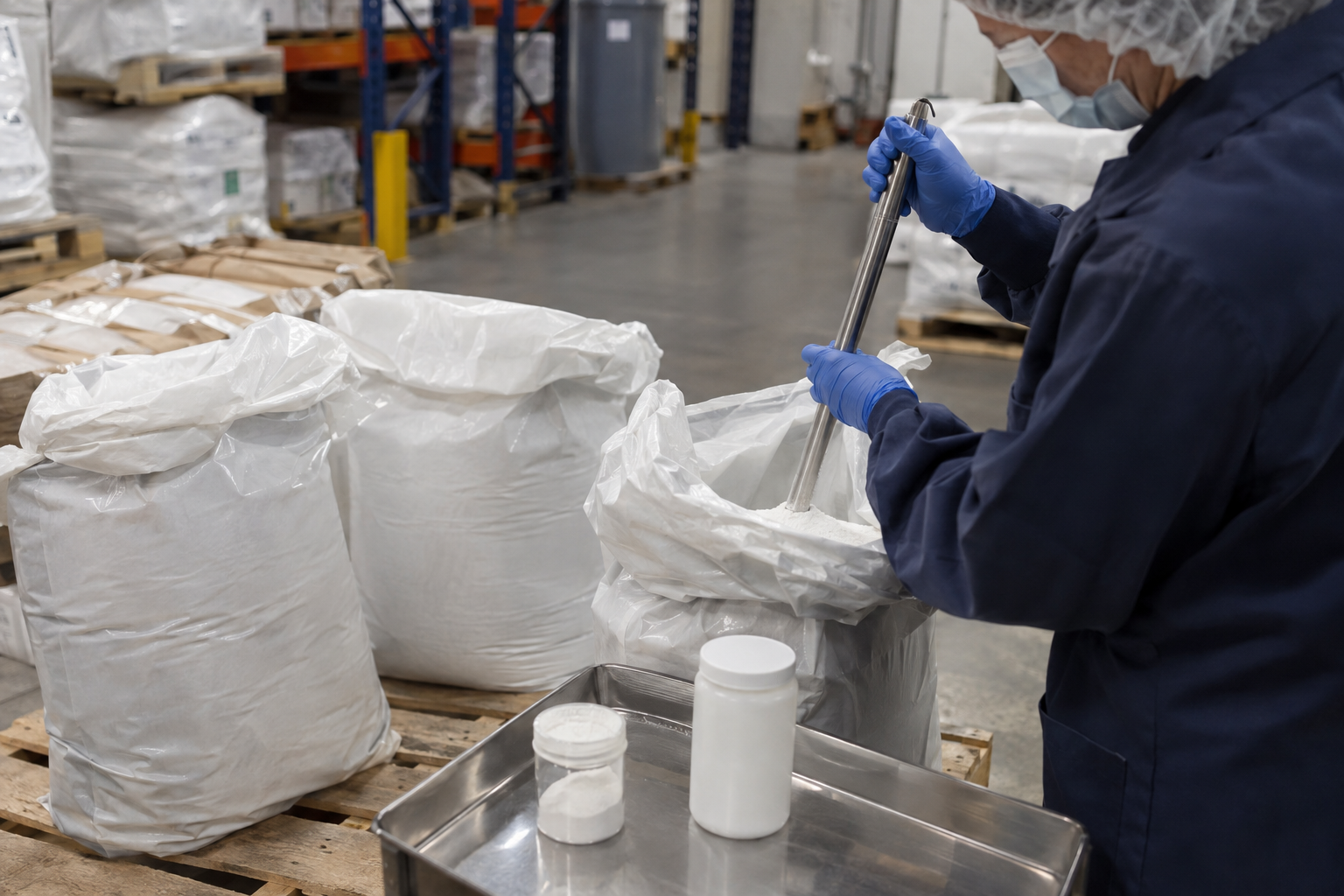
Powder segregation may occur when particles with different sizes, densities or flow characteristics are exposed to filling, vibration or transport. Sampling only material near a bag opening may therefore miss variation elsewhere.
Sampling from different depths may be appropriate when non-uniformity is suspected and it can be performed without compromising the material. For sealed bags, unnecessary puncturing can introduce contamination or moisture.
- ● the sampling tool and cleaning status;
- ● selected container and sampling position;
- ● quantity collected;
- ● precautions against contamination and humidity;
- ● how the container is resealed;
- ● sampler, date and sample identification.
Choose Between Individual and Composite Samples
A composite sample combines portions from several selected containers and may provide an efficient estimate of average lot quality. However, averaging can conceal one abnormal bag or drum.
Individual samples should be retained when investigating damaged packaging, suspected non-uniformity, different pallet positions or a customer complaint.
Match the Sample to the Intended Test
- Identity and assay: require a representative chemical sample.
- Creatinine, DCD and DHT: require controlled handling and an appropriate validated or scientifically valid method.
- Microbiology: requires suitable sterile containers and contamination controls.
- Particle-size distribution: requires protection against segregation and loss of fines.
- Bulk density: requires defined conditioning and test procedures.
- Moisture: requires immediate sealing against ambient humidity.
Divide, Seal and Document the Sample
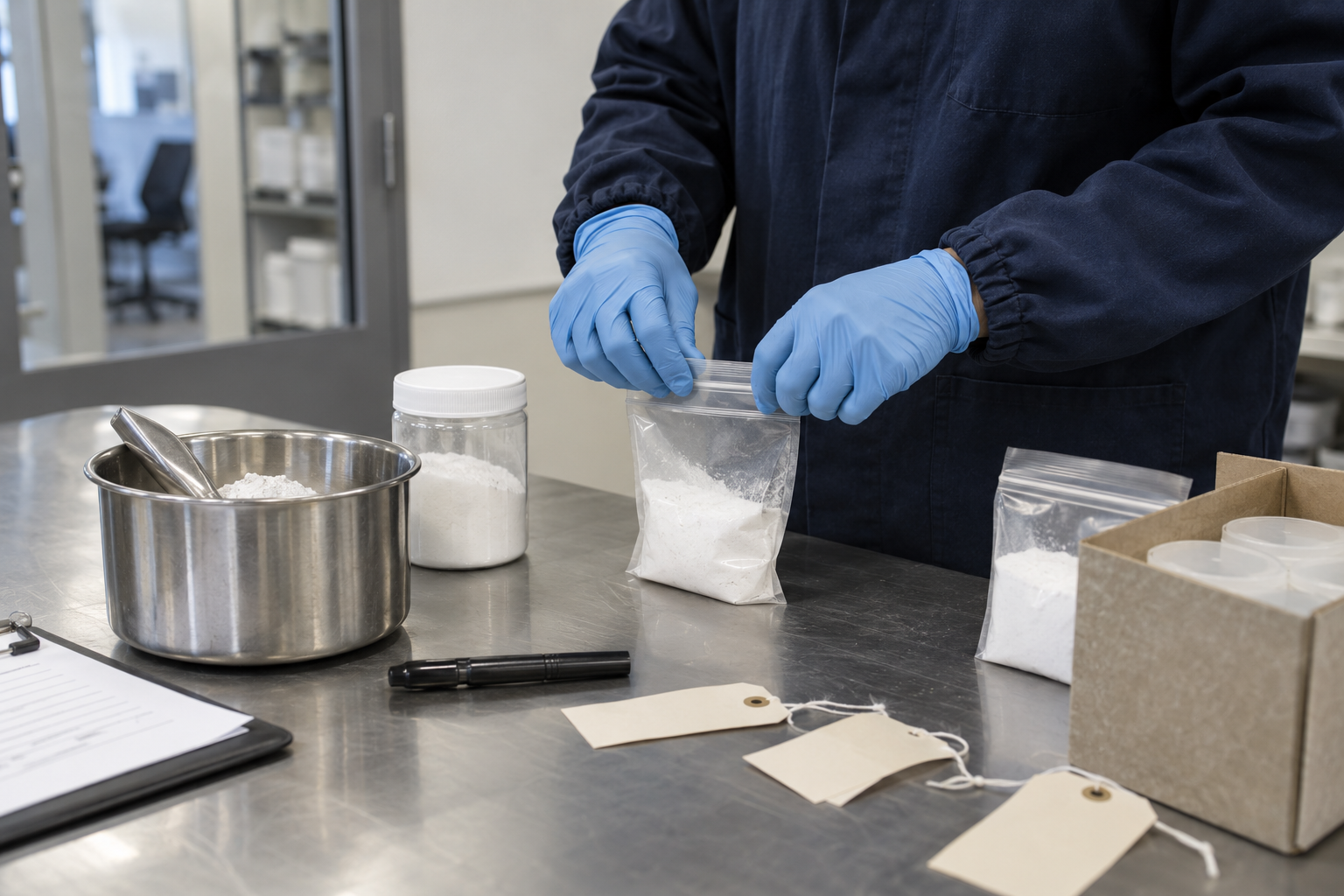
Collected material may need to be divided into a laboratory sample, confirmation sample and retained sample. Controlled splitting is preferable to taking separate casual scoops.
Frequently Asked Questions About Creatine Sampling
How many creatine bags should be sampled?
There is no universal number. The decision should be justified using shipment size, supplier history, suspected variability, test purpose and the risk of an incorrect release decision.
Planning a Creatine Sampling or Qualification Program?
SRS Nutrition Express can provide lot-specific COAs, grade specifications, packaging information and representative creatine monohydrate samples for supplier qualification and laboratory comparison.
Evidence Boundaries
- One passing sample does not prove uniformity across an inadequately sampled lot.
- One failed sample does not automatically prove that every container is defective.
- Composite sampling can conceal localised variation.
- Pharmaceutical sampling guidance is not automatically binding on food or dietary-supplement ingredients.
References
1. Electronic Code of Federal Regulations. 21 CFR §111.80—What Representative Samples Must You Collect?
2. World Health Organization. WHO Guidelines for Sampling of Pharmaceutical Products and Related Materials. WHO Technical Report Series 929, Annex 4.
3. Electronic Code of Federal Regulations. 21 CFR §111.75—What Must You Do to Determine Whether Specifications Are Met?
Post time: Sep-23-2026


