

L-carnitine is widely used in sports nutrition and metabolic health products, but the choice between L-carnitine base and L-carnitine L-tartrate is often driven more by handling and stability than by clear differences in long-term efficacy. Human studies that successfully increased muscle carnitine content used chronic supplementation together with an insulin-stimulating carbohydrate protocol. L-carnitine L-tartrate is commonly selected when easier solid-format handling is required, while L-carnitine base provides more L-carnitine per gram but is highly hygroscopic and can be more difficult to formulate.
This article outlines what the human and animal data support, where extrapolation begins, and the formulation trade-offs that matter most for powders, capsules, and ready-to-drink (RTD) products.
Human Absorption and Muscle Carnitine Loading
Oral Bioavailability and Plasma Kinetics
Oral absorption of supplemental L-carnitine is limited and dose-dependent. After oral doses of 1–6 g, reported absolute bioavailability is approximately 5–18%, with dose-dependent absorption and substantial renal handling. After ingestion, plasma carnitine concentrations typically peak within a few hours, then decline through a combination of tissue distribution and renal elimination. Increasing skeletal-muscle carnitine is more difficult than temporarily increasing plasma concentrations.
An animal pharmacokinetic study reported similar overall exposure for free L-carnitine and several L-carnitine salts, with earlier plasma appearance for L-carnitine L-tartrate in the first 3.5 hours. Comparable direct human evidence comparing L-carnitine base and L-carnitine L-tartrate is limited, so this finding should not be used to claim faster delivery or superior peri-workout performance in humans. EFSA has concluded that L-carnitine L-tartrate dissociates in the gastrointestinal tract and provides systemic L-carnitine exposure comparable to free L-carnitine from other forms.
Muscle Carnitine Loading Requires Chronic Dosing
Increasing skeletal muscle total carnitine content is more demanding than raising plasma levels. In a 24-week trial involving 14 healthy men, 2 g of L-carnitine L-tartrate plus 80 g of carbohydrate, consumed twice daily, increased muscle total carnitine by 21%. Significant effects were reported after 24 weeks, not after 12 weeks. A follow-up analysis from the same cohort associated the increase in muscle carnitine with higher energy expenditure and prevention of the body-fat increase observed in the carbohydrate-only group.
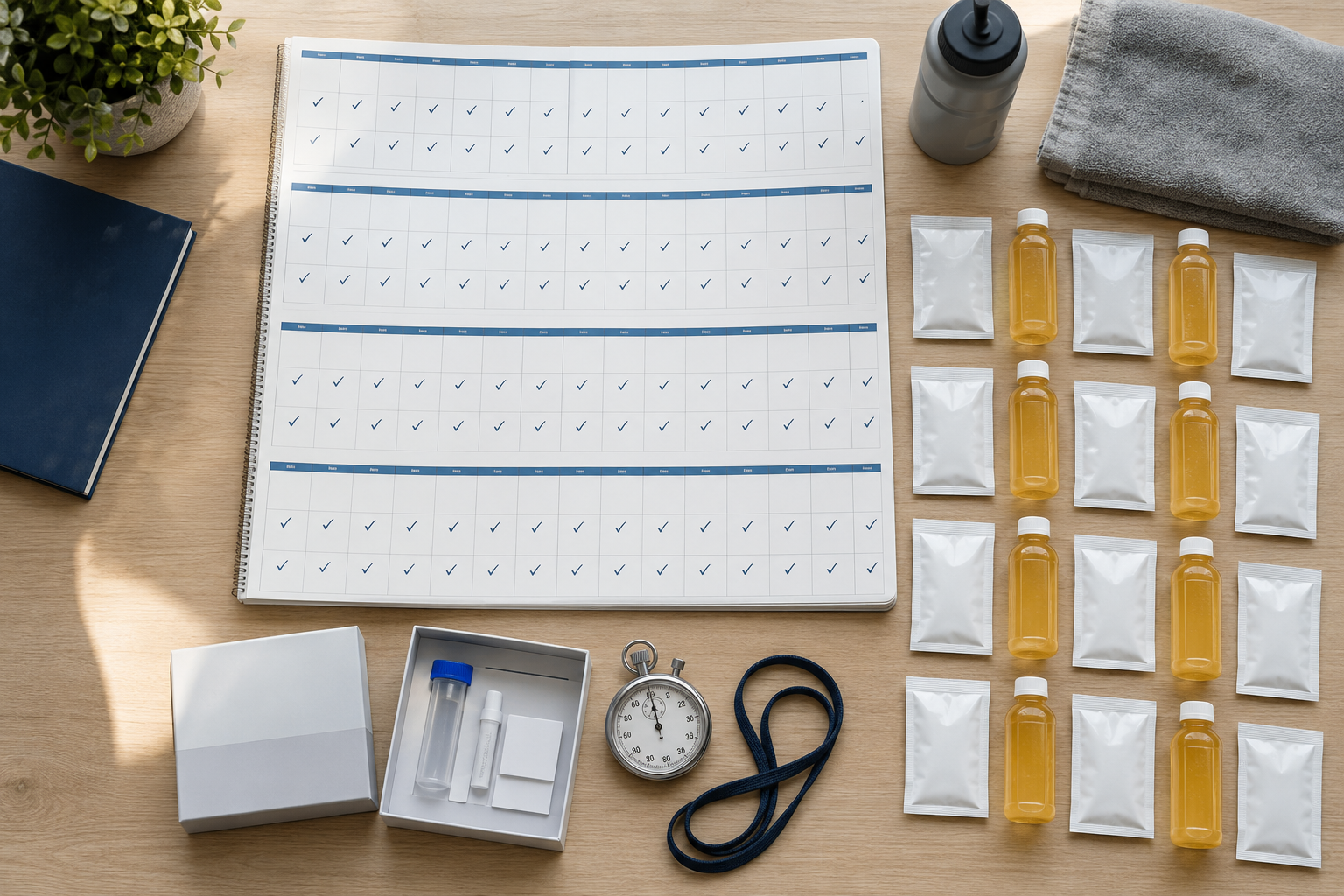
Shorter or lower-dose protocols, or those without a strong insulin stimulus, often fail to change muscle carnitine content despite increases in plasma carnitine. Form (base vs tartrate) is less critical than dose, duration, and co-ingestion strategy when the goal is to load muscle carnitine.
Composition and Physical Properties
Carnitine Content and Molecular Composition
L-carnitine base consists almost entirely of the carnitine molecule. Commercial assay limits depend on the applicable compendial standard and supplier specification. L-carnitine L-tartrate is a salt formed from two molecules of L-carnitine and one molecule of L-tartaric acid, resulting in approximately 68% L-carnitine by weight, with the remainder being tartrate. A given mass of L-carnitine base delivers more actual carnitine than the same mass of L-carnitine L-tartrate. Formulators must adjust dose levels to ensure that the intended amount of L-carnitine is delivered, regardless of the form selected.
Hygroscopicity and Physical Stability
L-carnitine base is highly hygroscopic and can absorb moisture from the air, leading to caking, reduced flowability, and handling challenges during blending, encapsulation, or stick-pack filling. Pharmaceutical monographs describe levocarnitine, USP as a white crystalline, hygroscopic powder with strict limits on water content.
L-carnitine L-tartrate is also hygroscopic but is generally regarded as more stable and less prone to deliquescence than the free base, particularly under high temperature and humidity conditions. This improved physical stability is a major reason why L-carnitine L-tartrate is frequently specified for capsules, tablets, and single-serve powders intended for long shelf life and variable storage conditions.

Formulation Trade-Offs
Solid Dosage Forms
For capsules, tablets, and stick packs, L-carnitine L-tartrate offers several practical advantages:
- Often easier to handle in solid-format development than highly hygroscopic L-carnitine base, although performance remains grade- and condition-specific.
- Documented use in recovery and long-term muscle-loading studies, although study-specific results cannot be transferred automatically to a finished product.
- Evaluated by EFSA as a bioavailable source of L-carnitine under the uses and intake conditions considered in its assessment.
L-carnitine base can be used successfully in solid formats, particularly when cost or maximum carnitine content per gram is a priority, but it requires careful attention to moisture control.
Liquid and RTD Applications
Both forms can be incorporated into aqueous systems, but achievable concentration, sensory effects and shelf-life stability must be confirmed in the complete formulation. Long-term stability depends on pH, temperature, light exposure and interactions with other ingredients.
For RTDs and liquid concentrates, the choice between base and tartrate may be driven more by taste, pH, and total acidity. Tartrate contributes additional acidity, which can influence flavor balance.
Evidence Boundaries
Human studies that successfully increased muscle carnitine content used daily doses around 2–4 g of L-carnitine (as L-carnitine L-tartrate) together with substantial carbohydrate to elevate insulin. There is no robust human evidence showing that L-carnitine L-tartrate is superior to L-carnitine base for long-term outcomes when L-carnitine dose and co-ingestion strategy are matched.
The main supported distinctions are:
- Similar overall systemic L-carnitine exposure between forms, with earlier plasma appearance for tartrate in an animal study.
- Better handling and physical stability in solid formats for L-carnitine L-tartrate.
- Higher L-carnitine content per gram for L-carnitine base.
The Practical Conclusion
For brands and OEMs, the choice between L-carnitine base and L-carnitine L-tartrate should be driven by formulation needs and evidence alignment. L-carnitine L-tartrate is well supported for chronic supplementation protocols aimed at increasing muscle carnitine content when combined with an insulin stimulus, and it offers practical advantages in solid dosage forms. L-carnitine base provides higher L-carnitine content per gram but requires more careful moisture control.
References
1. Wall BT, et al. Journal of Physiology. 2011;589:963–973. https://doi.org/10.1113/jphysiol.2010.201343
2. Stephens FB, et al. Journal of Physiology. 2013;591:4655–4666. https://doi.org/10.1113/jphysiol.2013.255364
3. Volek JS, et al. American Journal of Physiology-Endocrinology and Metabolism. 2002;282(2):E474–E482.
4. Mitchell ME. American Journal of Clinical Nutrition. 1978;31(2):293–306.
5. EFSA Scientific Panel. EFSA Journal. 2003;1(5):19.
6. Eder K, et al. International Journal for Vitamin and Nutrition Research. 2005;75(1):3–9.
7. Health Canada. L-Carnitine Tartrate. 2019.
8. DailyMed. Levocarnitine, USP. 2025.
9. Evans AM, Fornasini G. Clinical Pharmacokinetics. 2003;42(11):941–967.
Post time: Sep-08-2026


