

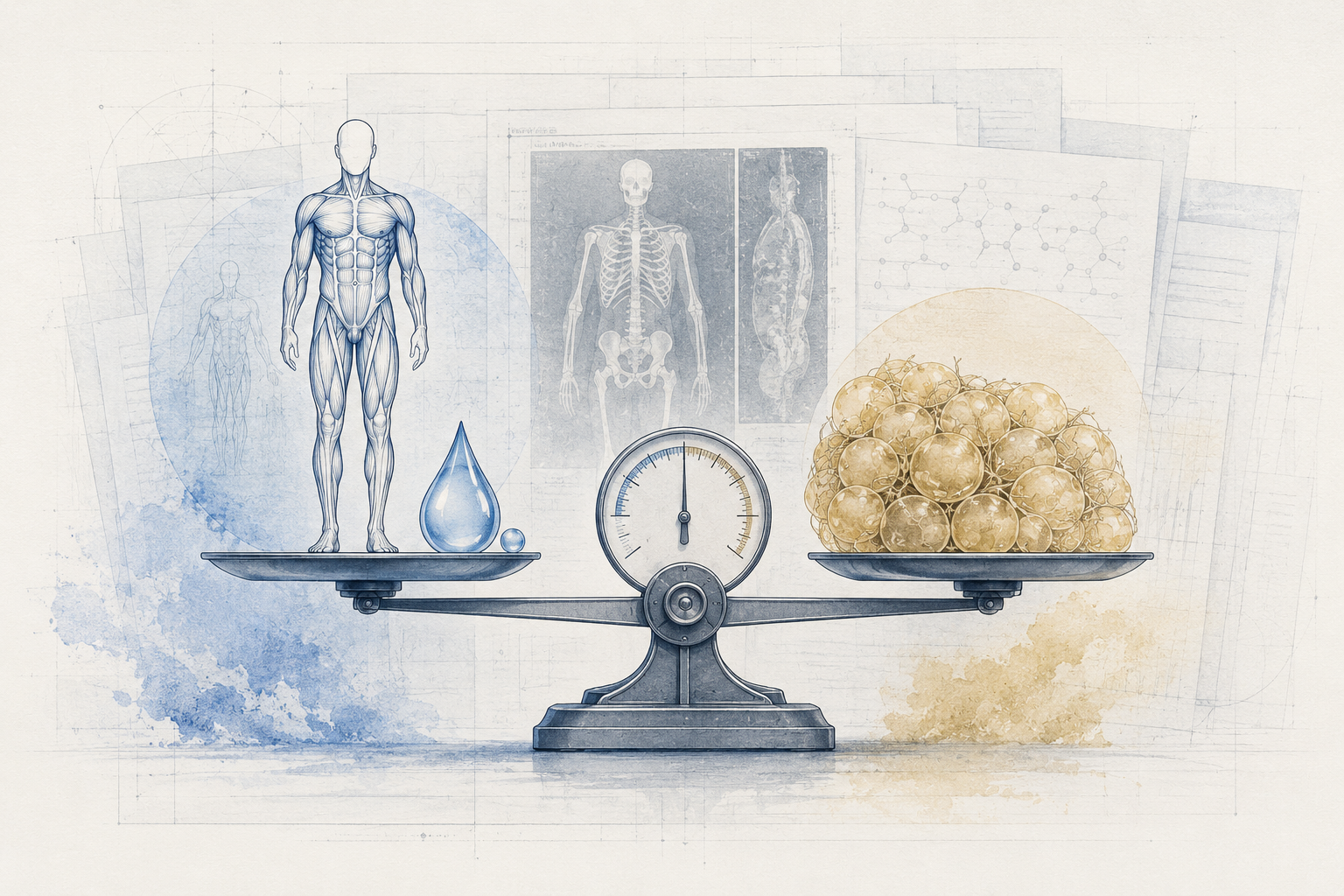
Creatine can increase body weight, so it may seem like an unusual ingredient for a weight-loss program. But scale weight does not distinguish between fat, lean tissue and water.
A 2026 randomized trial therefore addressed a more useful question: can creatine monohydrate support lean tissue while middle-aged adults exercise and reduce calorie intake? The results suggest it can—but they do not turn creatine into a fat-burning supplement.
Does Creatine Cause Weight Gain?
An initial increase in body mass can occur after starting creatine, particularly with a loading protocol. Much of this early change reflects increased body water rather than body fat. Over longer periods, creatine combined with resistance training can also increase fat-free mass.
For someone monitoring only the number on a scale, these changes may look counterproductive. Body-composition measurements provide a clearer picture of whether weight change comes from fat, lean tissue or water.
What Did the 2026 Trial Test?
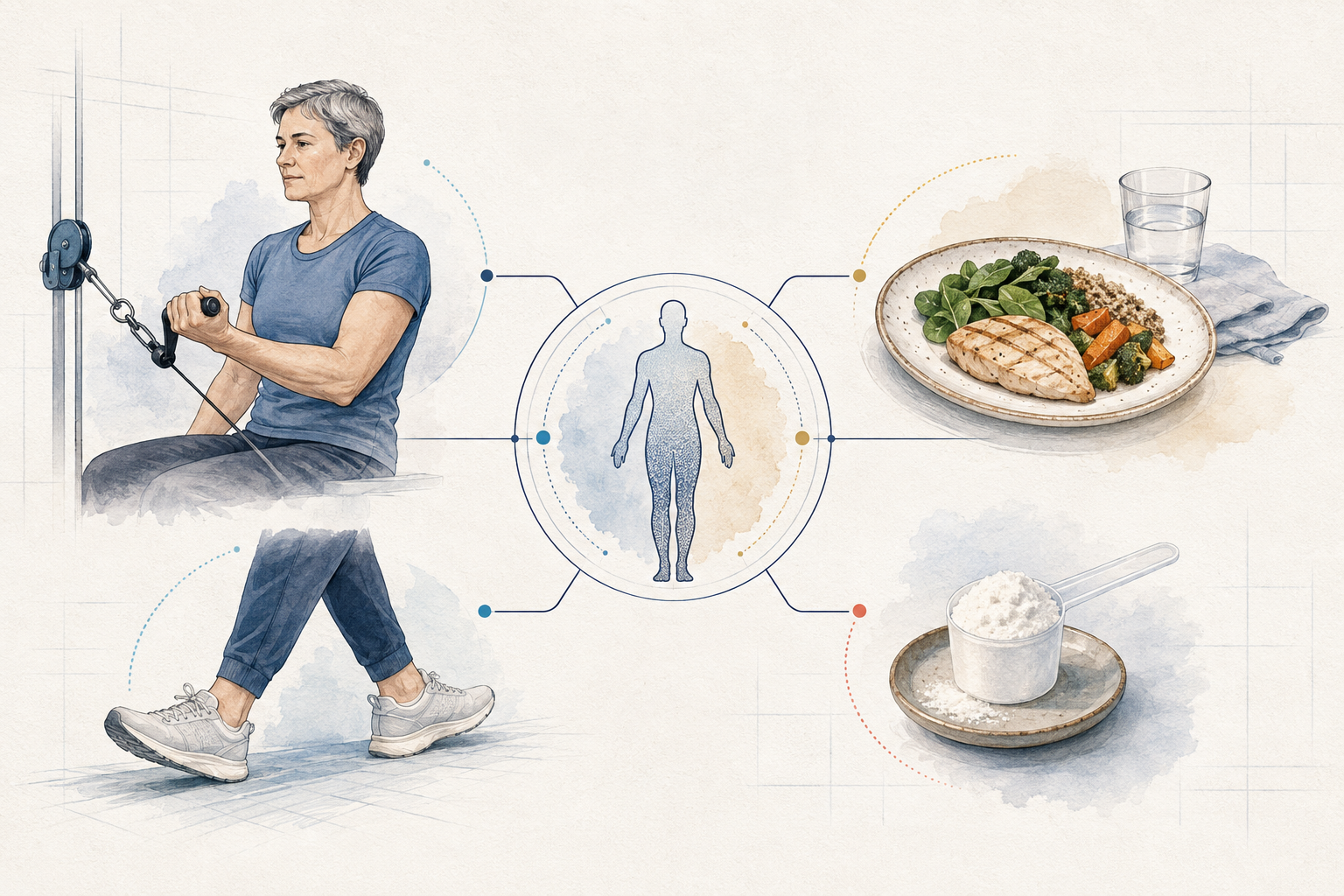
The study enrolled 73 healthy sedentary adults. Sixty-four participants—40 women and 24 men, aged 45–65 years—completed the 12-week intervention and were included in the analysis.
Participants selected either a non-exercise condition or a structured exercise and weight-loss program. Within each pathway, they were randomized to receive 10 g/day of creatine monohydrate or a maltodextrin placebo.
The exercise group completed supervised resistance and aerobic training three times per week, followed an estimated 300–500 kcal daily energy deficit and aimed for 10,000 steps on at least four days per week. Body composition was measured by DXA at baseline, week 6 and week 12.
Because exercise participation was self-selected rather than randomized, comparisons across the exercise and non-exercise pathways require caution.
Did Creatine Preserve Lean Mass During Weight Loss?
In the exercise-and-diet group receiving creatine, DXA-measured lean tissue mass increased by 1.69 kg at week 6 and 1.27 kg at week 12 relative to baseline. The exercise-plus-placebo group showed little corresponding change.
Body fat percentage also fell more in the creatine group. At week 12, the change was −3.24 percentage points with creatine compared with −1.87 percentage points with placebo. Both exercise groups lost fat mass, however, so the difference in body fat percentage likely reflected the combination of fat loss and increased lean tissue—not a direct fat-burning action of creatine.
Creatine without the structured exercise and diet program also increased DXA-measured lean tissue and improved selected strength and endurance outcomes. It did not produce the same reductions in body weight, fat mass or body fat percentage seen in the exercise groups.
Does Creatine Increase Fat Loss?
Current evidence does not support presenting creatine as a thermogenic or standalone fat-loss ingredient.
A 2025 dose-response meta-analysis of 61 controlled trials involving 1,457 participants found that creatine combined with resistance training increased fat-free mass by 1.39 kg and body mass by 0.89 kg. It found no significant overall effect on absolute fat mass, BMI or body fat percentage.
A separate 2023 meta-analysis of 12 trials in adults under 50 found a 1.19-percentage-point reduction in body fat percentage when creatine was combined with resistance exercise, but the change in absolute fat mass was small and not statistically significant.
The most consistent interpretation is that creatine can improve body-composition outcomes by supporting lean tissue and training adaptations. That is different from causing additional fat loss.
What Does This Mean for Product Formulation?
The evidence creates a credible role for creatine monohydrate in products positioned around active weight management, resistance training and healthy aging. Claims should focus on creatine’s established relationship with physical performance and training rather than implying that the ingredient independently reduces body fat.
The 2026 trial used 10 g/day, which should not automatically become a commercial serving recommendation. Common maintenance protocols generally provide 3–5 g/day, and the appropriate dose must also reflect the intended market and applicable claim conditions.
Delivery format affects whether that dose is practical. Powders readily accommodate gram-level servings. Capsules require evaluation of bulk density, fill weight and daily capsule count. Gummies and other moisture-containing systems require finished-product potency and stability testing; a raw-material certificate alone cannot confirm the dose remaining throughout shelf life.
Limitations and Evidence Boundaries
The 2026 trial was small, lasted 12 weeks and studied healthy sedentary adults aged 45–65. Its results may not apply directly to younger athletes, people using weight-loss medication or clinical populations.
DXA measures lean tissue rather than muscle protein. Because creatine can increase intracellular water, part of the reported lean-tissue gain may reflect hydration as well as new tissue. The study also cannot establish that every creatine product will deliver the same outcome.
These boundaries matter when translating research into website copy, product claims and sales materials.
How Can SRS Support Your Creatine Project?
SRS Nutrition Express supplies creatine monohydrate raw material for sports-nutrition, active-aging and weight-management formulations. Available support may include grade-specific specifications, representative certificates of analysis, particle-size information and qualification samples.
Grade selection should be based on the finished application rather than mesh designation alone. Dispersibility may matter most in powders, while density, flow and achievable fill weight become more important in capsule and tablet production. Finished-product performance must still be validated in the intended formulation.
Send SRS your target dose, delivery format, destination market, expected volume and processing requirements. Our team can discuss an appropriate available grade and provide the relevant technical documents and sample options.
Request a creatine monohydrate specification and qualification sample for your next product project.
References
1. Chun J, Liu Y, Kibler GL, et al. Effects of creatine supplementation with and without exercise and diet intervention on body composition, cognitive function, and markers of health in middle-aged and older adults. Journal of the International Society of Sports Nutrition. 2026;23(sup1):2716273.
2. Ashtary-Larky D, Mohammadi S, Hajizadeh L, et al. Creatine supplementation and resistance training: a comparison between novice and experienced lifters—a systematic review and dose-response meta-analysis. Journal of the International Society of Sports Nutrition. 2025;22(sup1):2586523.
3. Candow DG, Prokopidis K, Forbes SC, et al. Resistance exercise and creatine supplementation on fat mass in adults under 50 years of age: a systematic review and meta-analysis. Nutrients. 2023;15(20):4343.
4. Antonio J, Candow DG, Forbes SC, et al. Common questions and misconceptions about creatine supplementation: what does the scientific evidence really show? Journal of the International Society of Sports Nutrition. 2021;18(1):13.
Post time: Sep-02-2026


