

Picture the stairs at home. You could probably walk down them in the dark. Now imagine standing at the top, one hand on the rail, actually thinking about which foot goes first. It’s an odd thing to have to pay attention to something you once did while carrying laundry.
Ask someone what they’re hoping to get back to after a leg cast and you might hear “Sunday football.” Ask what they’d like back first and you might hear “taking my coffee downstairs without asking someone to carry it.” Both are perfectly good definitions of recovery. They’re also a long way apart.
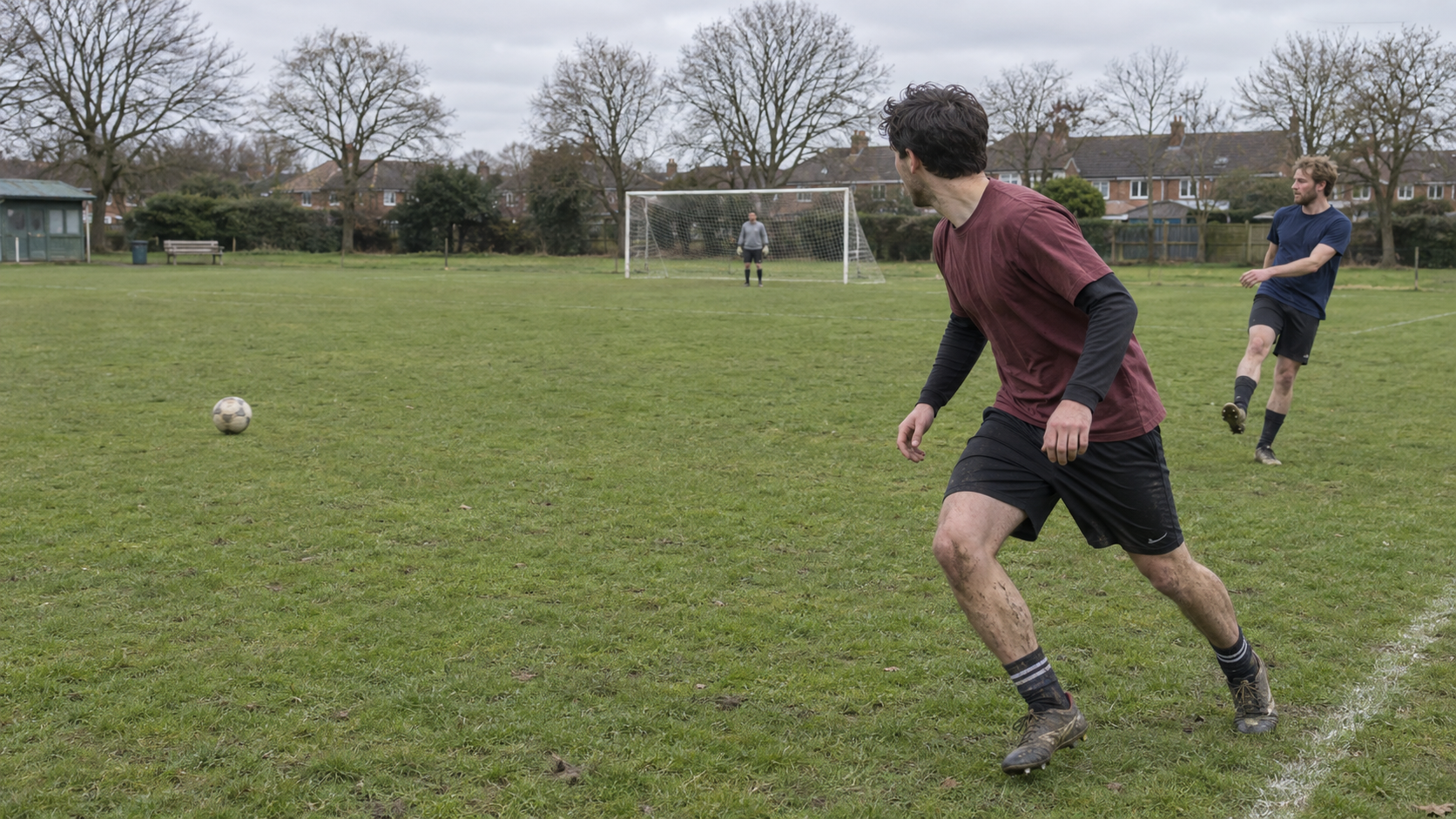
Somewhere between those two ambitions, a friend at the gym might mention creatine. It’s a fair question. If people take it to get more out of strength training, where does it fit when you’re working your way back?
? What Happens While the Kit Bag Sits by the Door?
It’s easy to imagine that taking creatine while the leg is still in a cast might save some work later. Researchers in the Netherlands had an unusually good way to test that idea. Their volunteers were healthy, so the team knew exactly when each leg would go into a cast. Some of the men even had a head start on creatine before the period of inactivity began. [3]
When the casts came off, the researchers scanned their thighs and tested how much weight they could lift by straightening the knee. The men who took creatine had lost about as much thigh muscle and strength as those who took a placebo. In that experiment, starting early bought them no measurable advantage on either test. [3]
↑ The Part Worth Following Came After the Cast
In a separate study in Belgium, volunteers came back to train the leg they’d spent two weeks keeping still. The exercise was a knee extension. Sit down, straighten the knee against resistance, come back and do it again at the next session. It sounds a little dull. For the researchers, that was a virtue: everyone had the same job. [2]
Over ten weeks of training, the volunteers taking creatine regained thigh muscle size and knee-extension power faster than those taking placebo. That’s the part of the research I’d want to hear if I were the one packing my kit bag again. There was a benefit during the fairly unglamorous work of practising a movement and getting stronger at it. [2]
There’s a wrinkle if your friend’s next question is, “So should I start the day the cast comes off?” The creatine group had been taking it before that first session. The study lets us follow how their legs responded once training resumed. It leaves the ideal starting day unanswered. [2]
! Then Somebody Passes You the Ball
On a knee-extension machine, you know which leg will move, in which direction, and when. A teammate sends a pass a little too far to your left and suddenly none of that is settled. Do you plant your foot and turn? Let the ball run? Think about it for a beat and watch it go past?

That gap matters when you see a headline about “faster recovery.” The Belgian researchers could tell you how much power a volunteer produced when asked to straighten a knee. They didn’t send anyone onto a pitch, time a return to competition, or follow the healing of an injury. The volunteers had agreed to wear casts for an experiment. That’s a different starting point from breaking an ankle on a wet pavement. [2]
And the stairs? Nobody asked the volunteers to carry coffee down them either. That doesn’t make the measured gain trivial. It gives it a place in the larger story. A stronger knee extension is one piece of getting your old routines back. How the next step feels, and when a particular activity is appropriate after an injury, are questions to bring to the clinician who knows your leg.
What Have You Heard About Creatine and Recovery?
Seen a creatine product promise a “faster comeback”? Send us the wording and we’ll help you see what the study actually measured. If you’re developing a product, share your draft description and we can look at it together.
Evidence Boundaries
- A 2026 review found six small controlled trials involving short periods of limb immobilization in young people. Findings varied with the limb studied and how researchers measured muscle. [1]
- The ten-week result describes structured retraining in healthy volunteers. The stairs and football scenes illustrate everyday goals outside the study. [2]
Recommended Reading
References
- Pratt J, et al. (2026). Effects of creatine supplementation on lean mass, muscle size and muscle performance during immobilisation and rehabilitation: A systematic review. Experimental Physiology.
- Hespel P, et al. (2001). Oral creatine supplementation facilitates the rehabilitation of disuse atrophy and alters the expression of muscle myogenic factors in humans. The Journal of Physiology.
- Backx EMP, et al. (2017). Creatine Loading Does Not Preserve Muscle Mass or Strength During Leg Immobilization in Healthy, Young Males: A Randomized Controlled Trial. Sports Medicine.
Post time: Nov-25-2026


