

Creatine is often described as an ingredient for strength and performance. Those words are familiar, but they are also broad. A new human trial offers a more useful way to describe its value: after four weeks of supplementation, the clearest changes appeared in how participants jumped.
Published in the European Journal of Applied Physiology in July 2026, the study found improvements in countermovement-jump performance and in the maximum height and flight time achieved during repeated jumps.
These are not abstract laboratory markers. They represent the ability to produce force quickly and repeat explosive lower-body efforts—two qualities that matter in many performance settings.
Four Weeks Produced Measurable Changes
The trial included 20 physically active adults between 18 and 45 years old. Ten received creatine monohydrate and ten received a placebo. Each group included five women and five men.
The daily creatine dose was based on body weight: 0.1 g per kilogram per day. For someone weighing 70 kg, that would equal approximately 7 g daily. Supplementation continued for four weeks, without a traditional loading phase.
Researchers assessed several aspects of physical performance, including countermovement jumps, repeated jumps, sprinting, handgrip strength and isometric lower-body strength.
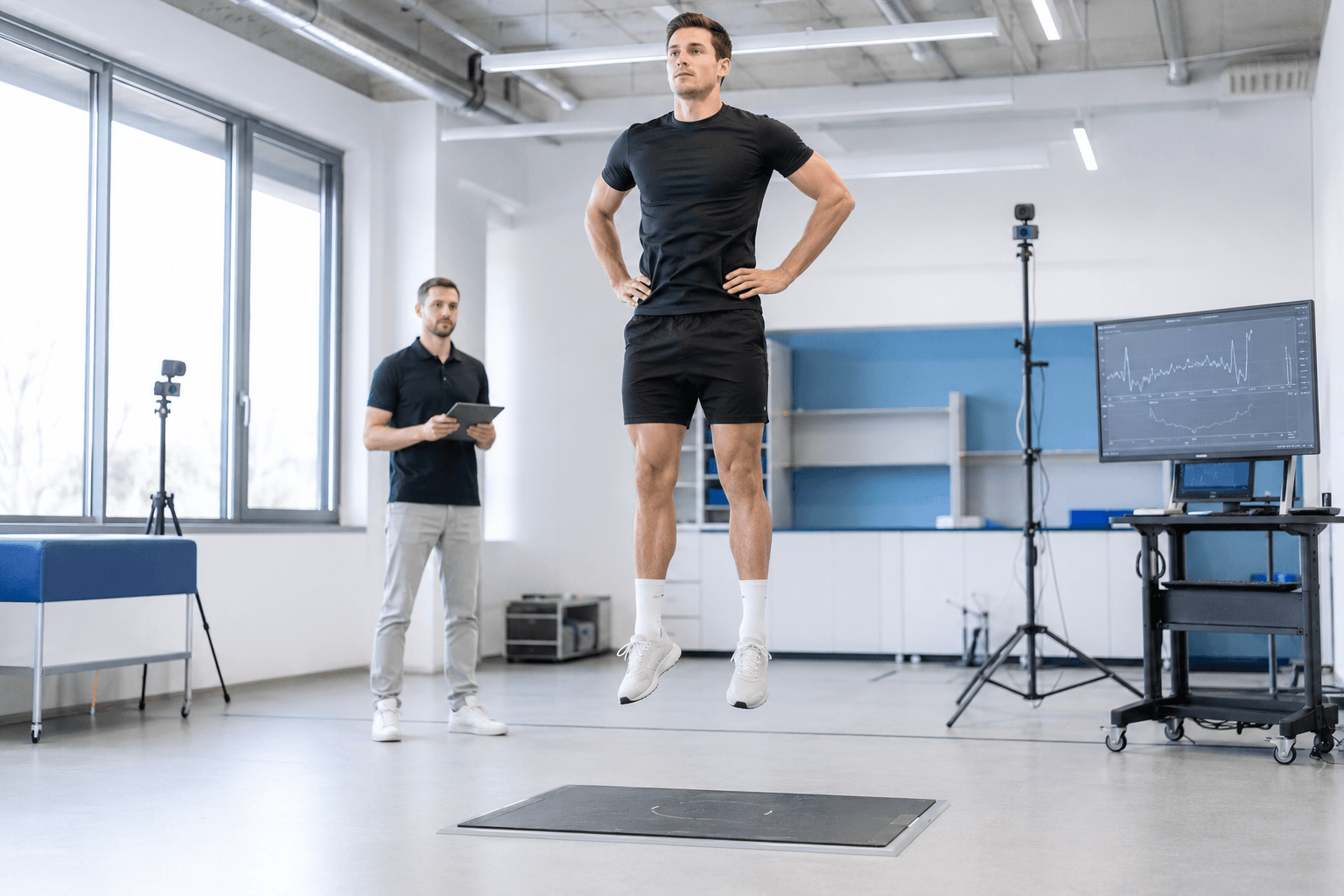
The changes were concentrated in the jumping tests. The creatine group improved its countermovement-jump performance, while maximum height and flight time also increased during repeated jumps. Reported differences reached statistical significance, with P values ranging from below 0.001 to 0.04. Original 2026 trial
The publicly available abstract does not provide the complete percentage change for every jump variable. It would therefore be premature to promise a specific percentage improvement from this single study. What the data do establish is that the changes were measurable, appeared within four weeks and favored selected measures of lower-body explosive performance.
Why Better Jumping Performance Matters
A countermovement jump requires the body to absorb force, reverse direction and produce a powerful upward movement within a very short time. Repeated jumps add another demand: the athlete must reproduce that effort with limited recovery between movements.
Creatine is relevant here because the phosphocreatine system helps regenerate ATP during brief, intense muscular work. Supplementation can increase the creatine available within muscle, giving the body more support for rapid energy turnover.
The practical value is not simply “more energy.” It is the possibility of producing a stronger explosive effort and maintaining high-quality output when those efforts are repeated.
That makes the findings particularly relevant to products developed around:
· lower-body power;
· jumping performance;
· repeated high-intensity exercise;
· rapid force production;
· training formats built around short, demanding efforts.
The trial did not directly measure muscle phosphocreatine or ATP regeneration, so the mechanism should not be presented as an outcome measured by this study. It does, however, provide a well-established biological explanation for the observed performance changes.
Creatine Also Changed Water and Body-Composition Measurements
Performance was not the only area that changed. Compared with placebo, four weeks of creatine supplementation was associated with:
· a 0.3 kg increase in estimated skeletal muscle mass;
· a 1.4 kg increase in total body water;
· a 1.4 kg reduction in measured fat mass;
· a 0.3 kg/m² increase in BMI.
The increase in total body water is expected with creatine and is relevant to how short-term body-composition results are interpreted. Because creatine promotes water retention within muscle, the reported increase in estimated muscle mass cannot automatically be treated as 0.3 kg of newly formed muscle tissue.
These measurements add context, but the main commercial value of this trial lies in the performance results. Four weeks was enough to detect changes in selected explosive movements even without a standardized resistance-training intervention.
The Strongest Response Appeared in Dynamic Lower-Body Tasks
The improvements were not distributed evenly across every test. They were concentrated in movements that required participants to generate lower-body force rapidly.
Countermovement-jump performance improved, as did maximum height and flight time during repeated jumps. By contrast, the study found no significant change in sprinting, handgrip strength or isometric mid-thigh-pull performance.

This pattern helps define what creatine changed during the four-week intervention. The clearest response appeared in dynamic jumping tasks rather than in static strength measurements. Repeated jumping may also be particularly relevant because it places several high-intensity efforts close together, increasing the demand for rapid energy regeneration between movements.
The findings do not mean that creatine only benefits jumping. Other responses may depend on the exercise performed, training status, supplementation period and testing method. In this trial, however, the measurable value was specific: participants improved selected aspects of rapid lower-body force production within four weeks.
This gives the study a more precise conclusion than the broad claim that creatine simply “improves performance.” Its strongest evidence was seen in explosive movements with a clear vertical-jump component.
What About the Vegan Participants?
All participants followed vegan diets, which contain little or no preformed creatine because meat and fish are its principal dietary sources.
This makes the study especially relevant to plant-based performance products. It does not, however, mean the observed benefit is exclusive to vegans. The trial did not include an omnivorous group or measure creatine directly inside the muscle, so it cannot determine whether vegans experienced a larger response.
Commercial creatine monohydrate is normally produced through synthesis rather than extracted from animal tissue. For a finished product to carry a vegan position, brands must still check flavors, carriers, processing aids, capsule shells and certification documentation.
The Bottom Line
After four weeks, creatine monohydrate produced measurable improvements in countermovement-jump performance and in maximum height and flight time during repeated jumps.
The value of these findings is their specificity. Creatine did not merely change a blood marker or theoretical mechanism. It changed selected physical tasks that depend on rapid force production and repeated explosive effort.
Not every performance test improved, so the study should not be turned into a promise of better strength, speed and athletic performance in every situation. But that does not weaken its main result: within four weeks, creatine was already associated with meaningful changes in lower-body explosive performance.
For sports nutrition brands, that creates a focused and credible product position—one built around explosive power, repeated high-intensity output and an evidence-informed daily dose.
SRS Nutrition Express supplies creatine monohydrate in multiple particle-size options for powders, capsules, gummies and performance blends.
Contact us to compare specifications, samples and application performance for your next creatine product.
Reference
López-Moreno M, Muñoz A, Aguilar-Navarro M, et al. Does creatine supplementation improve strength and power in physically active individuals on a vegan diet? A randomized, triple-blind, placebo-controlled trial. European Journal of Applied Physiology. Published July 2, 2026. Original study and DOI. Trial registration: NCT06483321.
Post time: Aug-25-2026


