

“Smaller peptides” sounds like an easy product advantage. In practice, it is an incomplete specification.
Enzymatic hydrolysis can reduce the molecular size of pea protein fractions and improve performance in some formulations. But the result also depends on the enzyme, degree of hydrolysis, peptide distribution, pH, processing conditions and finished-product target. A more extensively hydrolysed protein is not automatically more soluble, better tasting or more suitable for every application.
Degree of Hydrolysis Is Not Peptide Size
Degree of hydrolysis, commonly abbreviated as DH, estimates the proportion of peptide bonds that have been cleaved. Molecular-weight distribution describes how much material falls within different molecular-size ranges.
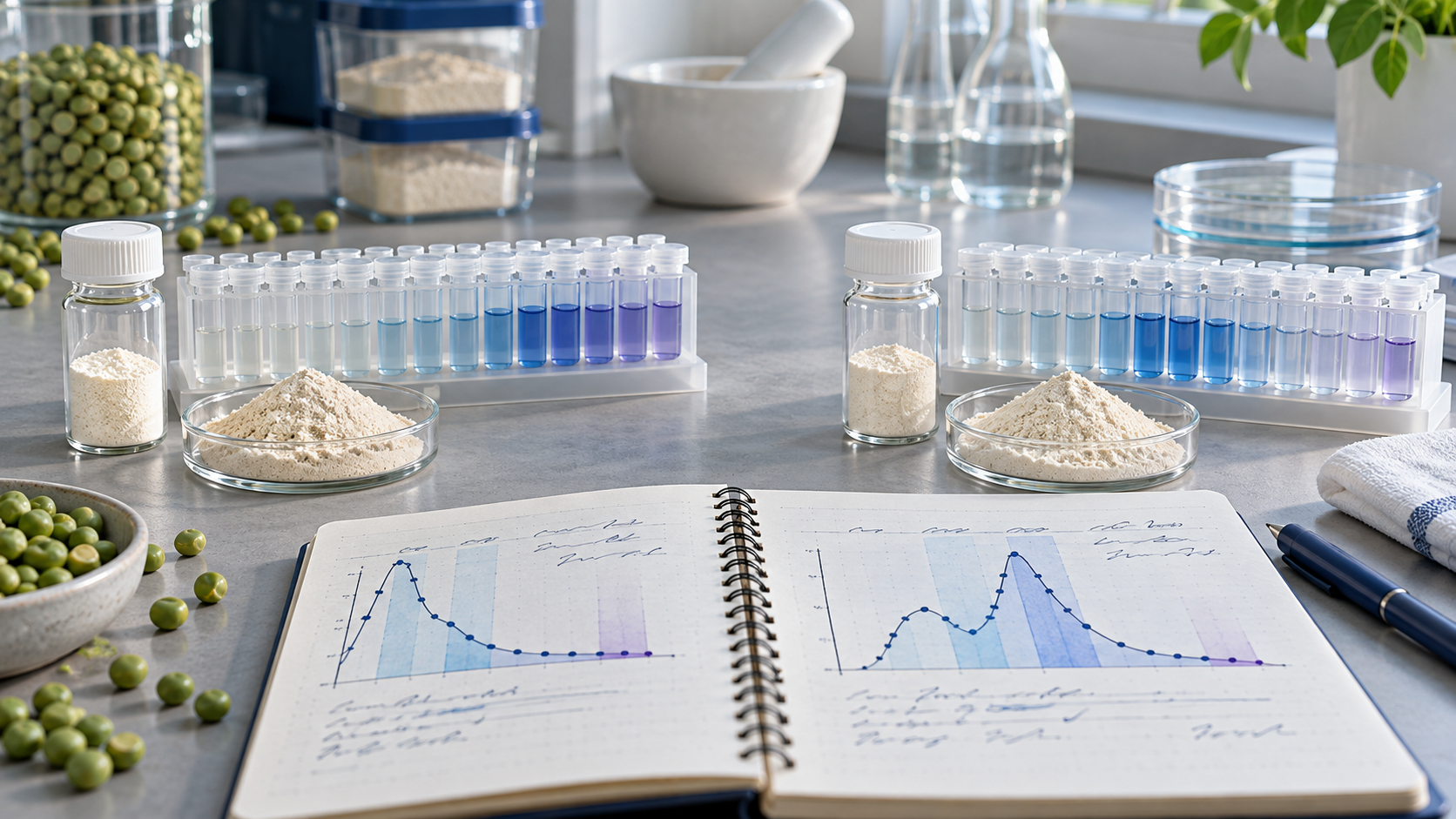
Products with similar DH values can contain different peptide distributions because enzymes do not cut every protein at the same sites.
A supplier should therefore state the method used for DH and, when molecular size is commercially important, provide the relevant molecular-weight test method and distribution—not only an unsupported “low molecular weight” claim.
Can Hydrolysis Improve Solubility?
Hydrolysis can expose polar groups and convert larger protein structures into smaller fractions that disperse more readily. Controlled studies on pea protein have reported improved solubility under selected processing and pH conditions.
However, the effect is not identical at every pH. Recent research found that limited hydrolysis improved pea-protein solubility near its isoelectric region but could reduce total solid solubility at neutral pH, probably because unfolding and heat treatment promoted aggregation.
This is why a general solubility percentage has limited value unless the test identifies the protein concentration, pH, temperature, mixing procedure, centrifugation or filtration conditions and calculation method.
Does More Hydrolysis Mean More Bitterness?
Frequently—but not inevitably.
A pea-protein study using different enzymes and treatment times found that bitterness was strongly correlated with DH. Another study found that Alcalase generated a more bitter hydrolysate than papain or α-chymotrypsin, demonstrating that enzyme choice also matters.
Hydrolysis can release hydrophobic peptides associated with bitterness. Yet taste cannot be predicted from DH alone because peptide sequence, free amino acids, residual pea flavours and downstream processing all affect the sensory result.
A technically impressive DH may therefore create a harder flavour-masking problem in ready-to-drink beverages, gummies or lightly flavoured powders.
Are Smaller Peptides Better for Every Format?
The desired profile depends on the application.
Clear or acidic beverages
The priority may be dispersion and reduced sediment under the intended pH, heat treatment and mineral content. A bench test in neutral water cannot establish performance in an acidic beverage.
Powdered sports nutrition
Taste, mouthfeel, protein content, powder flow and reconstitution may matter more than achieving the smallest possible peptide fraction.
Bars and high-protein foods
Water binding and texture can be as important as solubility. Excessive hydrolysis may change structure or create an undesirable soft, sticky or bitter product.
Capsules or tablets
Density, hygroscopicity, flow and serving size may become more commercially relevant than beverage clarity.
The grade should therefore be selected against the finished-product brief, rather than against one isolated technical number.
? What Should Buyers Request?
- ✔ protein content and reporting basis;
- ✔ source material and manufacturing process;
- ✔ degree of hydrolysis with method;
- ✔ molecular-weight distribution with method;
- ✔ solubility or dispersibility under defined conditions;
- ✔ sensory information at a relevant use level;
- ✔ moisture, microbiology and heavy-metal limits;
- ✔ bulk density and particle-size information;
- ✔ recommended storage and packaging;
- ✔ representative batch data and a formulation sample.
Do not assume that results produced by different methods are directly comparable. Even “solubility” can describe different analytical procedures, and earlier pea-protein research found that different solubility methods produced materially different assessments.
Test the Complete Formula, Not Just the Ingredient
The final decision should be based on the real product matrix.
Prepare pilot samples at the intended protein dose, pH, sweetener system, flavour level and processing temperature.
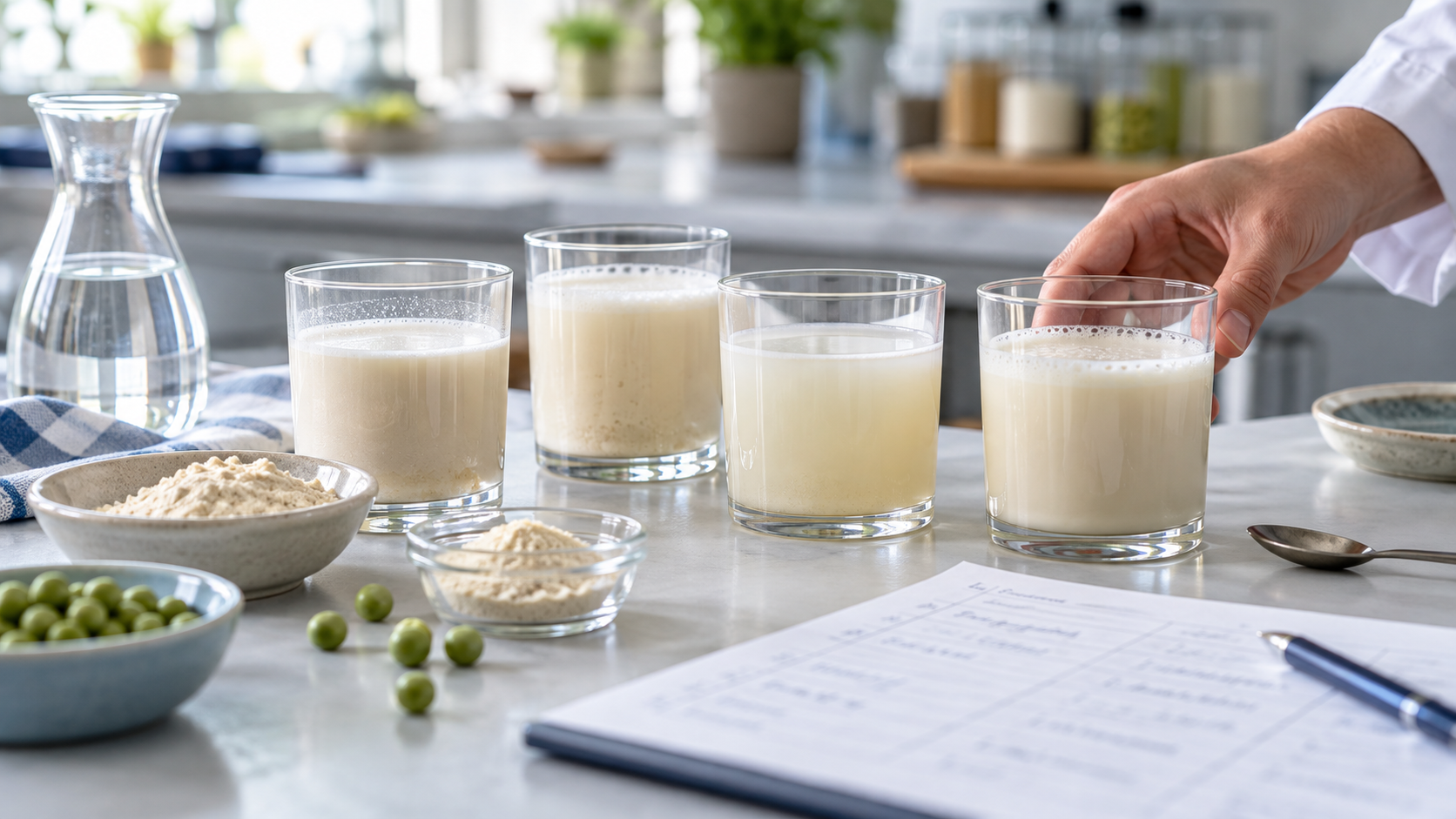
Monitor initial dispersion, sediment, viscosity, taste and stability throughout the intended shelf life.
If bitterness requires so much flavour masking that sugar, sweetener or flavour cost becomes impractical, the ingredient may not be the best commercial option—even if its laboratory specifications appear advanced.
Evaluate Pea Protein Hydrolysate With SRS
SRS Nutrition Express can provide pea protein hydrolysate specifications, representative batch documentation and qualification samples for formulation trials.
Share your dosage form, protein target, use level, pH, processing conditions, sensory requirements and destination market. SRS can help identify an appropriate grade for internal evaluation, while the final formula still requires application-specific sensory and stability testing.
Evidence Boundaries
- A higher DH does not guarantee superior performance in every application.
- DH and molecular-weight distribution are related but different measurements.
- Improved water dispersion does not prove stability in a finished beverage.
- Smaller peptides may increase bitterness depending on their sequence and the enzyme process.
- Published results from experimental pea proteins do not automatically describe every commercial SRS batch.
Recommended Reading
- Does Extrusion Improve Pea Protein Nutrition? What a 2026 Trial Found
- Pea Protein vs Whey After a Meal: What a 2026 Trial Found
References
- Arteaga VG, Guardia MA, Muranyi I, Eisner P, Schweiggert-Weisz U. Effect of enzymatic hydrolysis on molecular weight distribution, techno-functional properties and sensory perception of pea protein isolates. Innovative Food Science & Emerging Technologies. 2020;65:102449.
- Humiski LM, Aluko RE. Physicochemical and bitterness properties of enzymatic pea protein hydrolysates. Journal of Food Science. 2007;72(8)–S611.
- Klost M, Drusch S. Functionalisation of pea protein by tryptic hydrolysis—Characterisation of interfacial and functional properties. Food Hydrocolloids. 2019;86:134–140.
- Fu Y, Chen J, Bak KH, Lametsch R. Valorisation of protein hydrolysates by their use as functional ingredients. Food Bioscience. 2019;30:100386.
- Nielsen PM, Petersen D, Dambmann C. Improved method for determining food protein degree of hydrolysis. Journal of Food Science. 2001;66(5):642–646.
Post time: Oct-09-2026


