

Sports nutrition is expanding into more of the day: a morning protein drink, hydration during travel, recovery after training and support for an active later life.
For ingredient buyers and supplement brands, this creates room for more targeted products. It also makes the relationship between consumer need, scientific evidence and finished-product performance more important.
A Broader Audience Requires More Specific Nutrition
Professional athletes and committed gym users remain important, but they are no longer the only consumers informing product development. Recreational exercisers, active women, older adults and people managing their weight bring different priorities.
For everyday users, protein, hydration and recovery products need to fit ordinary routines. Preparation time, serving size, taste and portability can determine whether a product becomes a regular habit.
Women’s sports nutrition also deserves more precise development. Protein intake, creatine, iron status and bone health are relevant areas to evaluate, while midlife products may address changing strength and muscle-health priorities. These are separate nutritional questions: a women’s formula should follow a defined need, and iron should not become an automatic addition.
Older adults may place greater value on strength, mobility and maintaining independence than on athletic performance. Segmentation therefore needs to go beyond changing the label on an existing gym product.
Recovery Still Matters, but Ingredients Have Different Jobs
Recovery remains a core application. Protein supplies amino acids, carbohydrate helps replenish glycogen, and electrolytes contribute to replacing minerals lost through sweat.
Whey, casein and plant proteins offer different formulation options. Essential amino acids, tart cherry preparations and other ingredients may also enter the discussion, but their relevance depends on the specific outcome, material, dose and exercise conditions.
Creatine monohydrate remains the most extensively studied creatine form, with established evidence supporting high-intensity exercise performance and training adaptations.[3] Research into cognition, women’s health and aging broadens the conversation, but these applications should not be presented as equally established.
When evaluating another creatine form, compare human evidence, effective intake, stability and cost. Novelty or an absorption claim alone is insufficient grounds for assuming a better finished product.
Hydration Is Expanding Into Everyday Use
Hydration products now span exercise, outdoor activities, travel and daily routines. Grand View Research reports that sports drinks accounted for 38.7% of sports nutrition market revenue in 2025.[1]
The formulation brief should reflect the occasion. A low-sugar everyday drink and a product intended for prolonged endurance exercise may have different carbohydrate, sodium and preparation requirements.
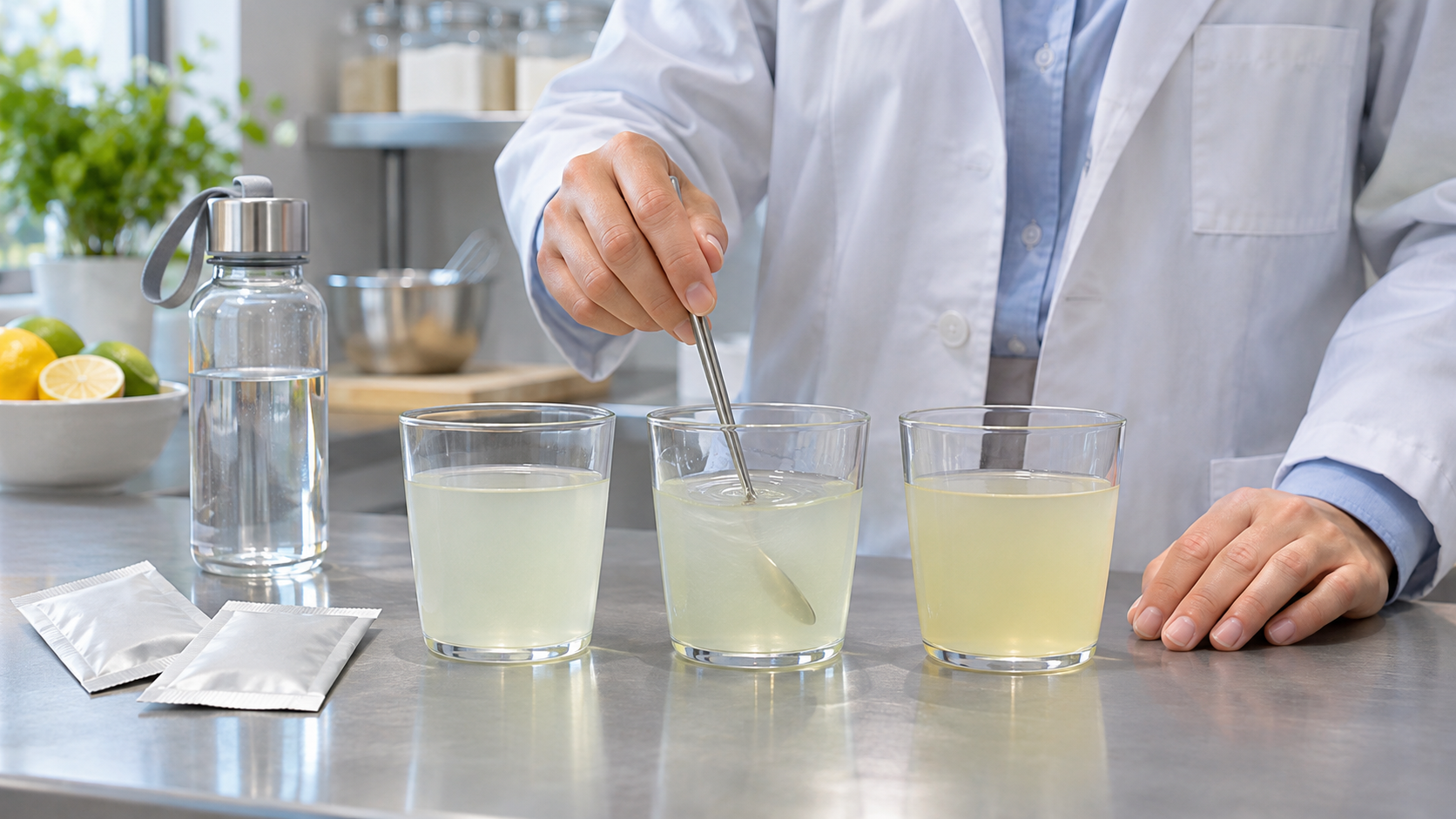
Sodium concentration, carbohydrate concentration and osmolality deserve attention. For mineral salts, distinguish ingredient weight from the amount of elemental sodium, potassium or magnesium delivered. Compare solubility and flavour in the prepared drink.
More electrolyte types or a longer ingredient list do not establish better hydration. Specify the intended dilution and use conditions, then test the complete formula.
Wearable sweat analysis may eventually support more tailored strategies. Sampling conditions and interpretation still matter; a device result should not automatically become an individualized formulation prescription.
Cognition Creates Opportunities Beyond Stimulation
Focus and mental performance are attracting interest alongside physical performance. Caffeine, L-theanine and alpha-GPC appear in development discussions, but each requires its own assessment.
Human trials of caffeine with L-theanine have reported benefits on selected cognitive and mood measures. For example, Haskell and colleagues tested 250 mg L-theanine and 150 mg caffeine, alone and in combination.[4] This is a study protocol, not a universal commercial ratio.
Creatine is also being investigated under conditions such as sleep deprivation. A 2024 controlled crossover study reported cognitive and brain-energy changes after a single high dose during sleep deprivation.[5] Those findings cannot be generalized to routine low-dose use in well-rested consumers.
Stress and Sleep Are Becoming Part of the Recovery Brief
Ashwagandha and rhodiola are being explored for applications involving stress, fatigue and exercise recovery.
A 2026 narrative review in Nutrients found that evidence was most consistent for selected ashwagandha preparations, while findings for other adaptogens remained preliminary. Studies were limited and heterogeneous, with female athletes underrepresented.[6]
For buyers, “ashwagandha extract” is an incomplete specification. Species, plant part, extraction, standardization and studied dose matter. A botanical’s traditional reputation cannot establish the effects of any extract sold under its name.
Sleep is another important part of recovery. A small study in collegiate basketball players associated sleep extension with improvements in selected performance measures.[7] It studied additional sleep, rather than a sleep supplement.
Magnesium, glycine, L-theanine and melatonin may be considered for evening concepts, but they do not share the same evidence or regulatory status. Assess the proposed ingredient, population and claim separately, and check destination-market requirements before development.
Healthy Aging Gives Protein a Wider Role
Maintaining muscle, strength and physical function connects sports nutrition with healthy aging.
The PROT-AGE Study Group recommended approximately 1.0–1.2 g protein/kg body weight/day for healthy older adults over 65, with needs adjusted for health and activity.[8] This concerns total daily dietary protein; it is not a recommended amount for one supplement serving.
Protein intake and resistance exercise belong in the same discussion. Essential amino acids, creatine, HMB, vitamin D and omega-3s may also be evaluated for defined nutritional objectives. Their roles and evidence differ, so they should not be treated as interchangeable muscle-health solutions.

Weight Management Raises the Importance of Nutrient Density
Weight-management development increasingly includes muscle maintenance and nutritional adequacy alongside changes in body weight.
GLP-1 therapies sharpen this issue because reduced appetite and food intake can make adequate nutrition harder to achieve. A 2025 joint advisory from four professional societies emphasizes nutrient-dense diets, appropriate protein intake, strength training and individualized care.[9]
For brands, this suggests evaluating manageable portions, meaningful protein contributions and acceptable drinking or eating experiences. It does not establish that a branded “GLP-1 support” product prevents muscle loss or replaces professional nutrition care.
Formulation Quality Will Determine Which Concepts Survive
Multifunctional products need enough room for the intended doses. Protein, creatine and some amino acids require gram-scale inclusion, making powders worth evaluating before committing to capsules or small tablets.
Plant-based development adds further choices. Compare amino acid profiles, leucine content, digestibility information and sensory performance. Blending plant sources, or combining dairy and plant proteins where positioning allows, should serve a defined nutritional or product objective.
Then evaluate the complete recipe. Protein can affect texture and viscosity; caffeine and amino acids can introduce bitterness; minerals and botanical extracts can complicate flavour. Mixing, flow, filling, packaging and shelf-life performance also need validation.
Quality assurance remains essential, particularly for products intended for tested athletes. Review identity, assay, relevant contaminants, traceability and change control. Verify the scope of any third-party certification: manufacturing-system certification and finished-product testing for prohibited substances address different questions.
Planning a 2027 product?
Contact SRS Nutrition Express with your target consumer, format, daily intake, destination market and expected volume. Discuss ingredient grades, specifications, supporting documents and samples before committing to a commercial order.
Evidence Boundaries
- Market estimates and industry outlooks describe commercial expectations, not guaranteed demand or clinical efficacy.
- Evidence depends on the ingredient form, dose, population, duration and outcome. It does not automatically transfer to a finished blend.
- Sleep-deprivation research does not establish that creatine replaces sleep; sleep-extension research does not validate a supplement.
- Adaptogen findings remain limited and extract-specific. The GLP-1 advisory concerns nutrition and clinical care, not validation of a commercial supplement.
- The development implications above are editorial interpretation. Final formulation and claims require product- and market-specific assessment.
Recommended Reading
References
- Grand View Research. Sports Nutrition Market Size & Share Report, 2026–2033.
- Anthonavage M. (2026, November 2). Sports Nutrition Trends in 2027: How the Category Is Expanding Beyond Performance. Vitaquest.
- Kreider RB, et al. (2017). International Society of Sports Nutrition position stand: safety and efficacy of creatine supplementation in exercise, sport, and medicine. Journal of the International Society of Sports Nutrition, 14:18.
- Haskell CF, et al. (2008). The effects of L-theanine, caffeine and their combination on cognition and mood. Biological Psychology, 77:113–122.
- Gordji-Nejad A, et al. (2024). Single dose creatine improves cognitive performance and induces changes in cerebral high energy phosphates during sleep deprivation. Scientific Reports, 14:4937.
- Książek A. (2026). Current Evidence and Practical Considerations for Adaptogen Use in Exercise Recovery, Training Adaptation, and Exercise Performance in Athletes: A Narrative Review. Nutrients, 18:2552.
- Mah CD, et al. (2011). The Effects of Sleep Extension on the Athletic Performance of Collegiate Basketball Players. Sleep, 34:943–950.
- Bauer J, et al. (2013). Evidence-based recommendations for optimal dietary protein intake in older people: a position paper from the PROT-AGE Study Group. JAMDA, 14:542–559.
- Mozaffarian D, et al. (2025). Nutritional priorities to support GLP-1 therapy for obesity: A joint advisory. Obesity Pillars, 15:100181.
Post time: Nov-23-2026


