

Picture a team dietitian standing beside a delivery of creatine. The front of the tub gives the serving size in large type. The number she photographs is in small inkjet print on the bottom. She sends the distributor a picture with one question: “Can you show me the tested batch that matches this?”
Try answering that email from the distributor’s desk. You have the product brochure, a certificate of analysis for the bulk creatine and a copy of the label artwork. Which one can you send back? To answer her specific question, you need to know which finished tub she is holding and where its batch can be verified. That distinction can matter to a distributor promising a team its first delivery on Monday.
Start With the Number She Can See
Consider a team that has specified Informed Sport in its tender. The programme gives buyers a practical way to check a delivery. Search its directory by product or brand, open the exact product, then compare the tested batch entry with the batch printed on the pack. The programme describes testing each batch of certified product before release, including flavour variants. [1,2]
There is a reason to do that last step even for a familiar brand. A barcode scan can get someone to a product page. The printed lot code goes one step further and identifies the production batch in their hands. If a distributor has sent two lots in the same delivery, photograph a tub from each and look up both. That makes the answer useful to the person who will unpack the second carton tomorrow.
If the code on the tub and the directory entry do not match, send the brand or certification body the photograph and exact product name. A missing match leaves the question open. It is too early either to confirm the batch or to conclude there was contamination.
Follow the Lot Back One Door
Now imagine a private-label order. A contract packer receives a drum of unflavoured creatine monohydrate and fills it into tubs. The ingredient supplier’s certificate carries the drum lot. The packer assigns a finished lot to the filling run. Both numbers can be correct, even though the characters on the two documents look nothing alike.
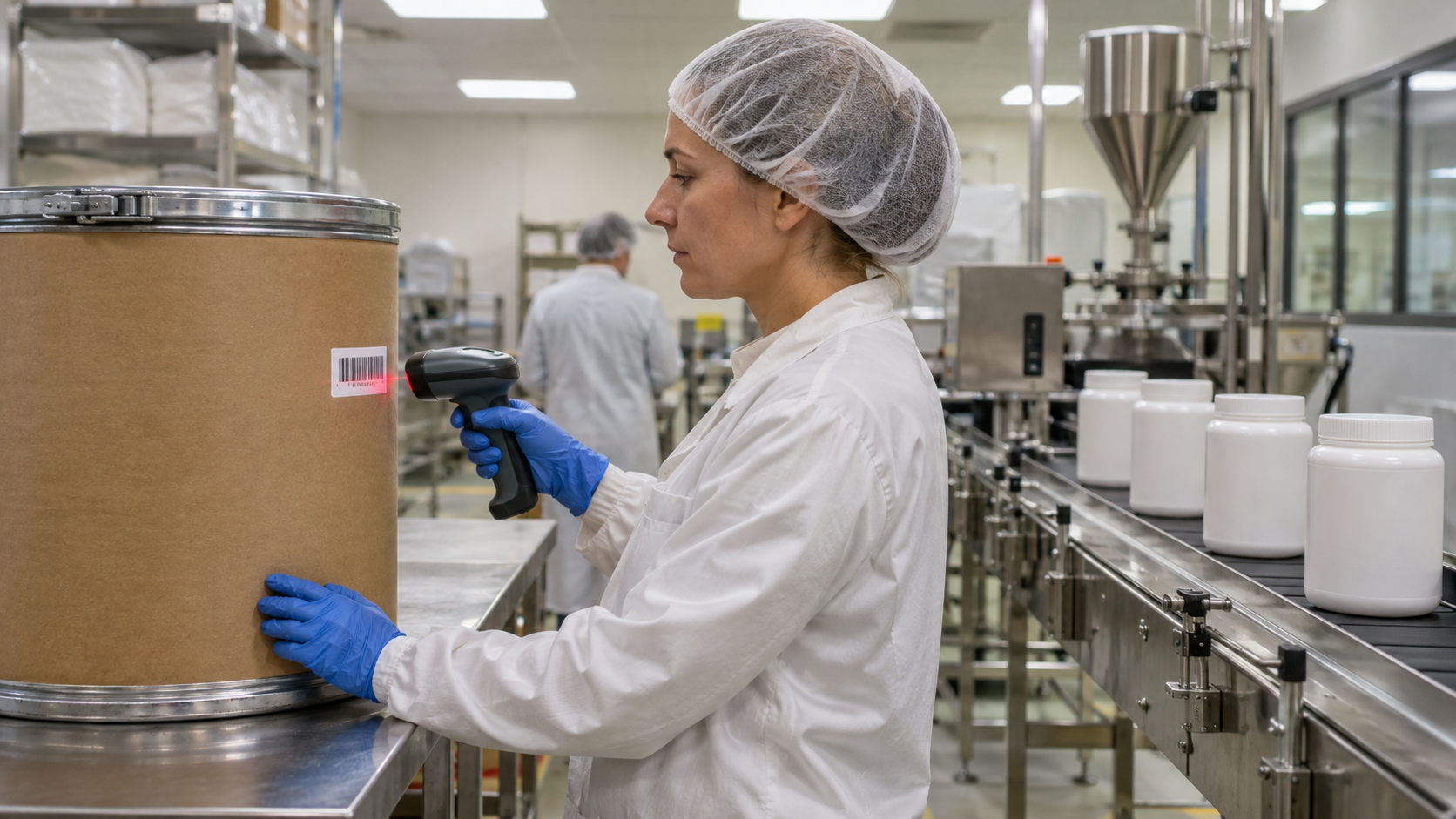
The packing record connects them. It can tell the brand which ingredient lot went into the team’s tubs. The raw-material certificate can then answer questions about the tests it actually lists, such as identity, assay or specified impurities. The certifier’s finished-batch entry answers a separate question about that product under its programme. A high assay result alone gives the dietitian no information about which prohibited substances were screened.
This is where an ingredient partner can make the brand’s job easier. For a proposed SRS creatine monohydrate lot, the brand can request the applicable specification and lot-specific COA, then have its packer retain the link to the finished run. Keeping those details together makes it much easier to trace a customer question back to the material actually packed.
The Second Delivery Is Where the Deal Can Unravel
The first order goes smoothly. Six weeks later, the team reorders the same tubs. The distributor has enough stock if it combines the end of one pallet with the start of another. The original product link still opens, the artwork matches and the invoice reads exactly as before. Only the inkjet codes have changed.

For that second order, a useful dispatch note would identify each finished lot being shipped and give the buyer the corresponding verification details. This is also a sensible moment to ask about substitutions. If the club agreed to unflavoured powder, an offer to fill the shortfall with lemon flavour deserves its own check. Informed Sport explicitly includes flavour variants in its batch-testing requirements. Other programmes have their own rules, so the buyer’s named programme belongs in the order brief. [1]
One line a buyer could add to an enquiry is: “Please identify the certification programme for the finished product and tell us how we can verify each lot supplied, including any proposed replacement.” That sentence gives the distributor enough information to quote the right order and the dietitian something concrete to check on arrival.
Sourcing Creatine for a Team or Private-Label Order?
Send SRS the relevant line from your buyer’s brief and tell us whether you need bulk monohydrate or documentation for a finished pack. We can confirm which ingredient-lot records are available for the proposed supply and identify what your packer or certification body would need to provide.
Evidence Boundaries
- The team, delivery and reorder above are illustrative purchasing scenarios. The verification example follows Informed Sport’s published process.
- Third-party sports certification helps reduce risk. USADA does not approve supplements, and no certificate guarantees zero risk. [3]
- Certification status must be verified for the named product and applicable batch. No SRS ingredient or finished product is represented here as holding a particular sports certification.
Recommended Reading
References
- DelBiondo GM, et al. (2026). Novel creatine formulation exhibits similar serum creatine concentrations and pharmacokinetics to creatine monohydrate in healthy adults. Journal of the International Society of Sports Nutrition.
- ClinicalTrials.gov. Impact of OptiCreatine on Plasma Creatine and Gastrointestinal Effects in Males and Females. NCT07225335.
Post time: Nov-26-2026


