

A 300 g tub should be traceable back to the creatine that entered the packing line. Changing the container does not remove the need to identify the original lot, document the packing operation and show where the finished units were sent.
For a brand buying bulk creatine and arranging retail packing, these links should be agreed before artwork approval. A supplier COA is useful, but it cannot describe operations that happened after the raw material left the supplier.
Link the Original Lot to the Packing Run
Record the supplier, manufacturer information where applicable, product grade, original lot number, received quantity and quality status. Preserve the link when your system assigns an internal material code.
Then connect that material to the packing date, line and finished-product lot. If one raw-material lot supplies several packing runs, each run should point back to it. If an approved process uses more than one raw-material lot, record every contribution rather than replacing the history with one new number.
Reconcile the Material Actually Used

For illustration, 80 tubs labelled 300 g represent 24 kg of declared net contents. If 25 kg of material was issued, that arithmetic alone does not explain the remaining kilogram. Actual filled weights, unused returned material, samples and documented losses must be reconciled against the quantity issued.
The example is not a permitted loss allowance or a filling tolerance. It shows why counting finished tubs is only part of the record. In the US dietary-supplement context, batch records address component quantities, yields, packaging and label identifiers, and related checks. [1]
Keep the Label Version With the Finished Lot
The product name, grade or ingredient description, net contents, lot coding and applicable date information should match the approved brief and destination-market requirements. Keep the approved artwork version linked to the run, including any changes to the tub, liner, closure or label.
A new packing date does not, on its own, justify extending the ingredient’s usable period or assigning a fresh full shelf life. Agree the basis for the finished-product date before labels are printed, with support for the actual packaging and storage conditions.
Distinguish Incoming Approval From Packed Product Release
Incoming checks establish whether the bulk material can be used. Packing checks address what happened next: line clearance, the correct packaging and label, net-content controls, closure condition and any testing required by the release plan.
Keep the incoming COA available and clearly identified. Do not present it as a laboratory report for the retail lot if the packed product was not tested under that report. Define who reviews the packing records and who authorises dispatch.
Retain Samples and Know Where the Tubs Went
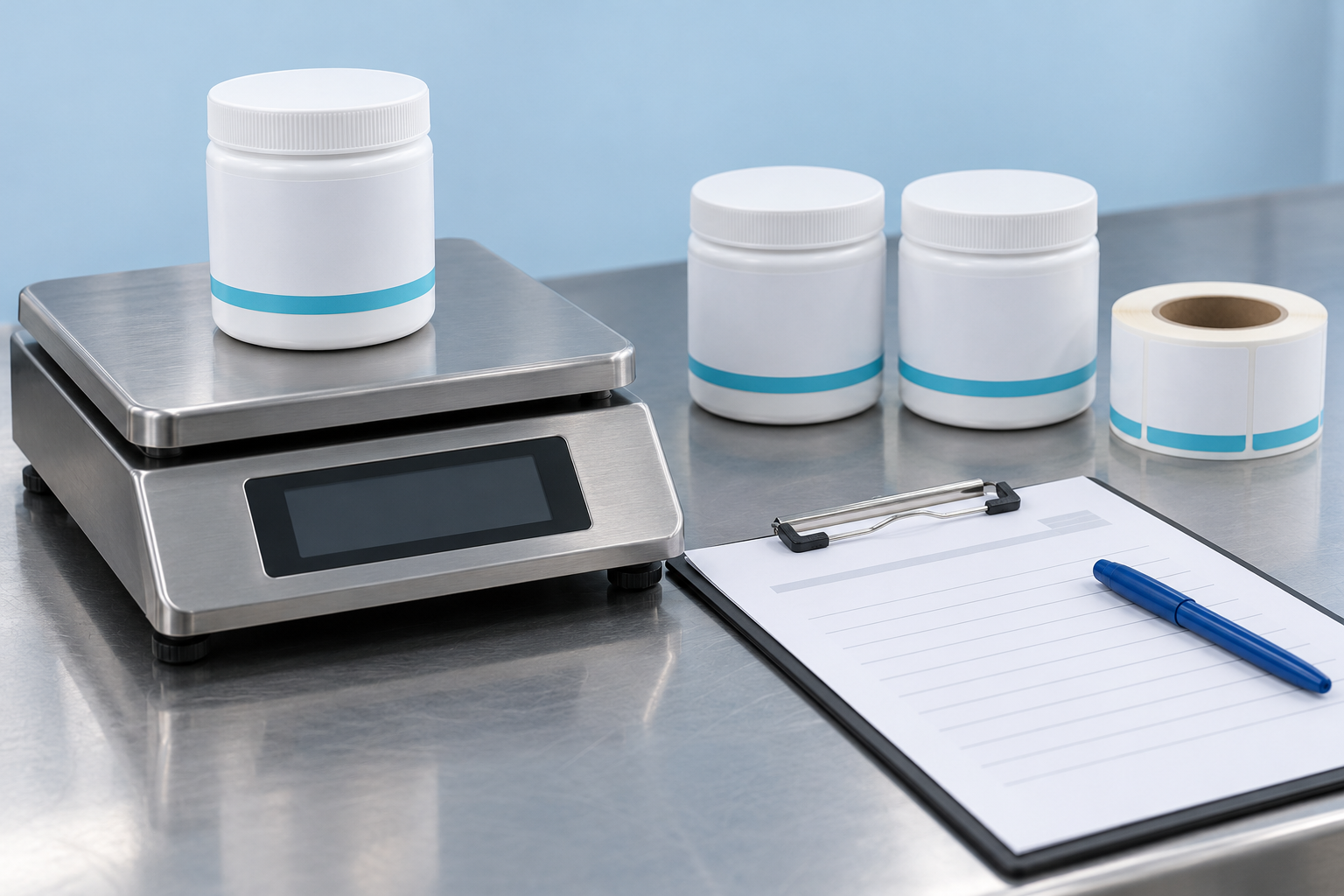
A raw-material retain and a packed retail retain answer different questions. The first supports investigation of the incoming material; the second also represents the container and packing operation. US dietary-supplement rules address protective storage and the container-closure system used for reserve samples. [2]
Connect finished lots to dispatch records, customers and quantities. A useful practical check is to select one retail lot and ask whether the team can retrieve its original material records, packing details and distribution history without relying on someone’s memory.
Send SRS a Repacking Brief That Goes Beyond Tub Size
For a creatine packaging enquiry, share the destination market, intended pack size, order quantity, approved grade and whether SRS will supply the raw material. Include artwork status, required batch coding, date requirements and the documents your team expects at release.
SRS Nutrition Express can review the proposed project and discuss available supply and packaging options. Confirm the agreed record package, testing responsibilities and release arrangements in the project scope so the finished tub has a documented history as well as a finished label.
Evidence Boundaries
-
The 25 kg and 80-tub calculation is illustrative; it is not an SRS yield record, loss allowance or filling tolerance.
- US dietary-supplement provisions are identified as examples within their own scope; they are not presented as universal rules for every market.
- Repacking does not itself establish a new shelf life. The actual product, package and dating basis require review.
- The article does not describe a verified SRS customer batch or a standard documentation package available for every project.
Recommended Reading
References
1. Electronic Code of Federal Regulations. 21 CFR 111.260. What must the batch record include?
2. Electronic Code of Federal Regulations. 21 CFR 111.465. What requirements apply to holding reserve samples of dietary supplements?
Post time: Oct-20-2026


