

A pea protein COA may list hundreds of pesticide results as “not detected.” That can be reassuring—but it does not answer every compliance question.
The difficulty begins when a residue is detected at a low level, when the laboratory reports a substance that is not included on the routine COA, or when an MRL established for raw peas must be interpreted for a concentrated protein ingredient.
Start With the Correct Commodity and Residue Definition
EU maximum residue levels are generally established for raw agricultural commodities. Regulation (EC) No 396/2005 also covers processed foods, but Article 20 requires changes caused by processing or mixing to be considered when no specific MRL exists for the processed product.
! Before judging a pea protein result, buyers should confirm:
- ✓ the pesticide and applicable residue definition;
- ✓ the raw commodity used;
- ✓ whether the material is a concentrate, isolate or hydrolysate;
- ✓ the analytical method and reporting limit;
- ✓ whether the result is expressed on an as-is or dry-weight basis;
- ✓ the destination market and intended finished-product use.
The European Commission’s pesticide database is useful for research, but the Commission states that it is informational and has no independent legal value. The applicable legislation and its current amendments remain the controlling source.
What Does a Processing Factor Actually Mean?
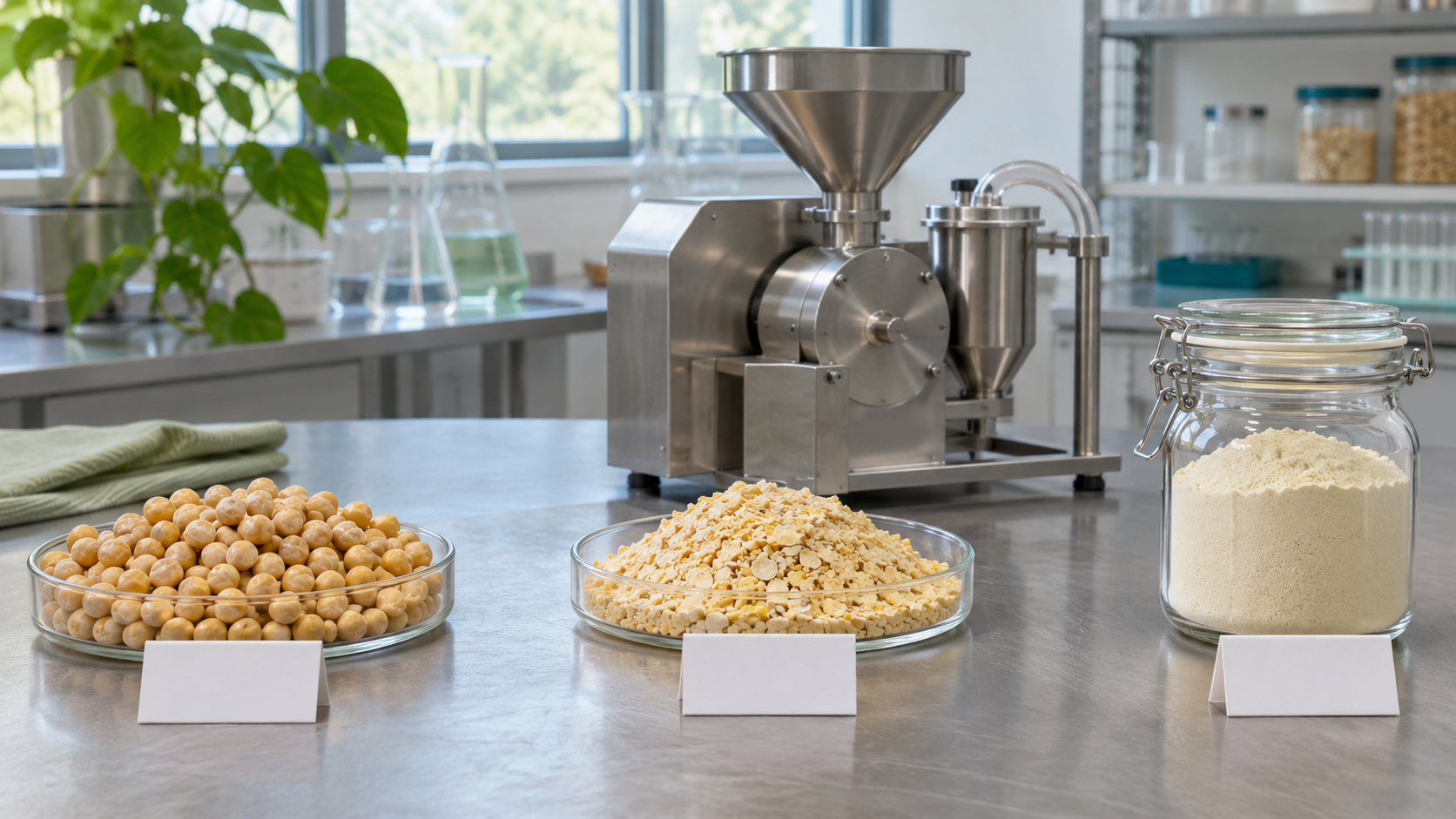
A processing factor is commonly expressed as:
A value below 1 suggests reduction during processing. A value above 1 suggests concentration.
That does not mean every pea-protein process shares one factor. Dehulling, soaking, separation, washing, drying and fractionation may affect residues differently. The pesticide’s chemical properties and the manufacturer’s actual process also matter.
EFSA’s 2024 database contains 2,651 studies and 4,229 median processing factors. Even so, it does not provide a validated factor for every pesticide–commodity–process combination.
Why the Supplier COA May Not Be Enough
A routine COA usually confirms the supplier’s agreed release specification. It may not include every pesticide requested by a particular customer, retailer or national authority.
“Not detected” is also incomplete unless the method’s limit of quantification is known. An LOQ above the buyer’s acceptance level cannot demonstrate compliance with that level.
When a residue is reported, request the complete laboratory report rather than only the COA value. The report should identify the method, sample, residue definition, result, uncertainty where reported, LOQ and accredited testing scope.
How Should Buyers Investigate a Detected Residue?
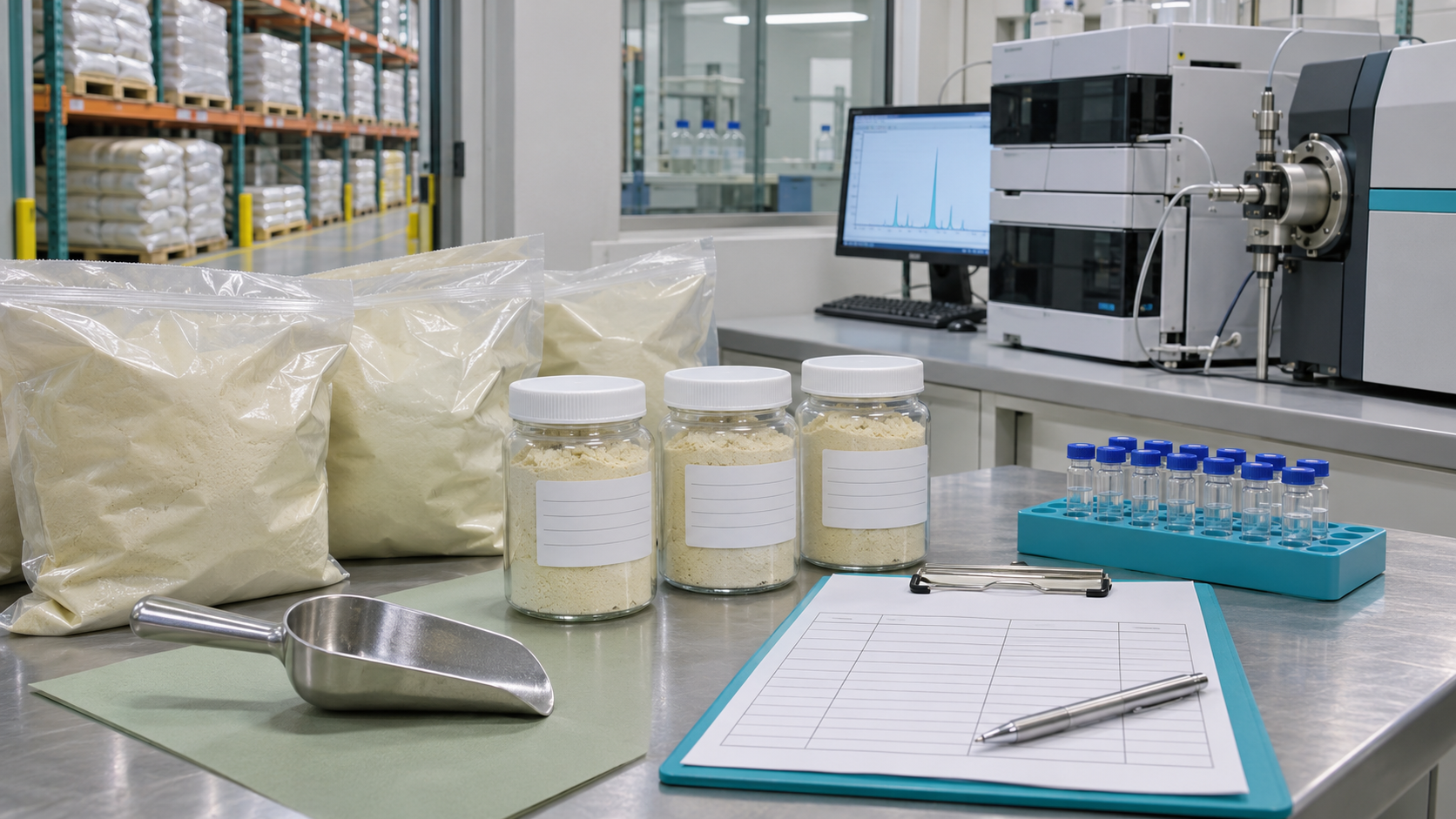
First verify that the sample represents the commercial lot. Then compare the supplier and customer laboratories for sampling procedure, analytical scope, method and reporting basis.
If processing-factor evidence is needed, use the most relevant substance–commodity–process data available. The European Commission advises beginning with the EFSA database and, where necessary, considering national databases, JMPR material or process-specific evidence accepted by the competent authority.
For chlorate, additional care is needed because residues may arise from chlorinated water or disinfectants rather than conventional crop protection. The EU introduced commodity-specific chlorate MRLs through Regulation (EU) 2020/749.
Build the Testing Plan Before the Shipment Arrives
A stronger purchasing specification should define:
- ‣ the target pesticide panel and destination market;
- ‣ individual acceptance criteria;
- ‣ required LOQs;
- ‣ sampling and retained-sample procedures;
- ‣ accredited laboratory expectations;
- ‣ actions for detected or disputed results;
- ‣ supplier change-notification requirements.
Testing requirements should be agreed before purchase—not created only after an unexpected result appears.
Qualifying Pea Protein for Your Market?
SRS Nutrition Express can support pea protein qualification with grade specifications, lot documentation, representative samples and available third-party testing information.
Share your destination market, product type, required pesticide panel, LOQs and annual volume before ordering. We can then review the proposed grade and coordinate appropriate pre-shipment or third-party testing where available.
Evidence Boundaries
- ● An MRL for raw peas is not automatically the direct limit for every processed pea-protein ingredient.
- ● A processing factor is specific to the substance, commodity and processing conditions.
- ● “Not detected” does not mean zero residue.
- ● One tested sample cannot prove every container or future batch will produce the same result.
- ● Customer and retailer limits may be stricter than general legal requirements.
Recommended Reading
References
- European Parliament and Council. Regulation (EC) No 396/2005, particularly Articles 19–20.
- European Commission. Information Note on Article 20 of Regulation (EC) No 396/2005 as Regards Processing Factors, Processed and Composite Food and Feed. SANTE/10704/2021 Rev. 1.
- Scholz R, et al. Second Update of the EU Database of Processing Factors for Pesticide Residues. EFSA Supporting Publications. 2024;21(4):8738E. DOI: 10.2903/sp.efsa.2024.EN-8738.
- European Commission. Regulation (EU) 2020/749 concerning maximum residue levels for chlorate.
Post time: Nov-05-2026


