

Two collagen peptide quotations arrive with the same headline: “average molecular weight approximately 2,000 Da.”
One costs less. Both appear suitable for your drink powder.
Before approving the cheaper option, ask what that number actually establishes. It describes one characteristic of a peptide mixture. It does not identify every peptide, establish identical sensory performance, or transfer another ingredient’s clinical results.
For buyers, the useful question is whether the proposed grade meets the requirements of the product you intend to sell.
Ask What the Molecular Weight Figure Describes
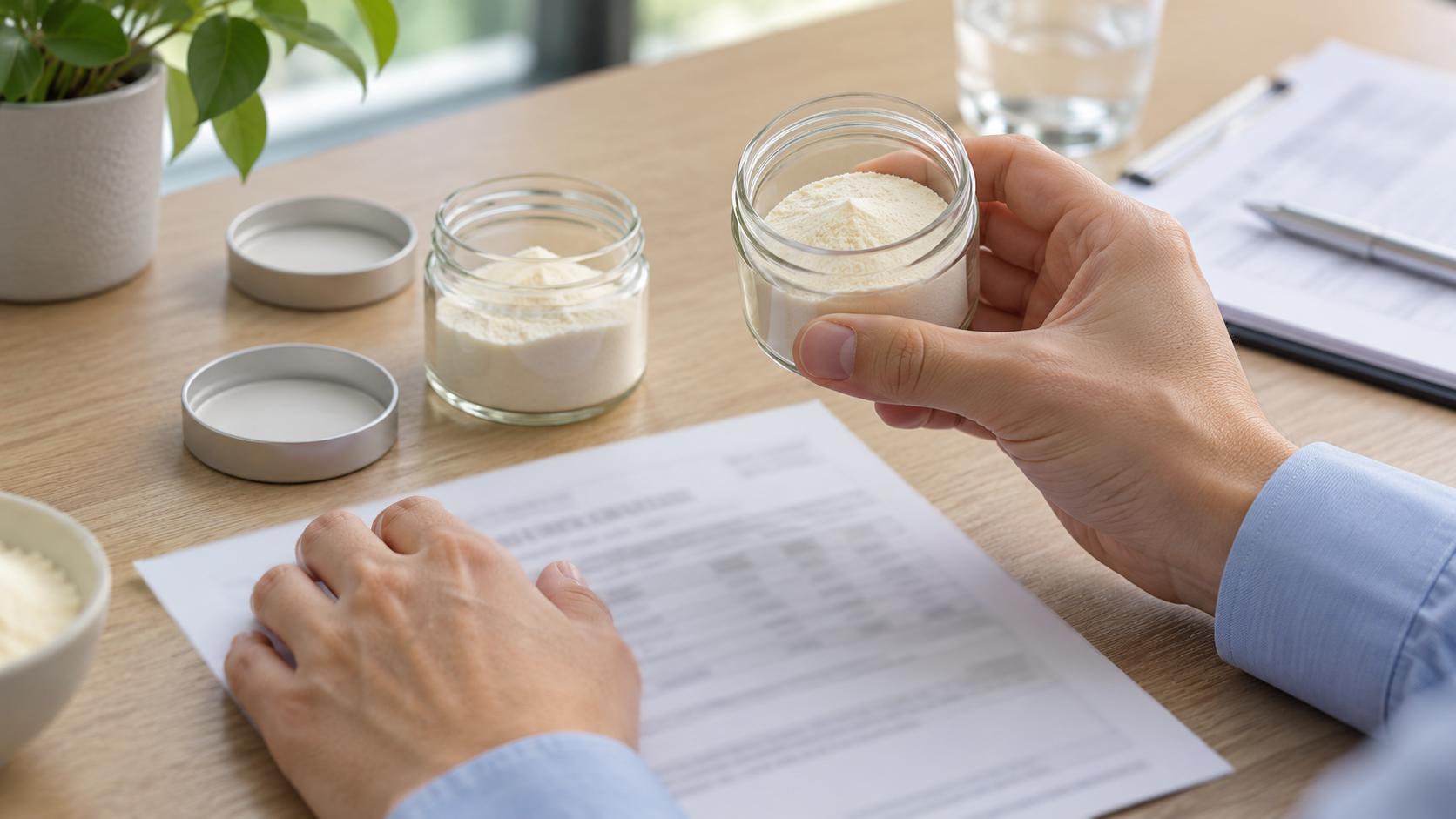
Collagen hydrolysates contain mixtures of peptides. An average compresses that mixture into a single number; different distributions can produce a similar average.
Ask whether the quoted value is a typical result, a specification limit, or a result for the offered batch. Request the analytical method and, where available, the molecular weight distribution.
If a supplier promotes a dipeptide or tripeptide percentage, request a definition of what is measured and how it is quantified. “Low molecular weight,” “rich in tripeptides,” and a measured content of a named peptide describe different things.
A peptide’s size alone does not establish its identity. Research examining collagen hydrolysates through digestion and absorption also shows why the starting powder’s composition is only part of the picture.[1,2]
Smaller Does Not Automatically Establish Better Results
A 2024 randomized, double-blind crossover study compared fish-, porcine- and bovine-derived collagen hydrolysates, including bovine products with average molecular weights of approximately 2,000 and 5,000 Da.
Free hydroxyproline uptake was comparable across the tested products. Within the bovine comparison, molecular weight did not affect the bioavailability of the selected peptides measured.[1]
That finding does not establish that all collagen grades are equivalent. It does show why a lower molecular weight should not automatically become a “better absorbed” or “more effective” purchasing claim.
When a quotation includes clinical support, check the exact ingredient studied, daily dose, population, duration and measured outcome. A study on a particular hydrolysate does not automatically substantiate another grade with a similar average molecular weight.
Confirm the Source Before Comparing the Price
Specify the animal source and tissue origin required for your project. Confirm whether the supplied material is pure collagen hydrolysate or contains added carriers or other ingredients.
Obtain the source, traceability, allergen and certification documents relevant to your market and customer requirements. If a particular certification is essential, check that its scope covers the proposed material and manufacturing site.
Resolving these points early prevents a technically attractive sample from reaching a commercial dead end.
Put the Sample Into the Product You Will Sell
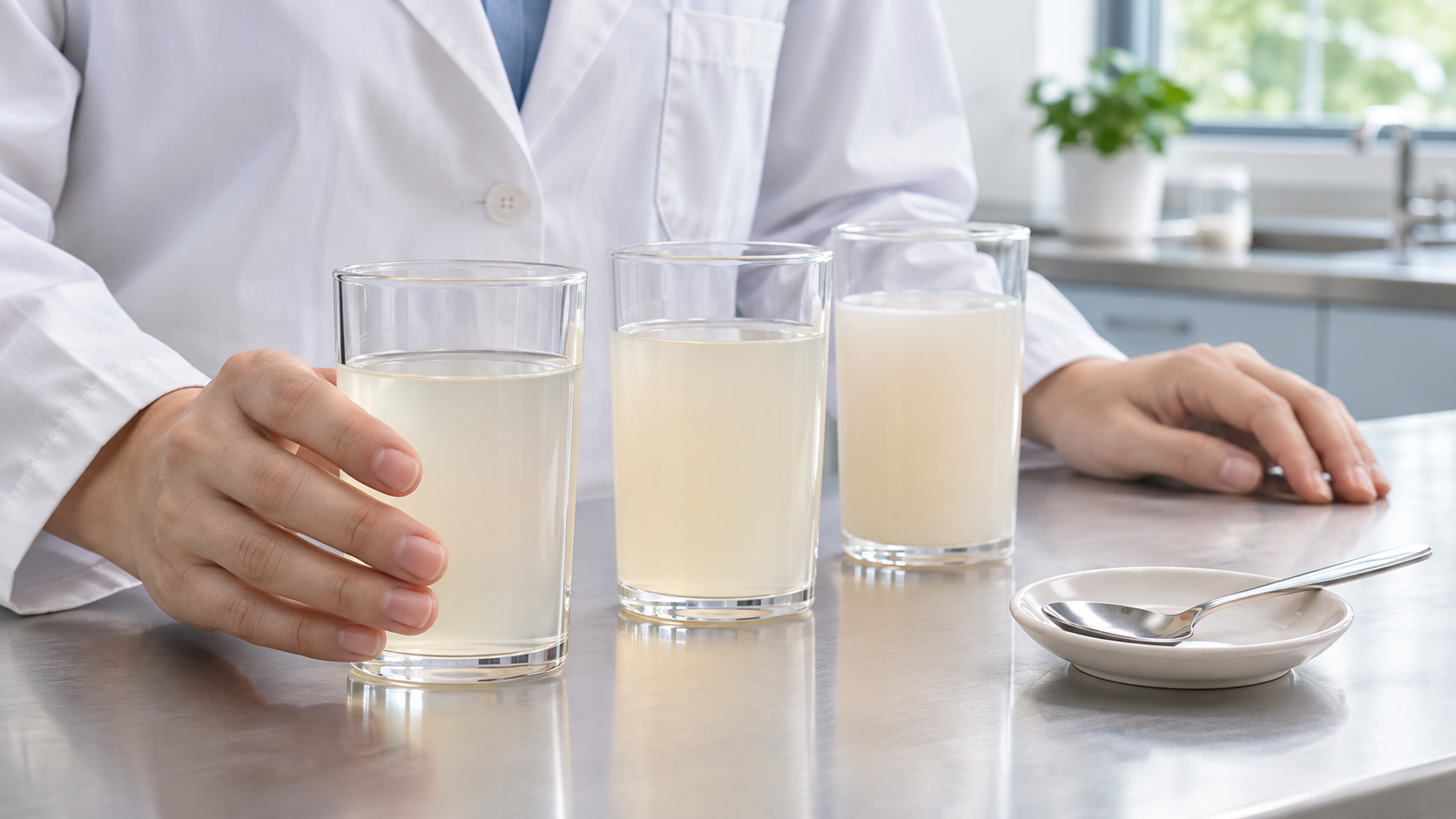
For a flavoured drink powder, compare the incumbent and candidate grades at the intended inclusion level in the complete formulation.
Record mixing conditions, wetting, visible residue, foam, colour, odour and aftertaste. Agree what counts as acceptable before evaluating the samples.
For a ready-to-drink product, include the planned processing conditions, packaging and storage evaluation. An initial water test cannot establish finished-product shelf life.
Keep the approved sample and its batch identification. Ask how the supplier will communicate changes to the source, manufacturing process or agreed specifications.
Send a Brief That Produces a Useful Quotation
“Please quote collagen peptides” leaves the supplier to guess.
Send your product format, destination market, preferred source, intended grams per serving, required certifications, trial quantity and expected commercial volume. Include any sensory limits and the reason a particular molecular weight or peptide profile matters.
Ask for the proposed grade’s specification, representative COA, available analytical information and sample conditions. Compare delivered cost alongside qualification work, formulation changes and likely production requirements.
Developing a collagen product or reviewing a second source? Contact SRS Nutrition Express with your formulation brief and current specification. Ask about available grades, supporting documents and samples for your evaluation.
Evidence Boundaries
- The cited absorption studies do not establish long-term skin, joint or other clinical benefits for a proposed SRS grade.
- The 2024 study was funded by Rousselot and included authors employed by the company.
- The purchasing and sample-evaluation steps above are practical recommendations; acceptance criteria remain specific to each product.
Recommended Reading
References
- Virgilio N, et al. (2024). Absorption of bioactive peptides following collagen hydrolysate intake: a randomized, double-blind crossover study in healthy individuals. Frontiers in Nutrition, 11:1416643.
- Kleinnijenhuis AJ, et al. (2020). Non-targeted and targeted analysis of collagen hydrolysates during the course of digestion and absorption. Analytical and Bioanalytical Chemistry, 412:973–982.
Post time: Nov-20-2026


