

Imagine a draft product page on your screen. The line under review reads:
Our new creatine formula was tested against creatine monohydrate in humans and is better absorbed.
It takes one breath to read. Halfway through, at the word and, the evidence you need changes. The first half asks whether anyone ran the experiment. The second asks who won.
A paper published online on November 9, 2026 gives a brand editor the rare luxury of checking both halves against the same experiment. The line above is an editorial example. It is not a quotation from the researchers or the ingredient company. [1]

The Half You Could Keep
The researchers compared OptiCreatine™ with conventional creatine monohydrate. Healthy adults tried each material on a separate visit, in randomized order. Each time, they consumed a five-gram dose of the test material in water. The team then tracked serum creatine for five hours. Each participant could serve as their own comparison. [1]
For someone writing about the specific formulation studied, “tested against creatine monohydrate in humans” is a meaningful detail. It tells the reader there was another active material in the experiment. A sentence that says only “clinically studied” leaves that information out. If the product on your desk uses a different ingredient, though, the paper still belongs to the formulation named in its methods.
What Happened After the Word “And”
Before deciding whether to keep better absorbed, try finishing the sentence more precisely. Did the new formulation produce a higher peak in the blood? Did it reach that peak sooner? Or did participants have greater exposure over the whole observation period? Each would give “better” a different meaning.
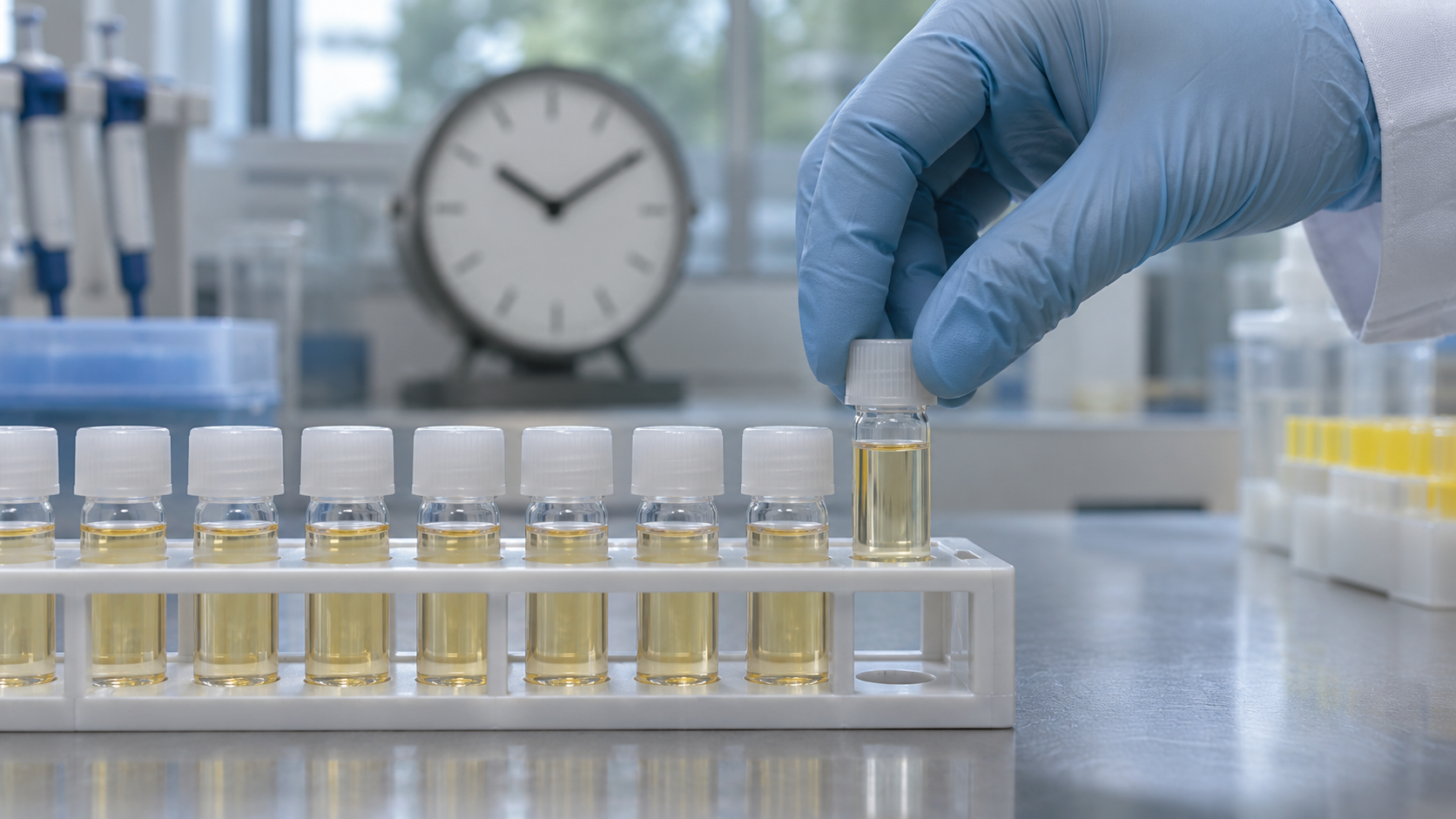
The investigators checked all three. None showed a statistically significant difference between the formulations. The study therefore gives an editor grounds to describe the comparison and the observed blood response. It gives no grounds for adding a superiority claim. Nor does a nonsignificant result prove the two products equivalent under every condition. [1]
Here is the sentence I would keep in a technical brief:
In a single-dose crossover study, researchers detected no significant difference between the two tested formulations in peak serum creatine, time to peak or total serum exposure over five hours. [1]
That wording is longer. It earns the space because a colleague can open the paper and find every part of it. The finding also has a clear stopping point. Blood samples collected over an afternoon cannot tell a reader how much creatine accumulated in muscle over a month, or how much weight someone later lifted.
The Question That Belongs in the Buying Meeting
Suppose you take the two words out of the draft and the commercial team still likes the ingredient. Good. Now ask what the launch would gain if the customer never saw the absorption claim.
There might be an answer. Perhaps the brand wants a particular delivery format and the candidate performs well in that recipe. Perhaps it has an advantage the shopper can actually notice. Either could be worth paying for once demonstrated. Equally, the team may discover that most of the proposed premium depended on those two words surviving artwork review. Finding that out before agreeing a price is valuable in itself.
One question is especially revealing on a supplier call:
“Which sentence about this exact material would you support, and which result should our technical team cite?”
It gives a supplier with strong evidence room to explain it. It also gives purchasing and marketing the same account of what is being bought.
Comparing a New Formulation with Monohydrate?
Send SRS the claim you are evaluating and the finished format you have in mind. We can help define a monohydrate comparison for your project and provide the relevant grade specification.
Evidence Boundaries
- • The paper reports short-term serum measurements in healthy adults after a single dose per visit. It did not measure long-term muscle creatine stores or training performance.
- • A nonsignificant difference does not establish formal equivalence. The findings apply to the specific materials and conditions tested.
- • TSI Group, the company associated with the tested formulation, is listed as the study sponsor in the trial registration. SRS materials were not the study comparator. [1,2]
Recommended Reading
- → Creatine Monohydrate Specification Sheet: What Buyers Should Check Before Ordering
- → Creatine Assay Explained: Monohydrate Basis vs Anhydrous Creatine Basis
- → Does a 5 g Creatine Claim Mean 5 g Per Serving?
References
- DelBiondo GM, et al. (2026). Novel creatine formulation exhibits similar serum creatine concentrations and pharmacokinetics to creatine monohydrate in healthy adults. Journal of the International Society of Sports Nutrition.
- ClinicalTrials.gov. Impact of OptiCreatine on Plasma Creatine and Gastrointestinal Effects in Males and Females. NCT07225335.
Post time: Nov-26-2026


