

A protein bar offers a different way to include creatine in a daily routine. For a developer, the challenge is to deliver the intended amount in a bar that remains acceptable to eat and meets its specification after processing and storage.
Start with a development brief rather than a promised shelf life. Bar weight, creatine amount, protein system, binder, manufacturing route and packaging all need to be considered together.
There Is Published Work on Creatine Containing Bars
A 2021 pilot study produced a high-protein bar containing creatine monohydrate and evaluated nutritional, sensory and selected physiological outcomes. It shows that creatine-containing bars have been investigated as a food format. The multi-ingredient intervention does not isolate creatine’s contribution or validate another commercial recipe. [1]
For a new project, use that work as an application example. Establish your own criteria for the finished product instead of transferring the study’s conclusions to a different bar.
Make the Intended Serving Fit the Product
Specify whether the target refers to creatine monohydrate added or creatine expressed on another reporting basis. Keep that basis consistent between formulation, testing and labelling.
As a simple formulation example, adding 3 g of creatine monohydrate to a 60 g bar represents 5% of the bar’s mass. That amount must fit alongside protein, fats, carbohydrates, fibres and flavour ingredients. It is an input calculation, not proof that the finished bar contains or retains 3 g.
Evaluate Texture in the Complete Bar
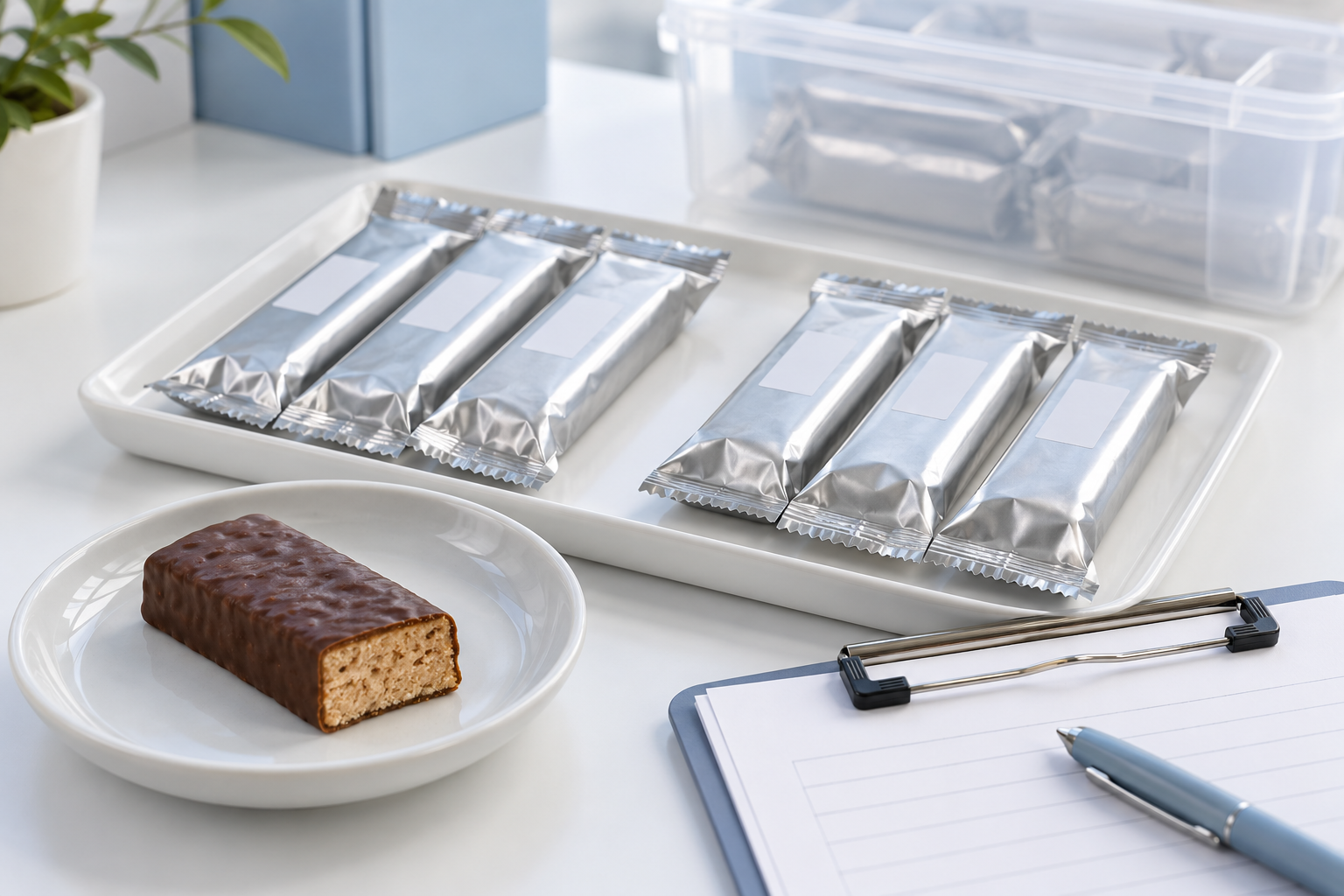
A powder that feels acceptable in water may behave differently in a dense bar. Compare grittiness, chalkiness, chew, cutting behaviour and visible distribution in the actual recipe, including any coating.
If comparing 200- and 500-mesh grades, keep the remaining formula and test conditions aligned. A finer grade may be worth evaluating for particulate mouthfeel, but mesh alone cannot guarantee a smoother bar. Record results rather than assigning a benefit before the trial.
Record Processing and Storage Conditions
Uzzan and colleagues studied creatine degradation in model systems containing glycerol and pH 4.0 buffer across different water activities and temperatures. The work supports considering water activity and temperature in development, but it does not provide a shelf-life calculator for protein bars. [2]
Record the actual sequence of addition, product temperatures, holding periods and cooling conditions. Cold forming is still a process that needs evaluation.
Agree What the Laboratory Will Measure
Ask a qualified laboratory whether its creatine method is suitable for the proposed bar. Sample preparation must account for the protein, fat, binder, coating and other ingredients. Define how the whole serving is sampled and homogenised, and how recovery and specificity will be demonstrated.
Plan measurement after processing and at justified storage intervals in the intended packaging. Include creatine content, relevant degradation monitoring such as creatinine, and appropriate texture, water-activity, microbiological and package checks. The exact panel and acceptance criteria belong to the product-specific validation plan.
Choose the Package Alongside the Formula
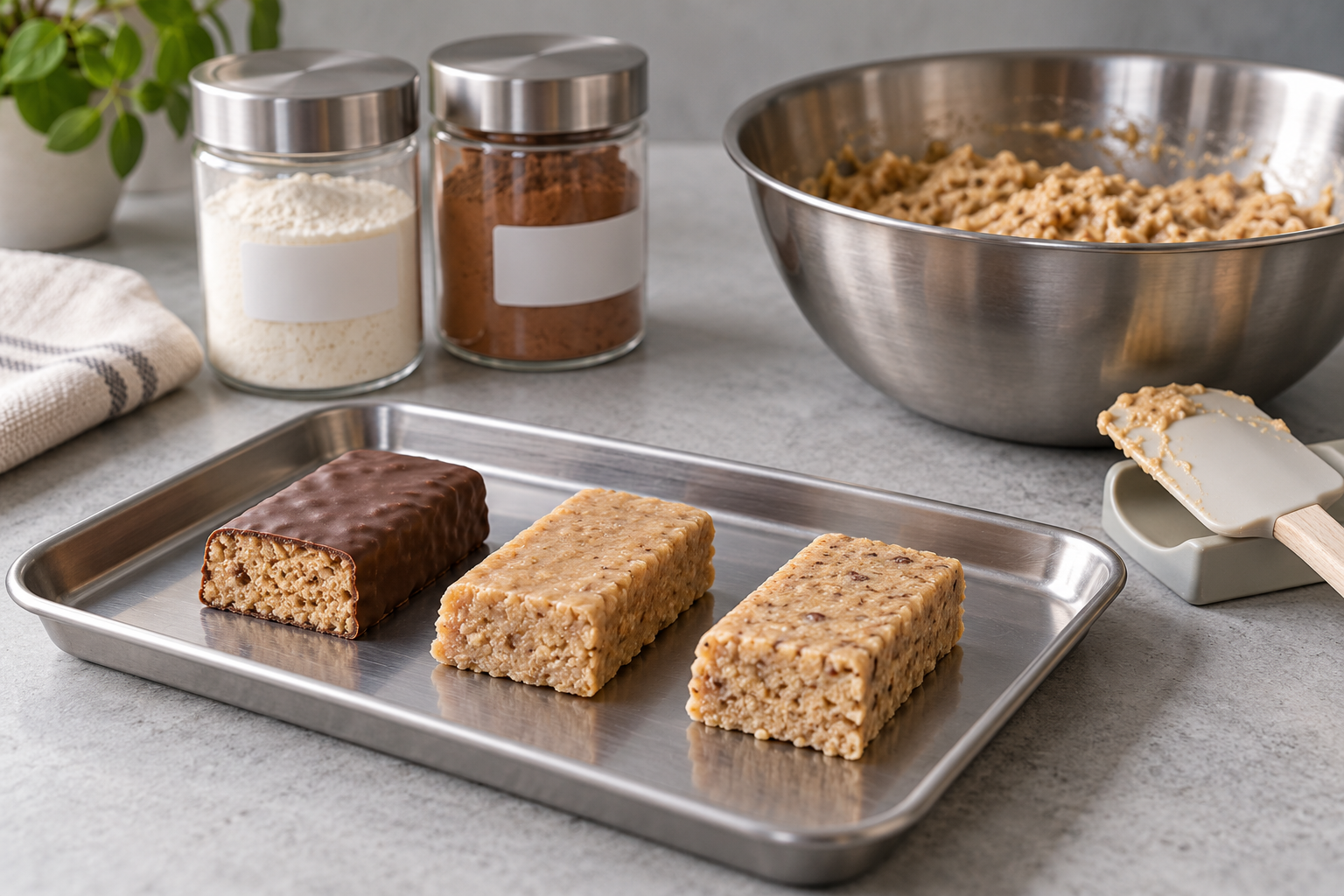
Assess the wrapped product under its intended distribution and storage conditions. A bar can retain an acceptable taste while failing its quantitative specification, or meet an assay target while becoming too hard to eat. Set acceptance criteria for both composition and consumer experience.
Before launch, also confirm whether the intended ingredient use, food category, labelling and claims are appropriate for the destination market. A successful development trial does not answer those market questions.
Share Your Bar Brief With SRS
Send SRS Nutrition Express the proposed bar weight, intended creatine amount and reporting basis, protein and binder system, process, destination market and shelf-life target. Add the trial quantity and any grade already evaluated.
SRS can discuss available creatine monohydrate specifications, samples and raw-material documentation for your development work. Finished-bar formulation, analytical validation and shelf-life support must be established for the actual product with the manufacturer and qualified laboratory.
Evidence Boundaries
- • The published bar study concerns one multi-ingredient product and does not establish a creatine-specific benefit or a shelf life for another recipe.
- • The 60 g bar and 3 g addition example is illustrative and is not an SRS formula, measured result or dosage recommendation.
- • The water-activity research used model systems rather than the proposed protein bar; its kinetics cannot be transferred directly.
- • No superiority of 500-mesh creatine, finished-bar manufacturing capability or validated commercial bar formula is claimed here.
Recommended Reading
References
1. Jovanov P, Sakac M, Jurdana M, et al. High-Protein Bar as a Meal Replacement in Elite Sports Nutrition: A Pilot Study. Foods. 2021;10(11):2628. DOI 10.3390/foods10112628.
2. Uzzan M, Nechrebeki J, Zhou P, Labuza TP. Effect of water activity and temperature on the stability of creatine during storage. Drug Development and Industrial Pharmacy. 2009;35(8):1003-1008. DOI 10.1080/03639040902755197.
Post time: Oct-22-2026


