

The useful quantity of a creatine sample depends on the decision you need to make. Material reserved for identity testing or a drink comparison may not leave enough for a mixer, feeder or filling trial.
Before requesting a sample, agree the trial plan with production and quality teams. Work backwards from the equipment, formulation and number of runs, then add separately allocated material for testing and retention. This gives the supplier a quantity that serves a defined purpose.
Decide What the Trial Must Demonstrate
A laboratory evaluation may examine identity, analytical results or dispersion in a particular formula. A production trial asks different questions: can the intended blend be mixed, transferred and filled under the proposed operating conditions?
Write down the measurements and acceptance criteria before allocating material. If the trial must include a hopper refill or enough operating time to collect samples at several stages, allow enough blend to perform those steps. A short run should be reported with its limitations.
Confirm the Equipment Working Quantity
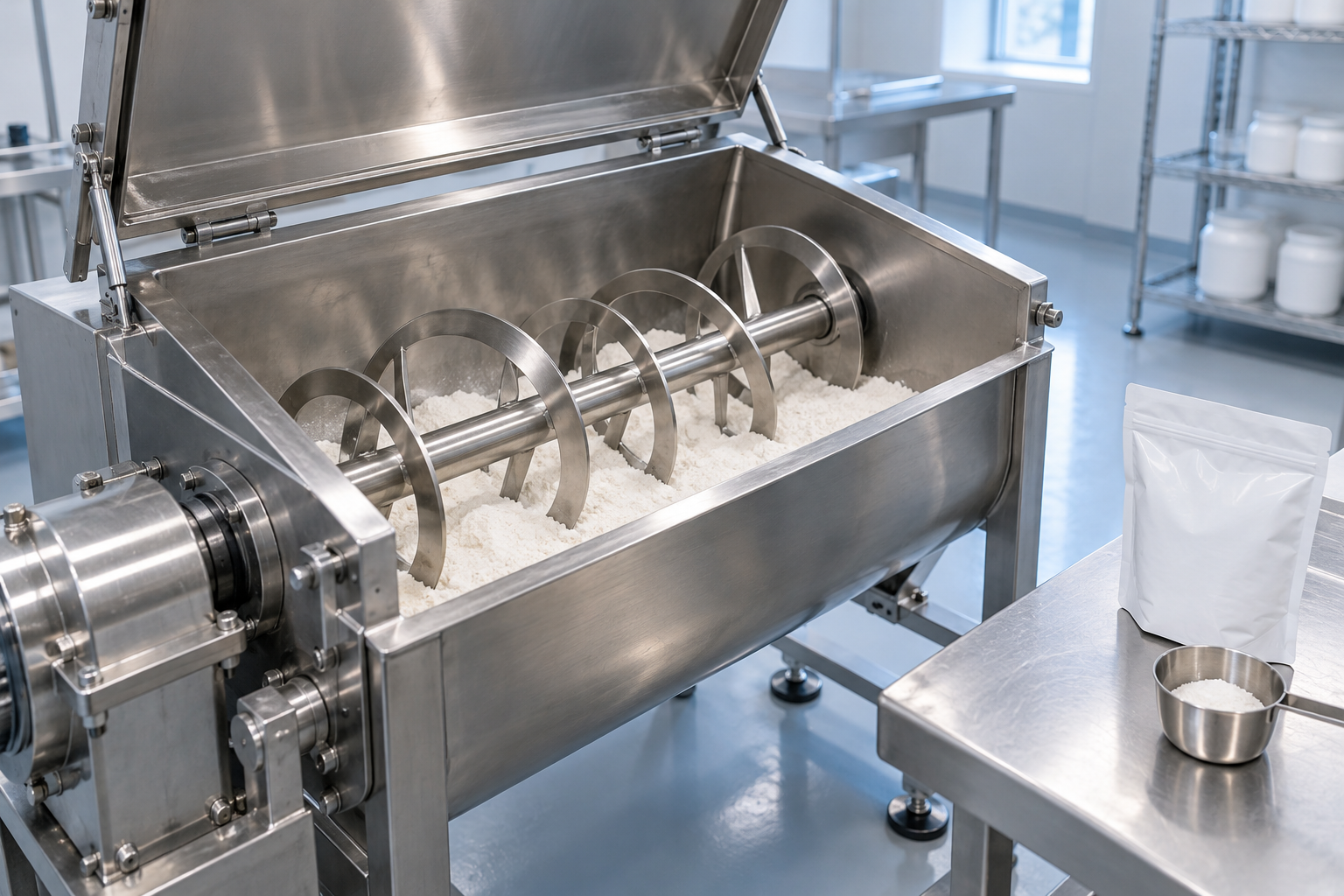
Ask the manufacturer for the appropriate working quantity of the actual mixer and downstream equipment. Distinguish total blend weight from the amount of creatine it contains.
Where equipment capacity is expressed in litres, the team should establish a suitable working fill and the relevant blend density before converting it to kilograms. Nominal vessel capacity alone does not determine a useful trial batch.
Calculate Creatine for Each Planned Run
For a formula defined by weight, calculate creatine monohydrate required as trial blend weight multiplied by its inclusion fraction, then add the requirements for all planned runs. Use the actual raw-material quantity in the trial formula; a front-label creatine claim may use a different reporting basis.
In the illustrative plan below, the same grade is used in two separate 20 kg batches containing 25% creatine monohydrate by weight. Each run therefore needs 5 kg of creatine.
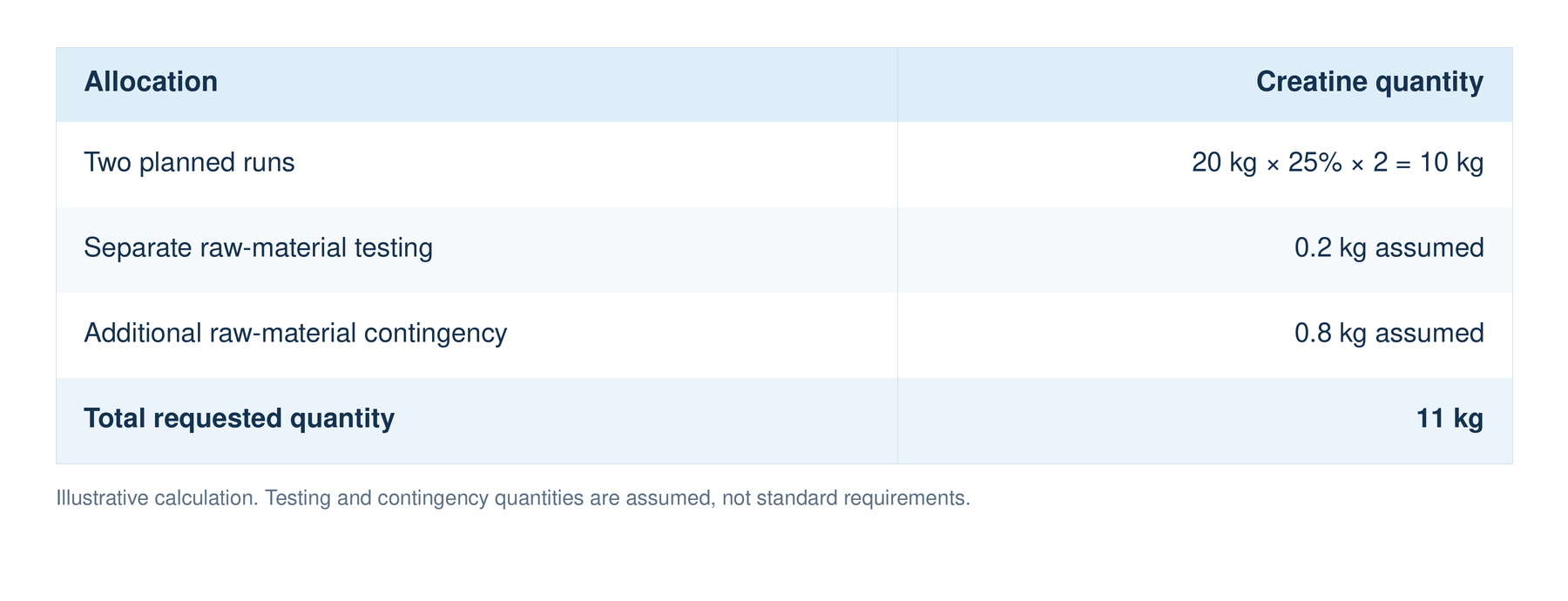
The result is 11 kg for this assumed plan. The 0.2 kg testing allocation and 0.8 kg contingency are example inputs, not recommended minimums or standard percentages. If a complete additional run is required, this formula needs another 5 kg for that run.
Count Every Allocation Once
Ask the laboratory how much raw material its agreed methods require, including any planned repeat testing. Identify retained raw material separately from finished samples taken out of the trial batch.
Check whether setup material, process hold-up and sampling withdrawals are already covered by the planned batch input. Add genuinely separate needs once. A reserve for trial planning does not authorise an arbitrary overage in the finished formula.
For US dietary supplement manufacturing, 21 CFR 111.210 addresses component quantities, theoretical yields and sampling instructions in master manufacturing records. It does not prescribe a standard kilogram quantity for a creatine development sample. [1]
Keep Grade Comparisons Separate
When comparing 200-mesh and 500-mesh creatine, calculate the requirement for each grade. Keep the formula, equipment and evaluation method comparable, and identify the sample grade and lot in the records.
If two trials use different scales because material is limited, record that difference. The results may help select the next experiment, but they do not provide the same comparison as matched runs.
Tell SRS What You Plan to Run
Send SRS Nutrition Express your dosage form, proposed grade, trial batch weight, creatine inclusion rate and number of runs. Add the equipment working requirement, separate testing allocation, delivery destination and required trial date.
SRS can review the request with you and discuss available grades, supporting documents and sample or pilot-quantity supply arrangements. Availability, quantity, charges and timing should be confirmed for the project. The manufacturer remains responsible for approving the trial plan and interpreting its results.
Evidence Boundaries
- The calculation is an illustrative material allocation, not SRS trial data or a universal sample recommendation.
- Equipment working quantities, analytical sample masses and acceptance criteria must be confirmed for the actual project.
- A successful development trial does not establish commercial process validation, long-term stability or consistency across future lots.
- The US regulation cited supports manufacturing-record context; it does not set a creatine trial sample quantity. Sample supply terms require confirmation.
Recommended Reading
- Requesting a 500-Mesh Creatine Sample? Test These Four Things Before You Approve It
- What Should You Include in a Creatine Monohydrate RFQ?
- How Much Creatine Should You Order for a Product Launch?
References
1. Electronic Code of Federal Regulations. 21 CFR 111.210. What must the master manufacturing record include?
2. SRS Nutrition Express. What Should You Include in a Creatine Monohydrate RFQ?
Post time: Oct-16-2026


