

Imagine turning over two bottles of nattokinase. Both list 2,000 FU per capsule. Look closer and the first lists 100 mg of nattokinase powder. The second lists just 50 mg.
If you were choosing one for yourself, would the 100 mg capsule feel like the better buy? And if you were putting your brand name on the 50 mg capsule, how would you explain the difference to a customer?
There’s a straightforward answer. One powder can have twice the enzyme activity per gram of the other. When that happens, half the powder can supply the same measured activity. For someone buying a bottle, that clears up a confusing label. For the team making the capsule, it opens up a more interesting choice.
? What is in those extra 50 milligrams?
Nattokinase is an enzyme found in natto, a Japanese food made from fermented soybeans. A lab can weigh a sample of nattokinase powder and, separately, test how much activity it shows against fibrin. That second measurement is where FU, short for fibrin degradation unit, comes from. [Ref]
Take two example powders. At 20,000 FU per gram, 100 mg supplies 2,000 FU on paper. At 40,000 FU per gram, it takes only 50 mg to reach the same figure. Those extra milligrams in the first capsule come from using more of a less concentrated powder. To make a fair comparison, both activity figures need to come from comparable tests. [Ref]
Key Detail: There’s also a detail worth checking before comparing two bottles: how many capsules make up a serving? A bottle offering 2,000 FU in one capsule and a bottle offering 2,000 FU in a two-capsule serving are describing different amounts per capsule. It’s an easy line to miss on a label and an expensive one to miss on a production brief.
When would a brand actually want the more concentrated powder?
Picture a product developer working on a combination capsule. The team likes the formula. The capsule is already the size they want customers to swallow. Then the manufacturer comes back with a familiar problem: the full blend takes up a little too much room.
This is where the 50 mg option earns a trial. Switching to the more concentrated nattokinase powder lets the developer reduce the weight of one ingredient while keeping its calculated activity target. How much space that saves depends on how the new powder packs alongside the other ingredients. A small filling trial can answer the question that matters: can we keep this formula in one capsule?
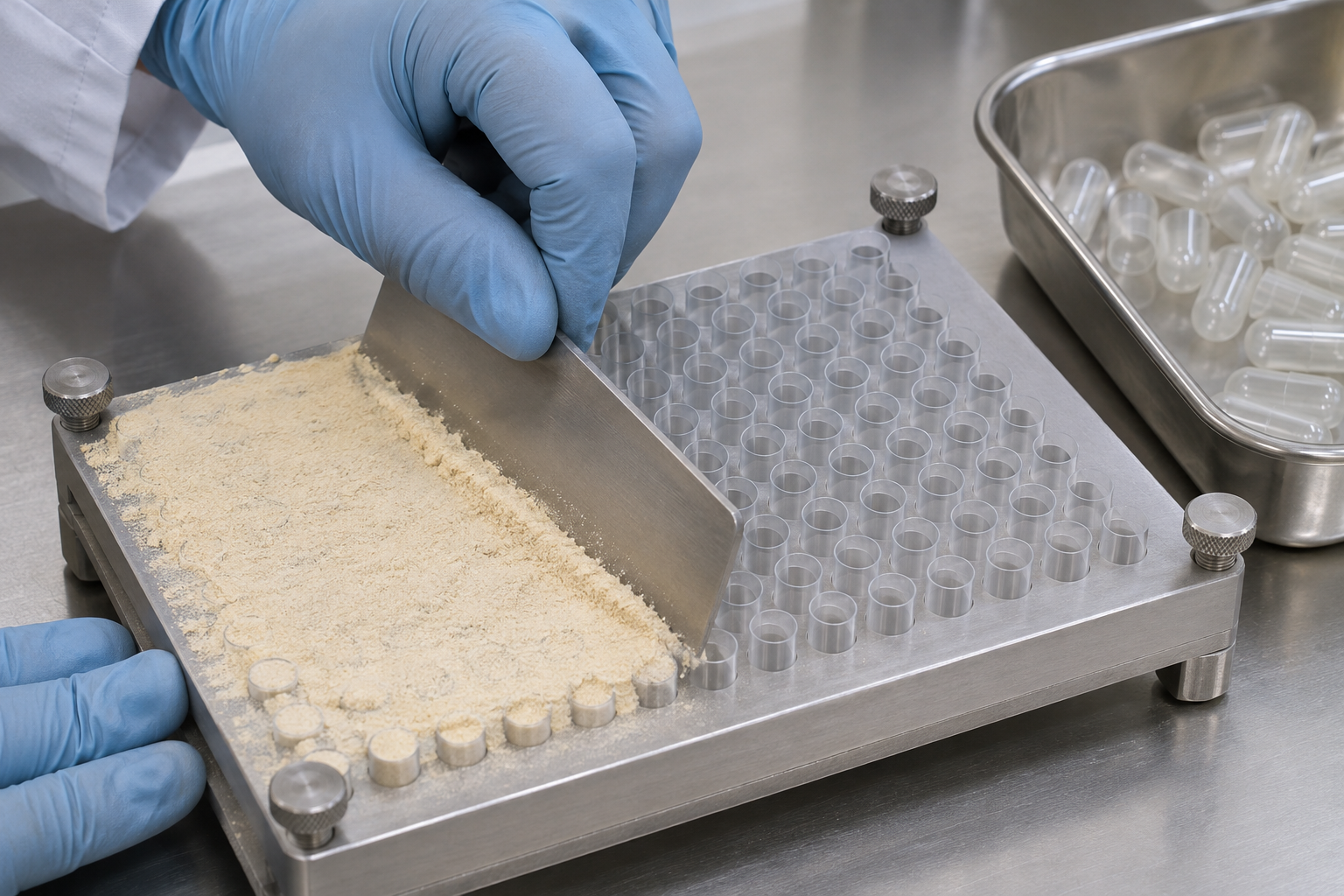
Now picture a simpler product containing nattokinase as its only active ingredient. The current powder already fits comfortably, and the manufacturer knows how it runs. Here, the choice may come down to something more ordinary: which grade can the brand buy in a sensible quantity for its first order?
The first order changes the maths
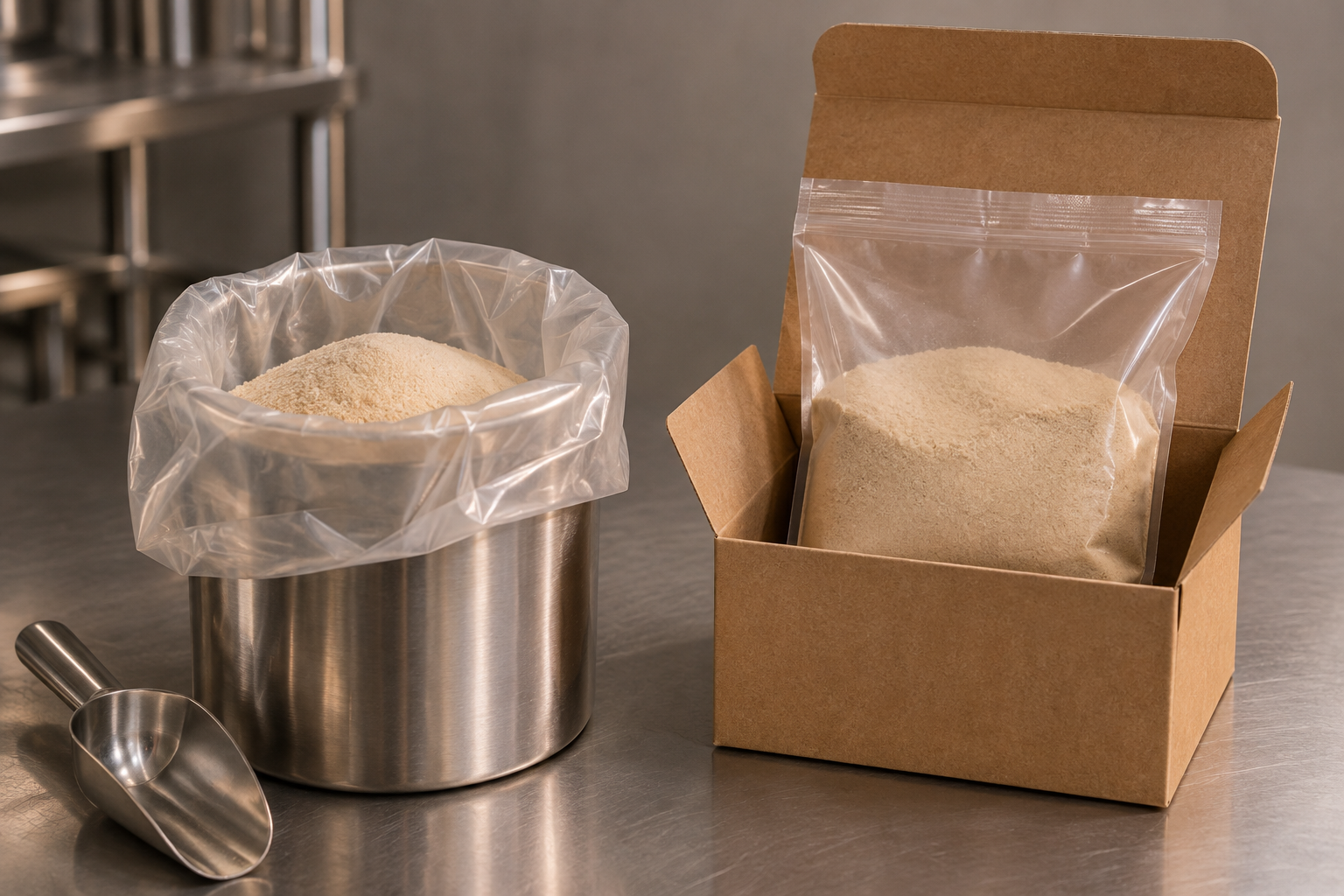
Take a pilot run of 10,000 capsules, each designed to contain 2,000 FU. Before allowing for production losses, the brand needs 1 kg of the 20,000 FU/g powder or half a kilogram of the 40,000 FU/g powder.
Now suppose the more concentrated grade costs 60% more per kilogram. Because the batch uses half as much, the nattokinase used in that run costs 20% less. That’s a good reason to look beyond the first price on a quotation.
But say both suppliers sell in 1 kg packs. The brand choosing the concentrated grade still pays for a full kilogram up front, and half of it goes back on the shelf. If a second run is already scheduled, that may suit the business perfectly. If the team is still testing demand, the lower-priced kilogram may be the easier first purchase. The same two quotes can lead to different decisions depending on when the brand expects to place its next order.
What should the brand be able to tell its customer?
Go back to the shopper holding those two bottles. They probably want a one-sentence answer: “We use a more concentrated nattokinase ingredient, so a smaller amount of powder can supply the activity shown on our label.”
Before using that explanation, the brand should have evidence for the capsule it sells. A supplier’s certificate gives the activity of the incoming powder. Testing the finished capsule and following its activity during storage helps establish what the customer can expect from the packaged product. That gives the brand a sound answer when someone asks why their capsule contains “only” 50 mg.
Which nattokinase grade makes sense for your first run?
Share your target FU per capsule and the number of capsules you plan to make. SRS Nutrition Express can help you compare available grades, sample quantities and the cost of the powder your first batch would actually use.
Evidence Boundaries
- The 2,000 FU figure is a formulation example. It shows how much powder each grade would require, assuming both grades are tested using comparable methods. It does not establish a recommended intake or show that two finished products have the same effect.
- The quantities for 10,000 capsules assume full production yield. The 20% cost difference comes from a hypothetical quote. To confirm how much activity a capsule delivers when a customer takes it, the brand needs test results for the finished product over its intended shelf life.
Recommended Reading
- When an Evidence-Based Dose Does Not Fit the Product Format
- Vegetable Capsule Specifications: What Buyers Should Check
References
- Japan Food Research Laboratories. Nattokinase Activity. Laboratory testing information for nattokinase activity, reported in FU/g.
- Japan Certified Health Food Council. Nattokinase Quality and Labeling Standard (JHFC-S-013).
Post time: Nov-27-2026


