

If your brand already sells creatine in a tub, a refill pouch gives you another packaging option to evaluate for repeat orders. The starting point can be the product you already sell: its approved grade, net weight, label and expected order quantity.
Before asking for a printed bag, decide what the new pack should do. Will customers use it directly, refill an existing container, or buy it as a separate larger format? That decision shapes the opening, closure, instructions and quotation.
Keep the Product Definition Clear
Confirm whether the pouch will contain the same unflavoured creatine as the tub, or a revised grade or blend. Keep the approved specification, ingredient description and reporting basis aligned across both formats unless a change is intentional and reviewed.
Choose Pack Weight Before Final Dimensions
A refill does not have to match the original tub’s net weight. A brand could evaluate the same weight for a straightforward replacement, or a larger pack for a different purchasing pattern. Choose the commercial purpose before selecting the bag dimensions.
Ask for a filling assessment with the proposed powder and pouch. Allow for the working space needed to fill and close it, the intended opening and the way it stands after packing. A flat artwork drawing cannot confirm those details. Check the sample after transport simulation as well as immediately after filling.
Specify the Pouch Structure and Closure
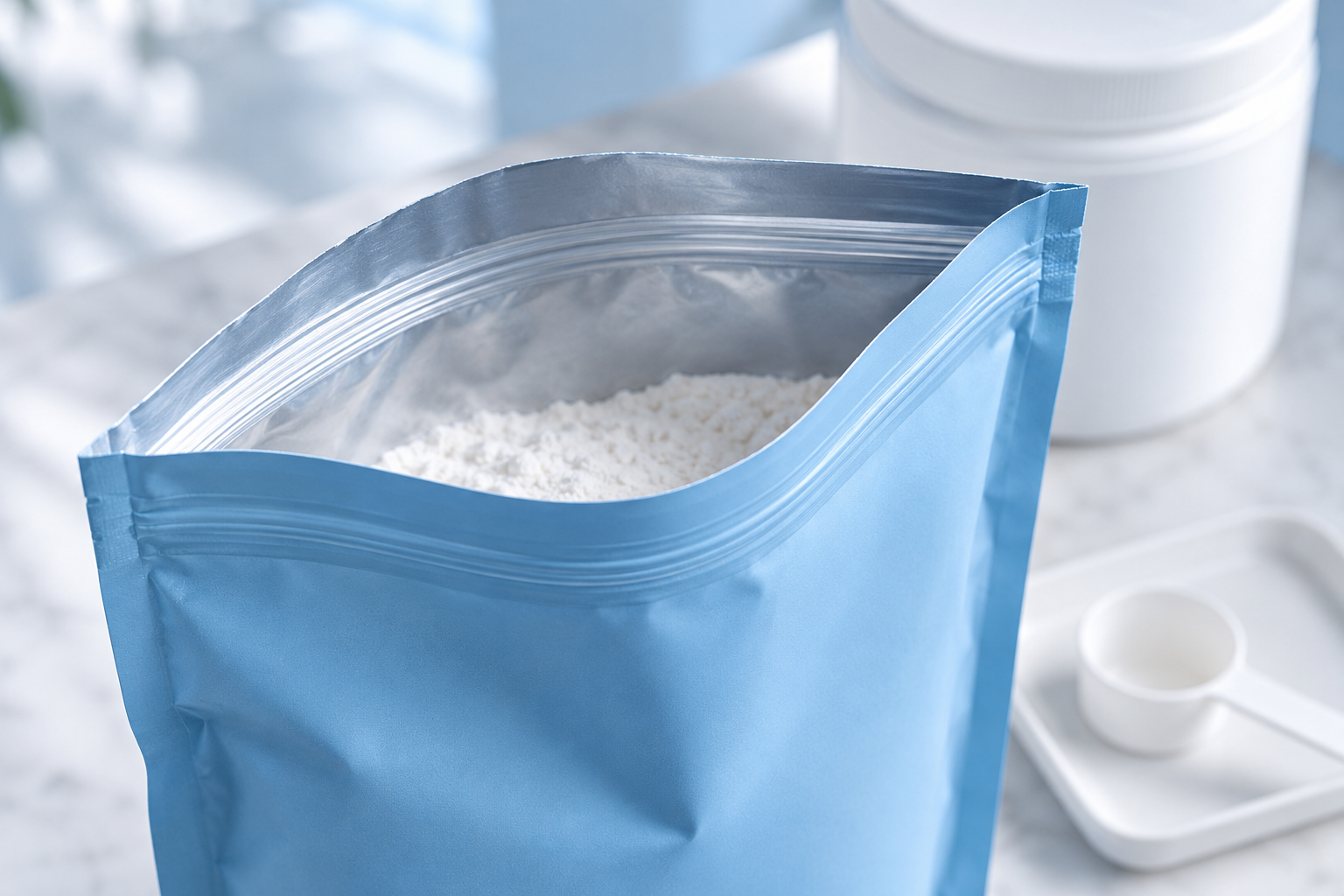
“Resealable pouch” is not a complete specification. Agree the material structure, product-contact layer, dimensions, initial seal, opening feature and reclosure. Request the available food-contact and barrier information for the proposed construction, and define what still needs verification.
For US dietary supplements, 21 CFR 111.70 requires contact packaging to be safe and suitable for its intended use and establishes packaging and label specification requirements. This is a US example, not a universal approval of any pouch. [1]
Evaluate the filled package through the intended storage period and repeated opening where relevant. The same powder in a new pack should not automatically inherit all the evidence generated for the original tub.
Design the Refill Experience Deliberately
If the product is intended to stay in the pouch, check access for the measuring tool and whether users can reclose the opening without powder interfering. Decide whether a scoop is included and make the directions consistent with that decision.
If transfer into another container is intended, have the responsible team review the instructions and container suitability. Important product, lot and date information must remain accessible. Avoid relying on an old tub label to identify a new pouch lot.
Compare Complete Packaging Proposals
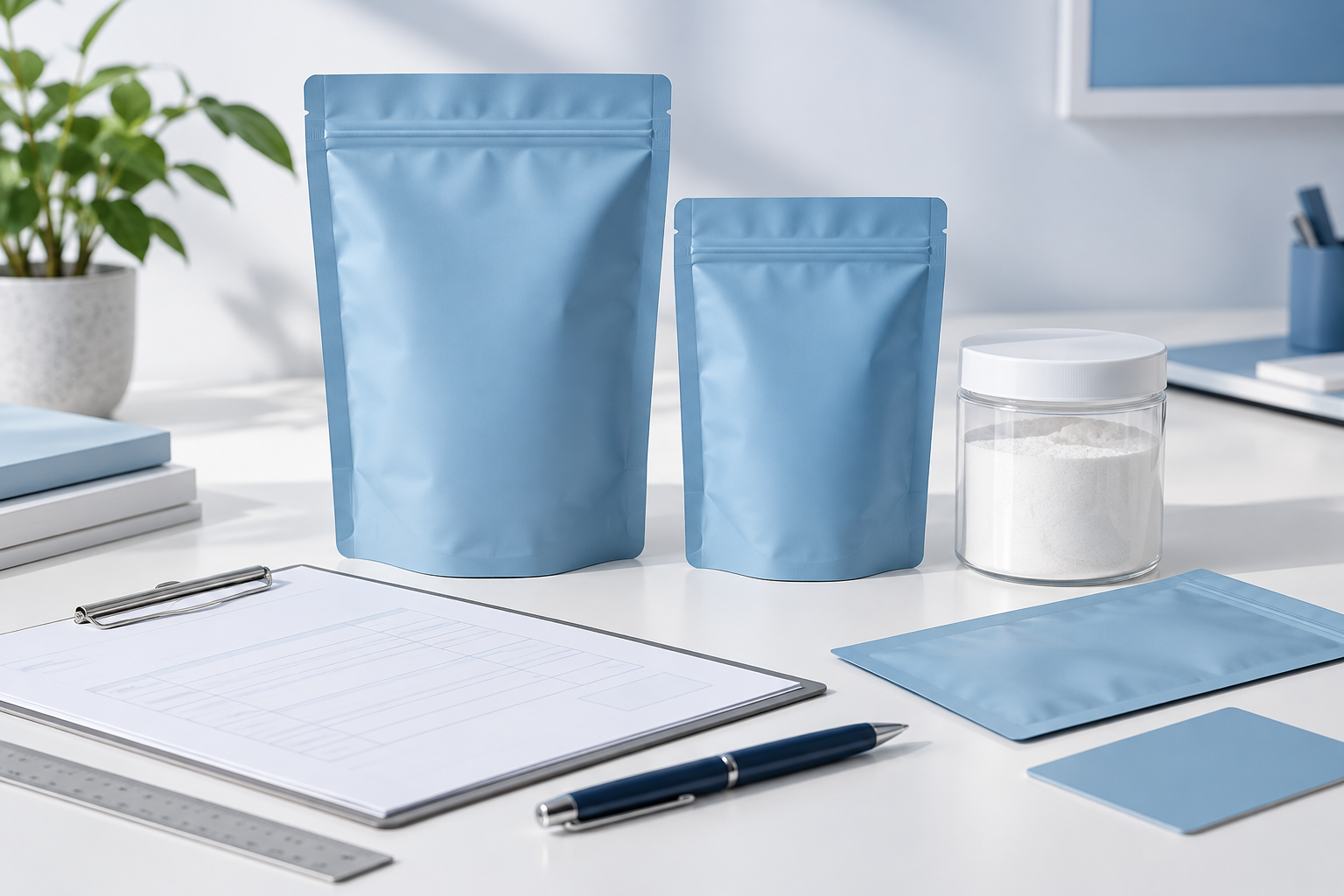
Ask for quotations using the same powder specification, net weight, quantity, delivery basis and agreed checks. Then compare the packaging material, printing, measuring tool, filling, sealing, cartons, pallet arrangement and any development charges included.
Confirm minimum quantities for the finished product and printed packaging separately, along with artwork requirements, unused packaging ownership and repeat-order conditions. A pouch should not be described as cheaper or environmentally preferable without an appropriate comparison of the actual options.
Bring SRS Your Current Tub and Proposed Pouch
SRS Nutrition Express includes tubs, pouches, stick packs and sachets among its powder-format options, with support for packaging, branding, documents and delivery coordination. A refill project can begin with a review of the existing product and a defined packaging brief.
Send a photo or drawing of your current pack, the approved creatine specification, proposed pouch weight, destination market and estimated quantity. Add whether you need a scoop, a resealable opening and help with artwork.
SRS can review the request and discuss available configurations, samples, documentation and quotation scope. Material availability, minimum quantities, testing, costs and lead times need confirmation for the selected project.
Evidence Boundaries
- • No reduction in cost, packaging weight, transport impact or environmental footprint is established by this article.
- • A resealable feature alone does not demonstrate package integrity, barrier performance or suitability after opening.
- • SRS packaging options are drawn from the company brochure; specific refill constructions and commercial terms require confirmation.
- • The US regulatory example applies within its scope. Finished packaging, dating, instructions and market requirements require project-specific review.
Recommended Reading
References
Post time: Oct-21-2026


