

Protein and fiber are sharing more product briefs. For brands, the appeal is straightforward: build more nutritional value into a drink or snack that consumers already enjoy.
At Fi Europe 2026, FrieslandCampina Ingredients is presenting RE-VIBE, a concept combining whey protein and prebiotic galactooligosaccharides (GOS) in a light, alcohol-free drink. BENEO is also showcasing protein-and-fiber snack concepts using ingredients including faba bean protein and chicory root fiber. These are different ingredient systems, but both illustrate how suppliers are bringing nutritional combinations into familiar formats. [1,2]
For product developers, the useful question is what that combination requires in practice. A protein-and-GOS brief needs a defined serving, a clear ingredient calculation and a product people will want to consume repeatedly.
Start with the Eating Occasion
A refreshing beverage, a breakfast shake and a protein bar have different jobs. Before choosing a fiber, decide who the product is for, when they will use it and how much they are realistically expected to consume.
That brief should define the protein target, the intended GOS contribution, serving size, daily frequency and sensory expectations. Adding several grams of another ingredient may be manageable in a shake, yet materially change the formulation space in a small drink or compact snack.
The protein target also needs its own justification. Adding GOS does not establish that the protein serving is appropriate for the intended audience.
GOS Content Is Not the Same as Ingredient Weight
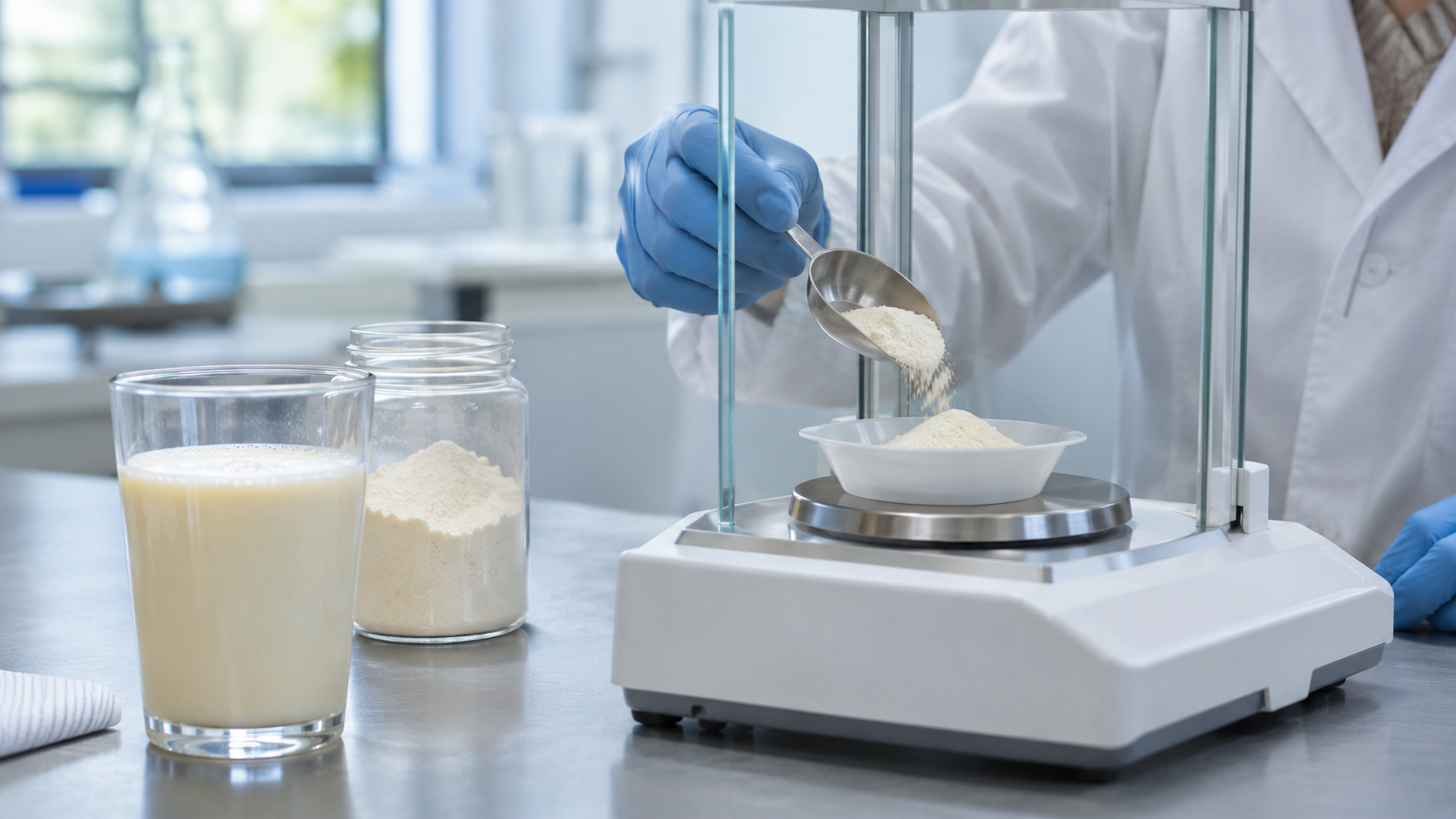
GOS ingredients contain mixtures of oligosaccharides, and commercial grades differ in dry matter, GOS concentration and accompanying sugars. The supplier’s current specification should identify which values are reported on a dry-matter basis and which apply to the material as supplied. [3]
Consider a hypothetical development target of 3 g GOS per serving. A powder containing 70% GOS as supplied would require approximately 4.29 g of ingredient. A syrup containing 75% dry matter and 60% GOS on that dry matter would require approximately 6.67 g.
These are illustrative calculations, not recommended doses or specifications for an SRS product. They show why the cheapest price per kilogram may not give the lowest cost per serving.
Neither calculation automatically establishes the amount that can be declared as dietary fiber. Confirm the applicable analytical method and destination-market labeling treatment separately.
Choose Evidence That Matches the Brief
GOS research can inform ingredient selection, but dose, composition and study population matter.
One single-blinded study in 18 healthy adults tested GOS-containing chocolate chews at increasing doses of 0, 2.5, 5 and 10 g, with each dose consumed for three weeks. Its focus was fecal microbiota, particularly bifidobacteria. [4]
That design does not establish an effective dose for every protein beverage, nor does it demonstrate that combining protein and GOS improves protein absorption, muscle growth or digestive comfort. A trade-show concept provides an application example; evidence for a particular finished-product benefit is a separate requirement.
Ask suppliers to distinguish the amount of commercial ingredient used in a study from the amount of GOS it delivered.
Test the Whole Serving
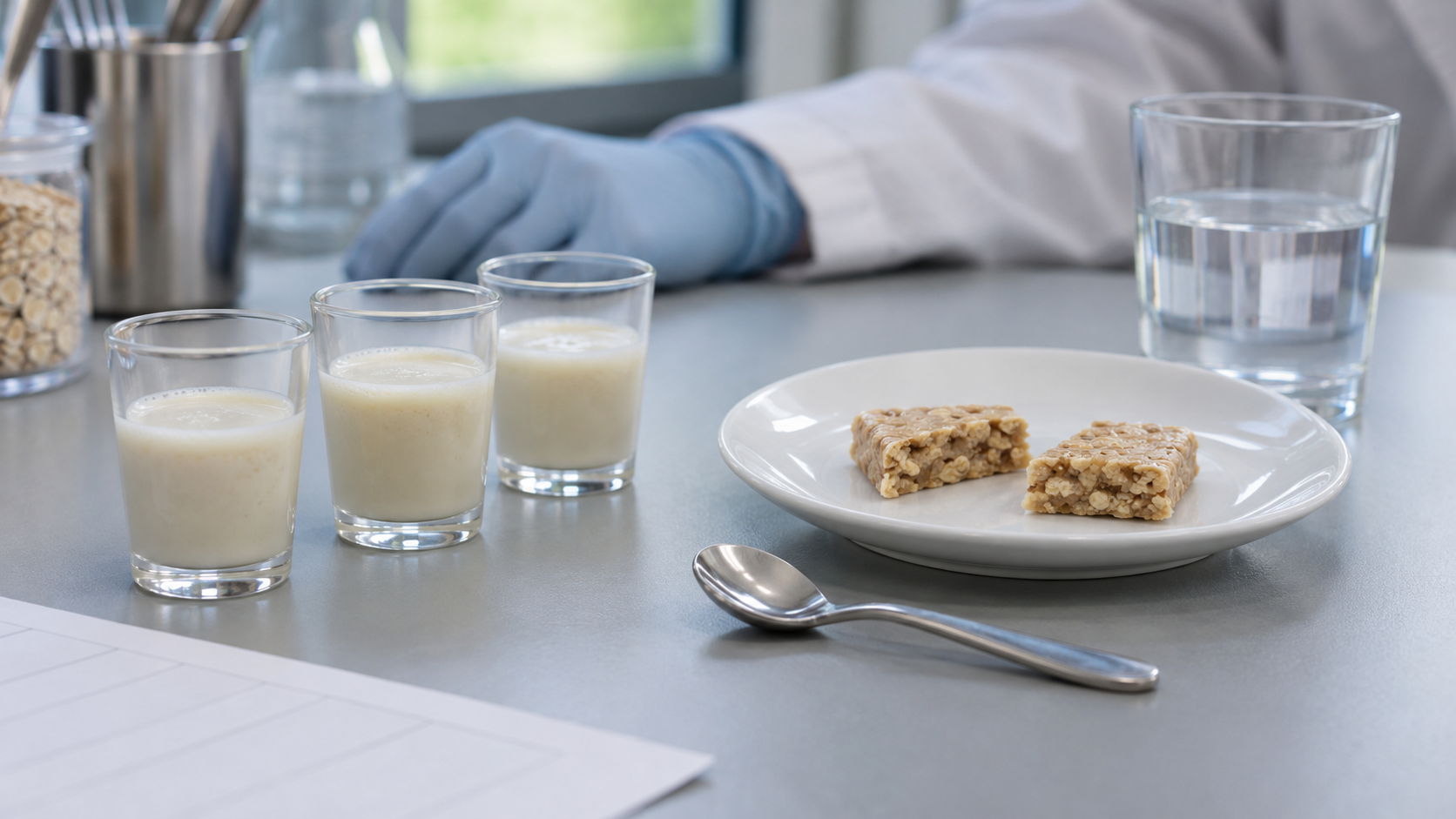
A combination product must work as something people eat or drink. Compare sweetness, mouthfeel, aftertaste and preparation experience using the complete formula, including flavors, sweeteners and other functional ingredients.
Digestive tolerance deserves its own development question. Evaluate the intended serving and expected daily frequency, including other added fibers or polyols in the formula. Avoid assuming that a higher fiber addition automatically creates a better consumer experience.
For bars, assess handling and texture over storage. For powders, examine mixing and moisture-related handling. For drinks, evaluate the intended processing and packaging system. Keep the trial focused on the product’s actual use rather than a sample of each ingredient tested separately.
Check What Comes with the GOS
Many commercial GOS ingredients are produced from lactose. Supplier information should clarify residual lactose, glucose and galactose, alongside the relevant allergen documentation and suitability for the proposed dietary positioning. [3,5]
A low-lactose specification does not by itself establish dairy-free, milk-allergen-free or vegan suitability. Those questions need separate answers for the selected grade.
This becomes especially relevant when pairing GOS with pea or another plant protein. Selecting a plant protein does not establish the positioning of the complete formula.
Turn the Trend into a Development Brief
A useful supplier enquiry includes the finished format, protein target, GOS target, serving size, destination market, desired claims, processing conditions and expected volume.
SRS Nutrition Express can help review protein and GOS ingredient options, available specifications and sample requirements against that brief. Confirm the proposed grade and documentation before moving from bench work to pilot production.
Evidence Boundaries
- Exhibition concepts do not establish clinical benefits for a protein-and-GOS combination.
- Findings from a specific GOS study cannot be applied to every ingredient grade or finished formula.
- The 3 g example illustrates ingredient calculations; it is not a recommended dose or an SRS specification.
- GOS content, ingredient weight and declared dietary fiber are not interchangeable.
Recommended Reading
References
- FrieslandCampina Ingredients. Clear protein beverages: refresh your thinking on protein. Fi Europe 2026 application information.
- BENEO. Fi Europe 2026: Meeting consumers’ new snacking behaviour with BENEO ingredient solutions. November 17, 2026.
- FrieslandCampina Ingredients. Galactooligosaccharides (GOS). Ingredient composition and grade information.
- Davis LMG, et al. A dose dependent impact of prebiotic galactooligosaccharides on the intestinal microbiota of healthy adults. International Journal of Food Microbiology. 2010.
- Biotis / FrieslandCampina Ingredients. Solutions for a Good Gut Feeling. Ingredient brochure.
Post time: Nov-18-2026


