

As global populations continue to age, maintaining muscle function has become a growing focus in nutrition and health research. While muscle loss has traditionally been measured by changes in muscle mass, researchers increasingly recognize that muscle strength and physical function may provide a more meaningful picture of healthy aging.
This shift has changed how scientists and nutrition companies think about muscle health. The goal is no longer only to preserve or increase muscle size, but to support muscle quality — the ability of muscle tissue to generate strength, support movement, and maintain independence.
For the nutrition industry, this represents a transition from a traditional “muscle building” approach toward solutions designed for long-term functional health.
What Is Muscle Quality and Why Does It Matter?
Muscle quality describes how effectively muscle tissue performs relative to its amount. Although there is currently no single universal measurement used across all research fields, muscle quality is commonly evaluated through indicators such as:
· muscle strength relative to muscle mass;
· physical performance;
· muscle composition;
· fat infiltration within muscle tissue;
· neuromuscular function.
This distinction is particularly important during aging.
The revised EWGSOP2 sarcopenia consensus published in 2019 placed low muscle strength as the primary indicator of sarcopenia, while muscle quantity became an important but secondary measurement.
This reflects a broader scientific understanding: maintaining the ability to walk, climb stairs, and perform daily activities may be more important than simply maintaining muscle volume.

Why Muscle Size Does Not Always Equal Strength
Muscle mass and muscle function are closely related, but they are not identical.
A person may maintain a certain amount of muscle tissue while experiencing declines in strength or mobility due to factors such as:
· reduced muscle protein synthesis response;
· changes in muscle fiber composition;
· increased fat accumulation within muscle;
· reduced mitochondrial efficiency;
· lower physical activity levels.
Research has shown that muscle strength is strongly associated with physical outcomes in older adults and may provide additional information beyond muscle mass alone.
However, measuring muscle quality remains complex. Different studies may use different definitions, populations, and evaluation methods, which can lead to variations in findings.
Therefore, muscle quality should be viewed as a broader concept rather than a single clinical measurement.
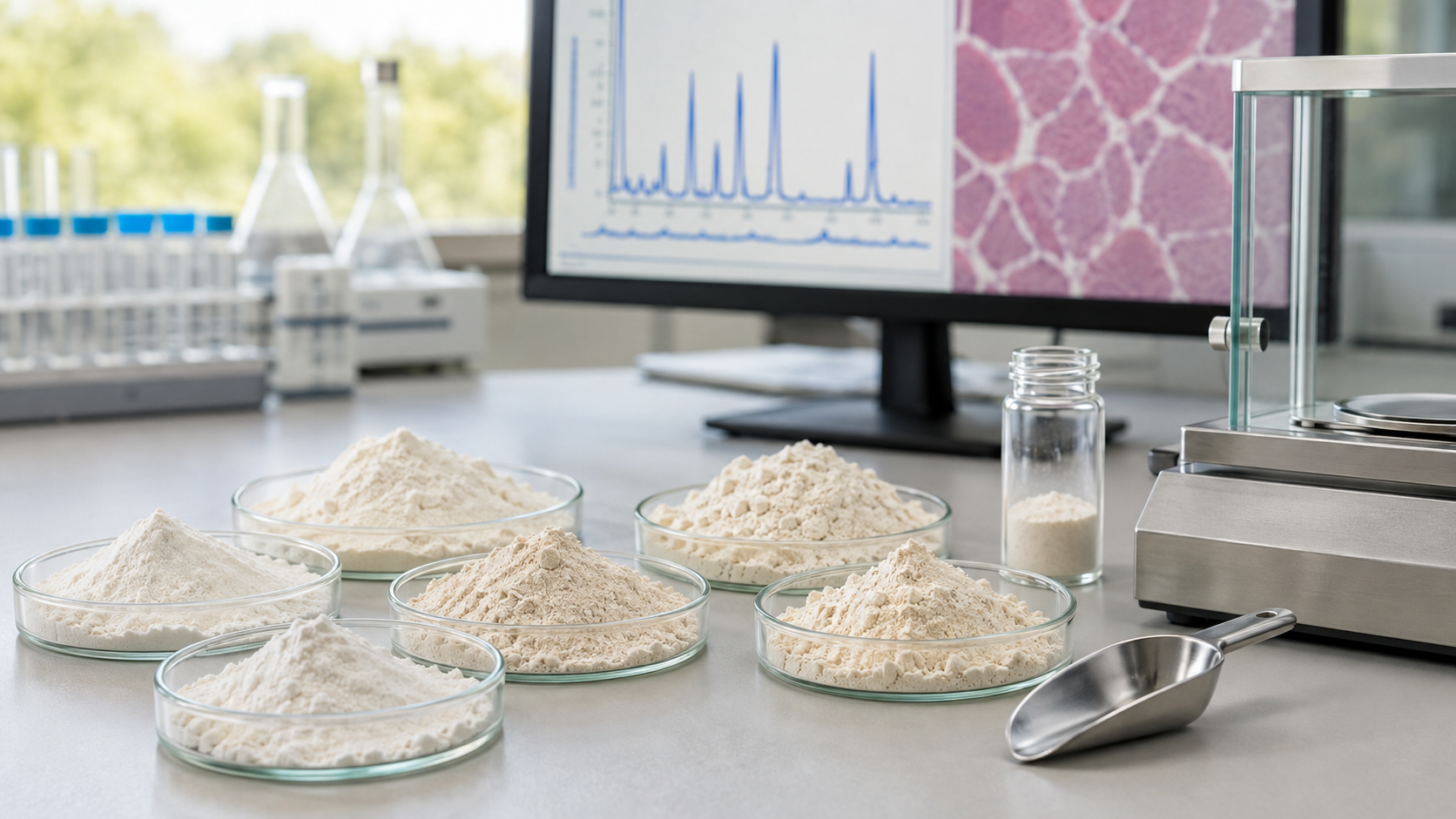
Protein Quality and Muscle Function During Aging
Protein remains one of the most studied nutritional factors related to muscle maintenance.
With aging, the body may become less responsive to dietary protein stimulation, a process often referred to as anabolic resistance. This means older adults may require careful attention to protein intake, amino acid availability, and overall diet quality.
Protein quality is influenced by several factors, including:
· essential amino acid profile;
· digestibility;
· leucine content;
· bioavailability.
Whey protein has received considerable research attention because of its complete amino acid profile and naturally high leucine content.
A meta-analysis published in the British Journal of Sports Medicine reported that protein supplementation combined with resistance exercise can improve muscle mass and strength outcomes. However, results are not identical across all studies.
Differences in:
· participant age;
· baseline protein intake;
· exercise program;
· intervention duration;
· total dietary pattern
can influence the observed outcomes.
Therefore, protein should be considered as part of a broader strategy that includes physical activity and balanced nutrition rather than as a standalone solution.
Beyond Protein: The Future of Functional Aging Nutrition
The concept of functional aging is expanding the role of nutrition beyond traditional muscle growth.
Current research is exploring how nutrition may support areas including:
· muscle recovery;
· metabolic health;
· mitochondrial function;
· inflammation balance;
· long-term physical independence.
This has increased interest in evidence-based nutritional ingredients, including high-quality proteins, amino acids, creatine, and other functional nutrition solutions.
However, scientific evidence continues to develop. Results from individual studies should be interpreted carefully because the effects of any ingredient can depend on dosage, population characteristics, formulation design, and lifestyle factors.
From Bigger Muscles to Better Function
The future of muscle nutrition is moving toward a more complete understanding of health.
For athletes, muscle growth may remain an important goal. For healthy aging markets, the focus is increasingly shifting toward maintaining strength, mobility, and quality of life.
For nutrition brands and product developers, this creates new opportunities to develop products based on measurable health goals rather than focusing only on muscle size.
At SRS, we support partners with reliable ingredient supply, quality documentation, specification control, and technical communication to help translate nutrition research into practical product development.
From ingredient selection to testing requirements, consistent quality and transparent data remain essential for developing science-based nutrition solutions.
References
1. Cruz-Jentoft AJ, et al.
Sarcopenia: revised European consensus on definition and diagnosis (EWGSOP2).
Age and Ageing. 2019;48(1):16–31.
2. Newman AB, et al.
Strength, but not muscle mass, is associated with mortality in the Health, Aging and Body Composition Study.
Journal of Gerontology: Medical Sciences. 2006;61(1):72–77.
3. Morton RW, et al.
Protein supplementation and resistance training increases skeletal muscle mass and strength: a systematic review, meta-analysis, and meta-regression.
British Journal of Sports Medicine. 2018;52:376–384.
4. Bauer J, et al.
Evidence-Based Recommendations for Optimal Dietary Protein Intake in Older People: A Position Paper From the PROT-AGE Study Group.
Journal of the American Medical Directors Association. 2013;14(8):542–559.
5. Food and Agriculture Organization of the United Nations (FAO).
Dietary protein quality evaluation in human nutrition.
FAO Food and Nutrition Paper 92. 2013.
6. World Health Organization (WHO).
Decade of Healthy Ageing 2021–2030.
Post time: Aug-17-2026


