

Digestive enzyme blends are often added to protein powders, mass gainers and healthy-aging products with the promise of helping the body use nutrients more effectively. A 2026 randomized human trial offers useful evidence—but not a simple “more absorption” conclusion.
The tested six-enzyme blend changed how quickly some nutrients appeared in the blood after a mixed meal. However, it did not significantly increase overall post-meal amino acid concentrations. The study therefore supports a possible effect on acute digestion kinetics, not a blanket claim that every enzyme blend improves absorption or produces better long-term outcomes.
What Did the Researchers Test?
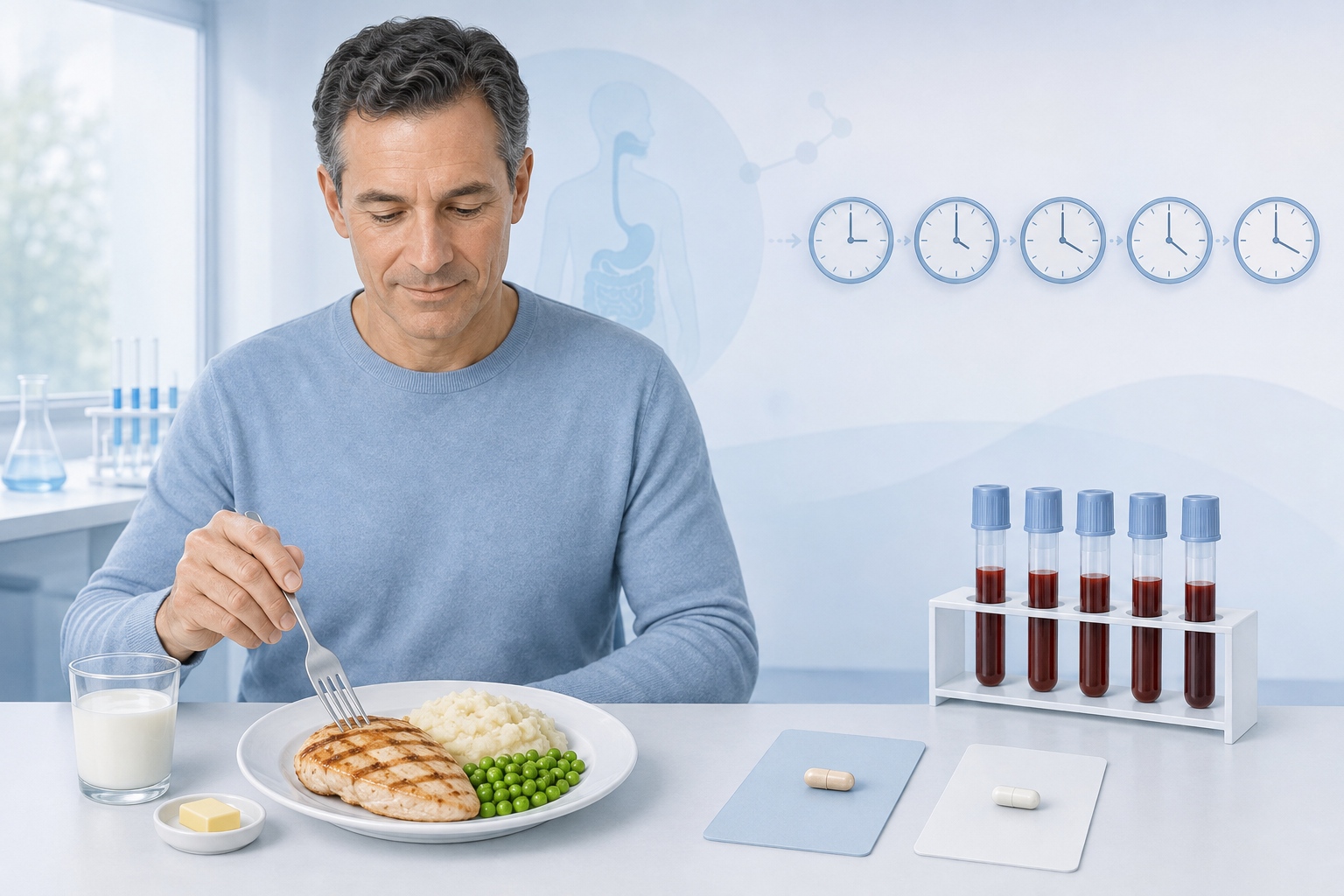
The randomized, double-blind, placebo-controlled crossover trial included 30 healthy middle-aged and older adults. Their average age was 56 years; 18 were women and 12 were men. Because each participant completed both conditions, each person served as their own comparison.
At the two test visits, participants consumed a 435-kcal meal containing grilled chicken, peas, potatoes, milk and butter. The meal provided 34 g of protein, 51 g of carbohydrate and 11 g of fat.
The meal was taken with either a placebo or a proprietary mixture of six microbial enzyme preparations marketed as OPTIZIOME® Macro Digest. The formulation contained proteases, lipase, amylase and glucoamylase.
Blood samples were collected before the meal and over the following five hours. Researchers measured amino acids, insulin, glucose and non-esterified fatty acids, or NEFAs.
Did the Enzyme Blend Increase Amino Acid Availability?
Not overall.
Essential amino acids, branched-chain amino acids, total amino acids and leucine concentrations were not significantly different between the enzyme and placebo conditions across the five-hour period.
One timing result did change. Leucine reached its maximum concentration after an average of 121.2 minutes with the enzyme blend, compared with 141.0 minutes with placebo. The difference of approximately 20 minutes was statistically significant.
This may indicate faster release or appearance of leucine following the meal, but total post-meal leucine exposure was not significantly higher. An earlier peak should therefore not be described as proof that more leucine was absorbed overall.
The response was also not uniform. Exploratory clustering suggested that participant characteristics—including sex, body composition, BMI and habitual macronutrient intake—were associated with different amino acid response patterns.
These exploratory analyses may help shape future research, but they do not yet identify a consumer group guaranteed to benefit.
What Happened to Carbohydrate and Fat Markers?
Post-meal glucose and total NEFA concentrations were significantly higher with the enzyme blend, while insulin did not differ significantly between the two conditions.
The authors interpreted these findings, together with the earlier leucine peak, as evidence of enhanced macronutrient digestion and nutrient bioavailability.
That interpretation needs context. The study measured nutrients circulating in the blood after one meal. It did not directly measure intestinal absorption efficiency, faecal nutrient losses or long-term nutritional status.
Higher circulating glucose or fatty acids may indicate that nutrients became available more quickly, but “higher” is not automatically a better health outcome. The trial did not assess long-term glucose control, muscle gain, physical performance or healthy-aging outcomes.
Can the Findings Be Applied to Other Digestive Enzyme Blends?
Only cautiously. Enzyme products can differ considerably in enzyme species, activity units, ratios, stability and the foods they are designed to break down.
This trial evaluated one proprietary six-enzyme formulation with one specific mixed meal. Its results cannot automatically be applied to DigeZyme®, a protease-only product or another multienzyme blend without product-specific evidence.
The study was acute and involved a relatively small group of generally healthy adults. It was funded by BIO-CAT, the company that supplied the investigational product. One co-author was a BIO-CAT employee at the time of the study and participated in the study design, data interpretation, manuscript editing and decision to publish.
BIO-CAT had also filed a patent application related to the compositions and uses described in the paper. Industry involvement does not invalidate the results, but independent replication and longer-term trials would strengthen confidence in their practical significance.
What Does This Mean for Supplement Formulation?
The study makes a stronger case for precise formulation than for broad digestive-enzyme claims.
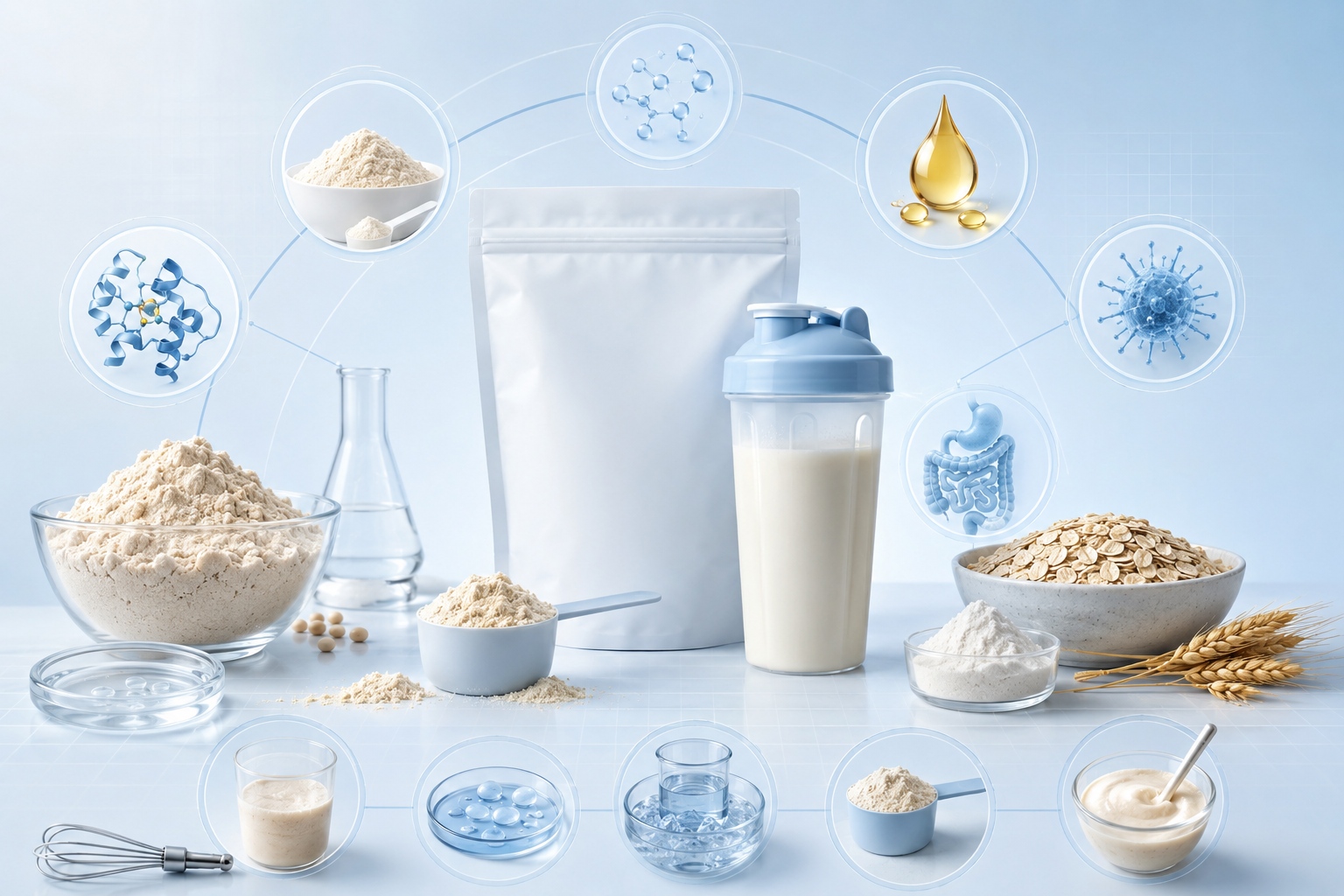
Product developers should match enzyme activity to the formula’s actual substrates, verify that enzyme activity survives processing and storage, and distinguish faster post-meal nutrient appearance from greater total absorption or improved health outcomes.
For protein powders and mass gainers, factors such as protein quality, serving size, amino acid profile, taste, dispersibility and gastrointestinal tolerance remain central. An enzyme blend may be a useful formulation component, but it should not compensate for an under-dosed or poorly designed base formula.
SRS Nutrition Express supports brands with protein ingredients, amino acids and formulation discussions for sports nutrition and healthy-aging products. Contact us to review ingredient specifications, serving-size targets and formula compatibility before finalising a digestive-enzyme concept.
Reference
Deutz MT, Askow AT, Garvey SM, et al. Oral Multienzyme Supplementation Alters Postprandial Plasma Nutrient Concentrations after a Mixed Meal in Healthy Middle-Aged and Older Adults: A Randomized, Double-Blind, Placebo-Controlled, Crossover Trial. The Journal of Nutrition. 2026;156(4):101400. doi: 10.1016/j.tjnut.2026.101400.
Post time: Aug-13-2026


