

On 26 May 2026, the European Commission adopted Regulation (EU) 2026/1118, refusing to authorise a proposed health claim linking daily creatine supplementation with improved cognitive function.[1]
For supplement brands, the scope of the decision matters. The EU rejected one proposed cognitive claim. It did not prohibit creatine, invalidate creatine monohydrate as an ingredient or remove the creatine claims already authorised for specific exercise-related uses.
The commercial question is therefore not whether creatine products can still be sold. It is whether the product concept, daily serving and communication remain aligned with the claims permitted in the target market.
Why Was the Cognitive Claim Refused?
The proposed wording was: “Daily creatine supplementation can contribute to improved cognitive function.” EFSA evaluated 23 human intervention studies. Some short-term studies using 20 g of creatine per day reported individual effects on working memory or response inhibition. However, these findings were not consistently reproduced across other doses, study durations or cognitive outcomes.[2]
EFSA concluded that the submitted evidence did not establish a cause-and-effect relationship between creatine supplementation and improvement in one or more areas of cognitive function.
This conclusion does not establish that creatine can never influence cognition under any circumstances. It means the evidence submitted was insufficient to authorise the proposed broad commercial health claim.
Which EU Creatine Health Claims Remain Authorised?
Regulation (EU) 2026/1118 did not remove the creatine claims already included in the EU list of permitted health claims.[3,4]
For short-term, high-intensity exercise, the authorised wording states: “Creatine increases physical performance in successive bursts of short-term, high-intensity exercise.”
The food must provide 3 g of creatine per day. Consumers must also be informed that the beneficial effect is obtained with a daily intake of 3 g. This claim applies to adults performing high-intensity exercise.
A separate authorised claim applies to resistance training in older adults: “Daily creatine consumption can enhance the effect of resistance training on muscle strength in adults over the age of 55.”

This claim requires a daily intake of 3 g of creatine together with progressive resistance training performed at least three times per week for several weeks. The training intensity must be at least 65–75% of one-repetition maximum and should allow the training load to increase over time.
By contrast, the proposed claim that daily creatine supplementation can contribute to improved cognitive function was refused under Regulation (EU) 2026/1118. It was not added to the EU list of permitted health claims.
Authorised wording is not a general licence to promise muscle gain, memory improvement or “brain performance.” The wording, target population, daily intake and conditions of use must remain consistent with the applicable authorised claim.
What Should Brands Review Now?
For cognition-positioned products, reviewing only the label is too narrow. The same compliance risk may appear on product pages, marketplace listings, advertisements, social posts, influencer briefs, distributor materials and translated content.
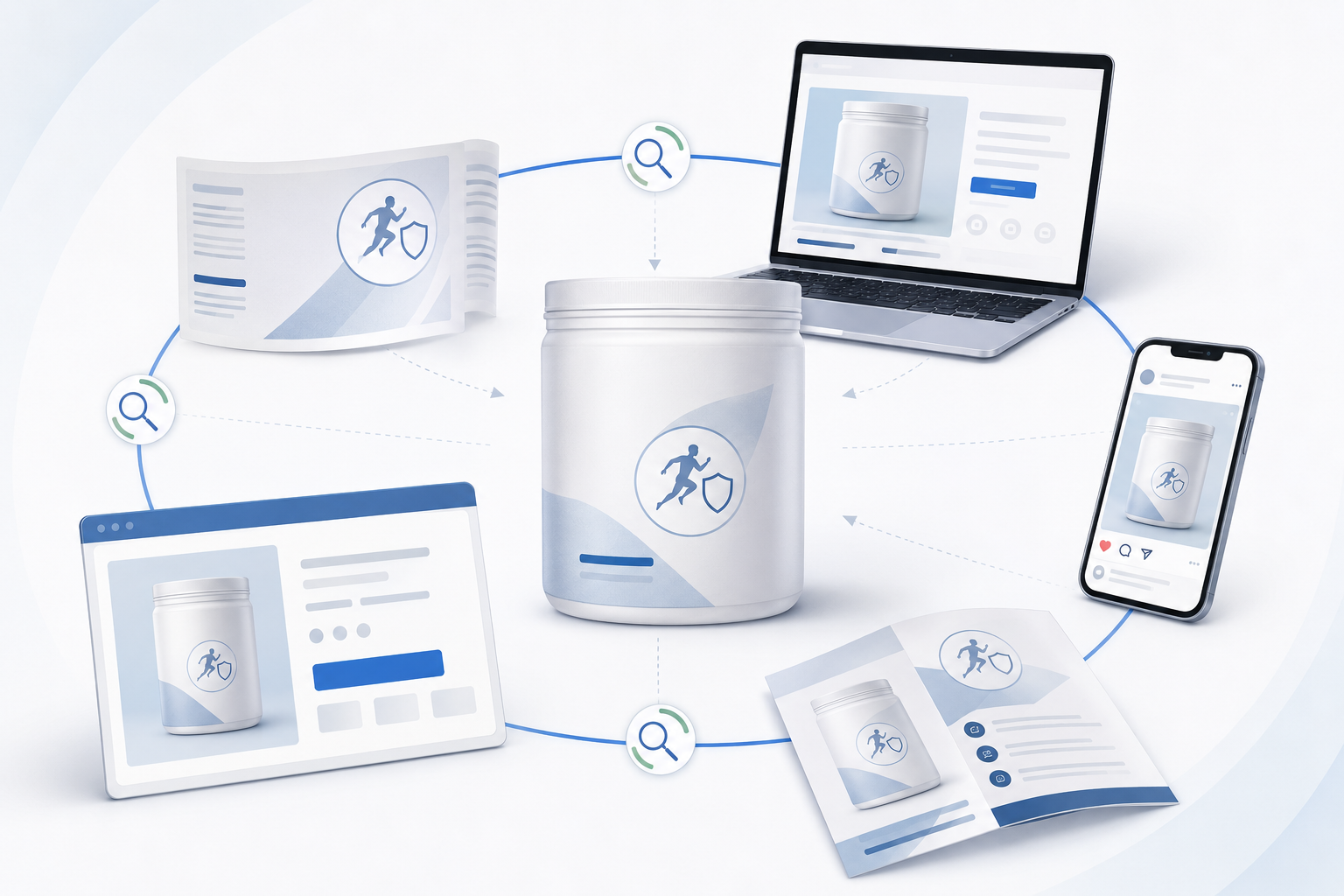
Brands should check:
- Does any communication state or imply improved memory, attention, alertness or general cognitive performance?
- Is research being cited that does not match the product’s dose, user group or conditions of use?
- Does the product using the exercise-performance claim provide the required 3 g daily intake?
- Is the exact authorised wording—or wording with the same meaning—used consistently in every target-market language?
- Are distributors, influencers or content partners making broader claims than the approved brand material?
Phrases such as “brain health” or “mental performance” should not be treated as automatic workarounds. Compliance depends on the complete presentation and the meaning conveyed to consumers. Final wording should be reviewed for each intended EU market.
Product Development Should Start Before the Label
A health-claim decision can affect the intended consumer, serving size, dosage form and launch strategy before a purchase order is placed. A compliant raw material cannot make an unsupported finished-product claim compliant.
SRS Nutrition Express can support creatine projects with specifications, batch documentation, particle-size and density data, samples and application discussions for powders, capsules and tablets. These technical inputs can help brands align the ingredient and dosage form with the intended daily serving. Final claim wording and legal approval remain the responsibility of the brand and its qualified regulatory reviewer.
References
- European Commission. Commission Regulation (EU) 2026/1118 of 26 May 2026 refusing to authorise a health claim made on foods.
- EFSA NDA Panel. Creatine and improvement in cognitive function: evaluation of a health claim pursuant to Article 13(5) of Regulation (EC) No 1924/2006. EFSA Journal. 2024;22:e9100. https://doi.org/10.2903/j.efsa.2024.9100.
- European Commission. Commission Regulation (EU) No 432/2012 establishing a list of permitted health claims made on foods, consolidated version of 19 August 2024.
- European Commission. Commission Implementing Regulation (EU) 2017/672 authorising a health claim related to creatine and resistance training in adults over 55.
Post time: Aug-10-2026


